

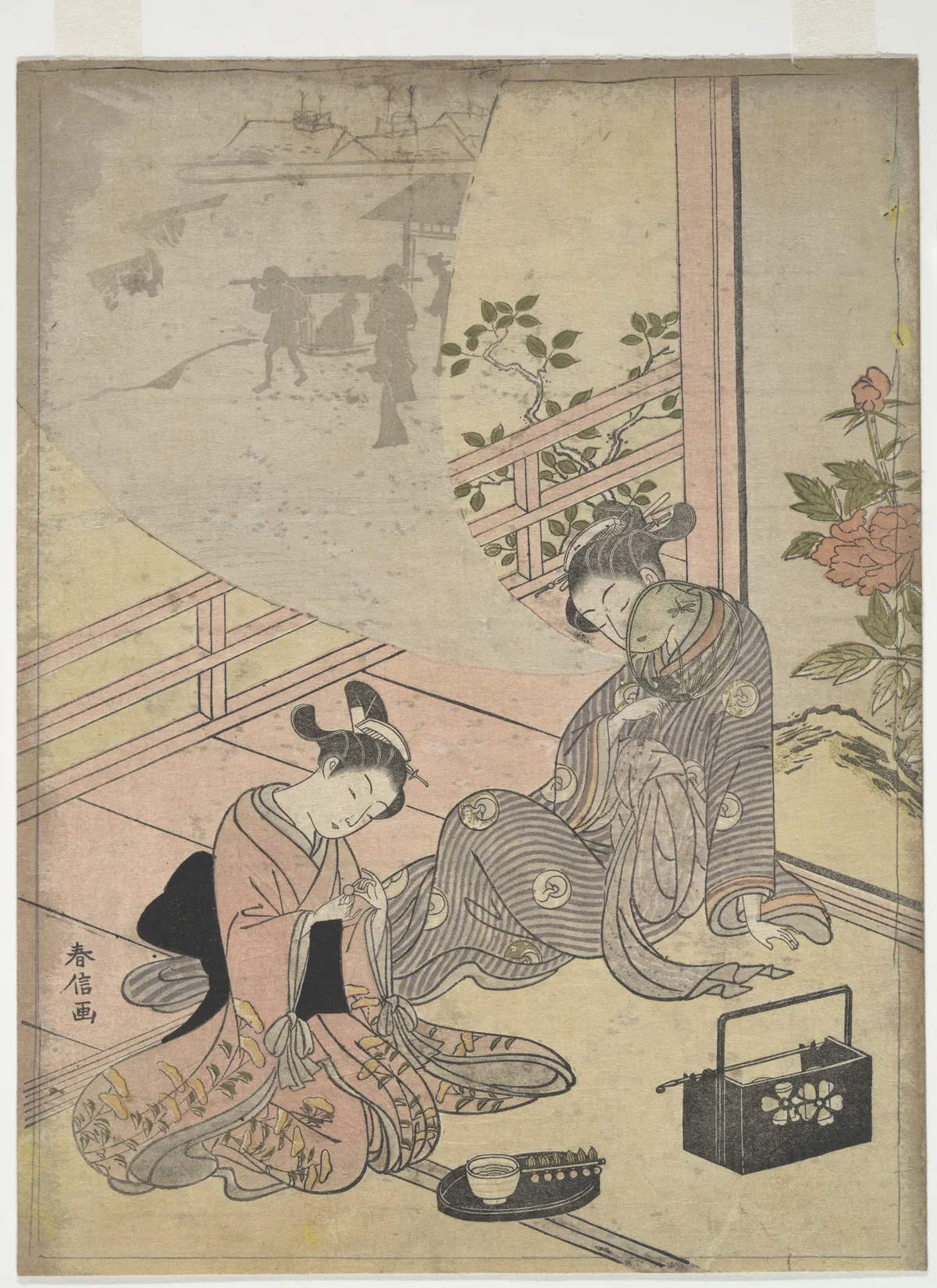
Courtesan's Reverie
The room was silent. The only sound was the gentle rustle of silk against tatami. A courtesan lay in repose, her dreams weaving through the dimly lit chamber. The air was thick with the scent of incense, curling in ghostly tendrils around her. Her expression, serene yet distant, hinted at worlds beyond this one.
A faint glow from a paper lantern painted soft shadows on the walls. Her kimono, vibrant in the half-light, whispered stories of distant lands and mythical tales. In her slumber, she was both present and elsewhere, caught between the tangible and the ethereal.
Each breath was a lullaby, a subtle reminder of the life that pulsed gently beneath her composed exterior. The room, a cocoon of stillness, embraced her as she dreamt of the legendary Young Man Lu. A tale known for its romance and whimsy, now reimagined in her subconscious. The familiar narrative twisted into something uniquely hers, a parody playing out in the theatre of her mind.
Paper screens held back the night, enclosing her in a fragile sanctuary. Outside, the world continued, oblivious to her silent reverie. Yet inside, time paused, suspended in the delicate balance between reality and dream. The courtesan remained motionless, her dreams a quiet rebellion against the constraints of her waking life.
Historical Echo
Suzuki Harunobu's work captures a moment of introspection in an Edo-period courtesan's life. His prints often depicted women in serene and intimate settings, reflecting both the beauty and the constraints of their roles. This print, a parody of "The Tale of Young Man Lu," highlights the intersection of reality and fantasy, a theme prevalent in Harunobu's art. The artist's delicate lines and subtle colours convey a sense of quiet elegance, inviting the viewer to ponder the stories within.