

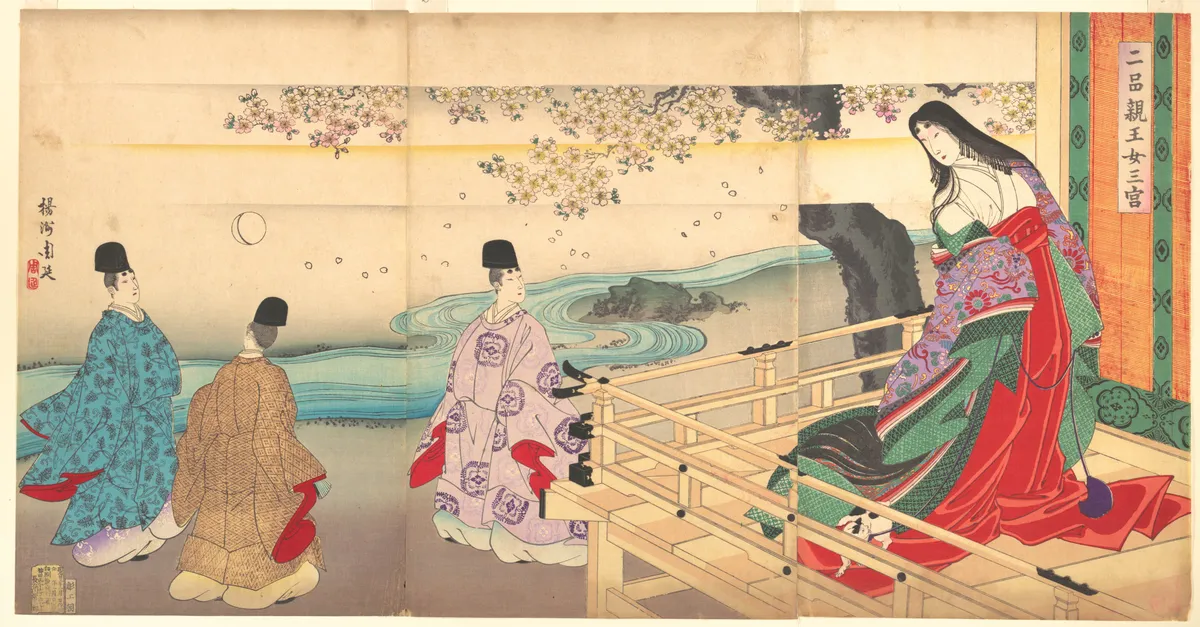
The Third Princess and Kashiwagi
The air inside the chamber felt heavy. Incense smoke curled in lazy spirals, casting faint shadows on the tatami mats. The Third Princess, delicate and poised, sat with her back straight, her eyes lowered. The silk of her kimono shimmered like a silent stream in the moonlight, each fold carefully arranged.
Kashiwagi stood nearby, his presence both a comfort and a burden. He watched her, his expression unreadable. The rustle of his own attire blended with the distant murmur of court life beyond the shōji screens. A gentle breeze nudged the paper panels, hinting at the garden outside—an unseen world of budding herbs and whispering leaves.
Time seemed to pause in this intimate space, a world caught between duty and desire. Kashiwagi's voice, when he finally spoke, was barely above a whisper, as if afraid to disturb the fragile stillness. Yet, each word carried the weight of unspoken emotions, a dance of restraint and longing that echoed the tales of old.
Historical Echo
In the Heian period, court life was a tapestry of intricate relationships and unspoken tensions. The Third Princess and Kashiwagi's story, nestled within the "Tale of Genji," reflects the delicate balance of power, love, and responsibility. Yōshū Chikanobu captures this moment with his masterful depiction, allowing us a glimpse into a world where every gesture holds significance, and silence speaks volumes.