

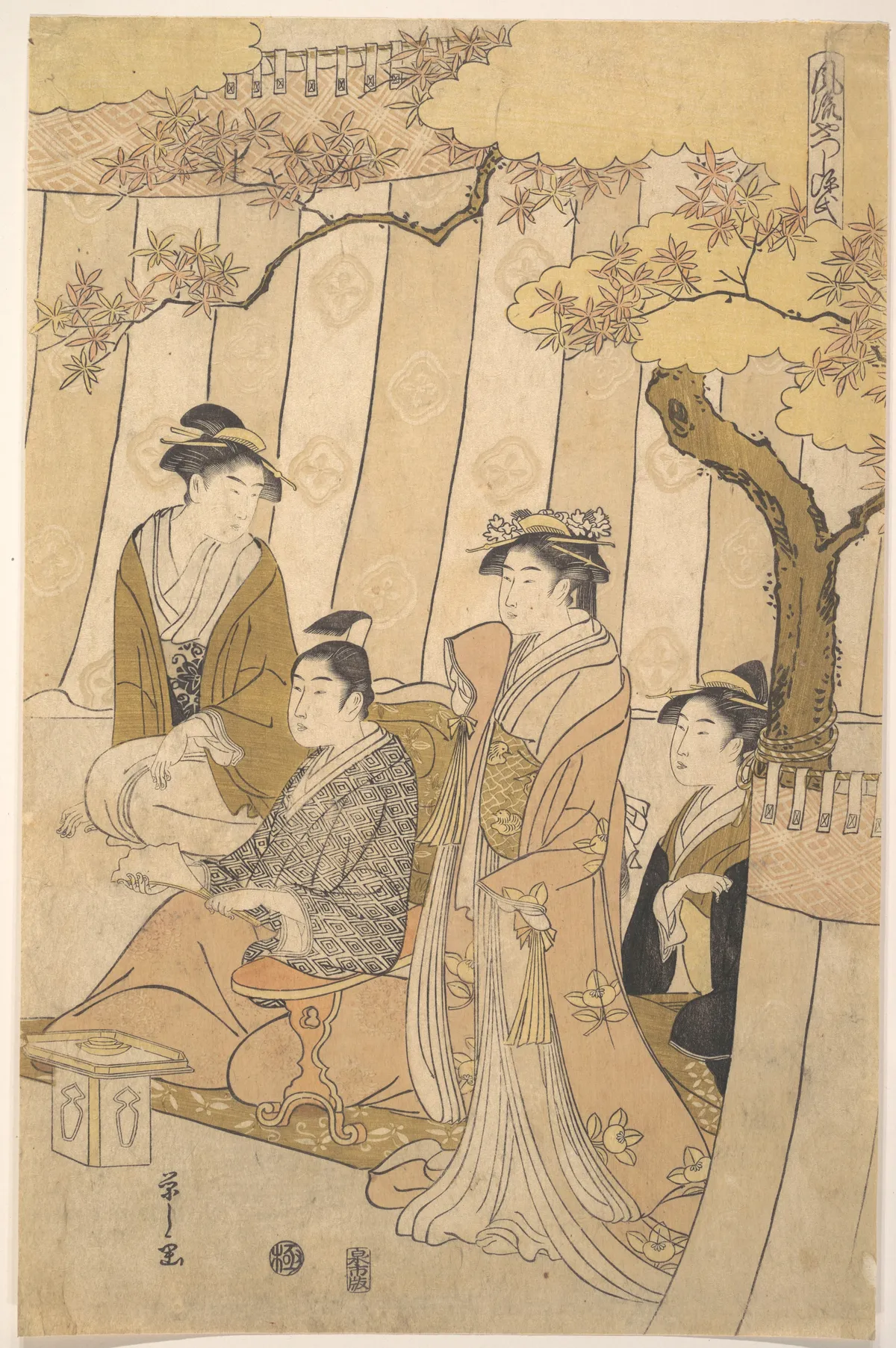
An Evening with Prince Genji
The room hums with a muted elegance. Paper screens diffuse the dim glow of lanterns, casting gentle shadows on the tatami mats. Prince Genji reclines with effortless grace, his robe a cascade of silk. The air is heady with the scent of incense, curling like whispers around the room.
Three young women attend him, their kimonos rustling softly as they move. Each step is measured, each gesture deliberate. One kneels to pour sake, the liquid catching the light as it flows. Another adjusts the folds of her robe, its pattern a delicate interplay of blossoms and birds. The third meets Genji's gaze, her eyes reflecting the lantern's flicker.
Outside, the night is a velvet silence, broken only by the distant call of a nightingale. Inside, the world is contained, serene, yet charged with unspoken tensions. The women’s laughter, though gentle, carries a weight of expectation. Genji’s smile is enigmatic, a mask over deeper currents.
The wood of the floor creaks as he shifts, the sound a quiet reminder of presence, of reality beyond the scene's refinement. It is a moment suspended in time, a fleeting tableau of beauty, poised on the edge of movement.
Historical Echo
During the Edo period, the tale of Prince Genji captivated audiences, his legendary escapades woven into the fabric of Japanese culture. Chōbunsai Eishi, known for his elegant depictions of court life, captures this allure in delicate lines and subtle hues. The print is a window into a world where art and life intertwine, a reflection of both the ephemeral and the eternal. The figures, poised and graceful, embody the aesthetic ideals of an age long past, yet their silent narrative continues to echo in the present.