

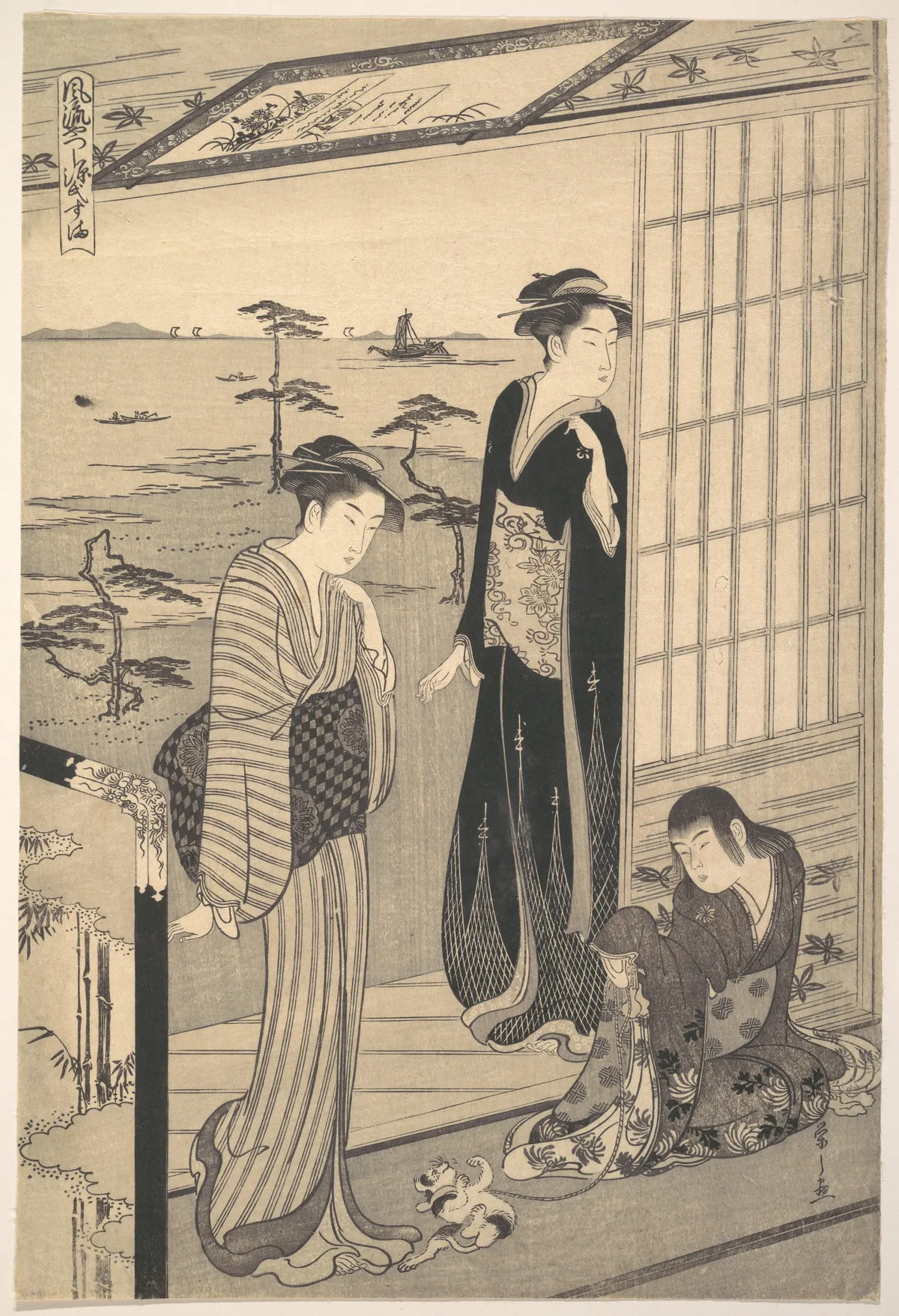
Genji in Suma
The shore at Suma lay quiet, cradled by the soft hush of waves. Genji stood still, his gaze lost in the horizon's embrace. The air was thick with salt, a gentle reminder of his solitude. His exile was a silent companion, unyielding, much like the sands beneath his feet.
A sparrow flitted close, its wings a whisper against the sky. Genji watched its fleeting dance, envying its freedom. The sea breeze tugged at his robes, a cold finger tracing the silken fabric. He felt the weight of absence, the court's distant murmurs fading into memory.
Light filtered through the pine trees, casting shadows that danced with the wind. Genji's heart ached with the rhythm of the tide, each ebb a sigh, each flow a longing. He turned away from the sea, eyes catching the delicate blossoms swaying in the breeze. They too, seemed to mourn in their fragile beauty.
The world around him was a tapestry of muted colours, a canvas of melancholy. Yet amidst the stillness, life breathed softly, an echo of the world he once knew. He walked slowly, each step a conversation with the earth. The path led him further from the familiar, deeper into the embrace of solitude.
Genji paused, letting the moment linger. The sea, the sky, the whispering pines—they held his exile in a fragile balance. In the distance, a distant bell tolled, its sound a gentle reminder of time's passage. He stood there, a figure etched in the twilight, dreaming of the life he left behind.
Historical Echo
"Genji in Exile at Suma" by Chōbunsai Eishi captures a moment from the classic tale, Genji Monogatari. Created in the late 18th century, the print reflects the Edo period's fascination with literary and cultural themes. Eishi's work embodies the elegance and restraint of ukiyo-e, blending narrative with visual beauty. Genji's exile at Suma signifies a period of reflection and solitude, a motif resonant with the period's artistic sensibilities. The scene is imbued with an atmosphere of quiet melancholy, where nature and emotion intertwine.