

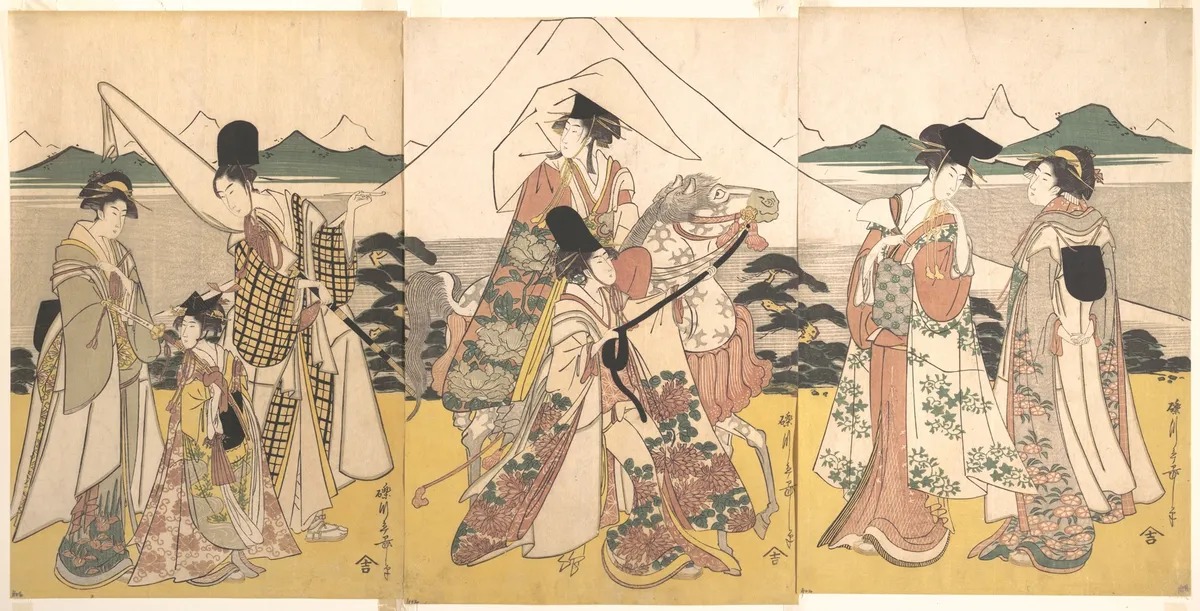
Narihira's Journey
The road stretched beneath a canopy of clouds. Narihira walked with measured steps, his figure a silhouette against the dawn. The earth was cool, still holding the night's embrace. Each step crunched softly on the gravel path, a rhythm that matched his heartbeat. Mist hung low, clinging to the trees that flanked his journey eastward.
The air was heavy with the scent of pine and distant rain. Narihira paused, listening to the silence of the land waking around him. Birds began their tentative calls, voices weaving through the branches. In the distance, a river whispered, its waters unseen but present, a constant companion in his solitude.
Narihira adjusted the cloth around his shoulders. The fabric was worn, familiar, a reminder of home and past travels. This was no ordinary journey; it was a pilgrimage of the heart, a search for something unnamed but deeply felt.
As the light grew, the world revealed itself in layers: the soft greens of early spring, the muted browns of the earth, the occasional bloom daring to announce its presence. Narihira breathed deeply, the cool air filling his lungs, grounding him in the present moment, yet propelling him forward.
Historical Echo
In the late 18th century, the poet Ariwara no Narihira was celebrated in tales of longing and discovery. His journey east became a metaphor for the eternal search for beauty and meaning. Rekisentei Eiri captured this moment, freezing it in time, allowing us to step quietly into Narihira's world. The landscape speaks in whispers of past footsteps, echoing Narihira's quest as both a personal odyssey and a universal journey.