

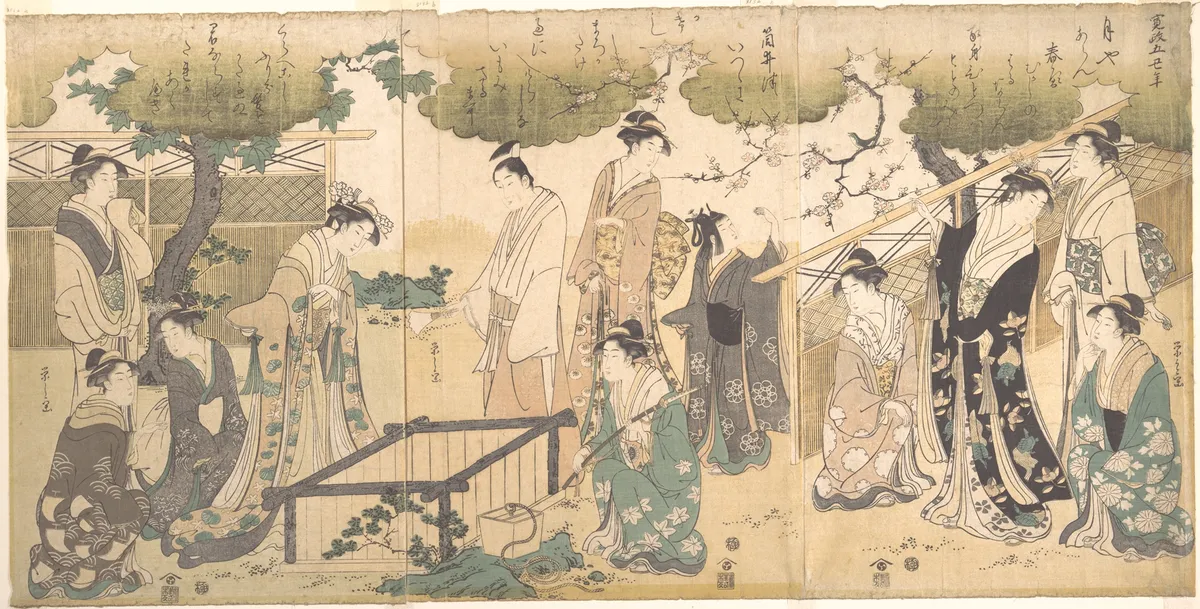
At the Tsutsui Well
The air is still, dense with the scent of wet earth. A lone woman stands at the Tsutsui Well, her form delicate against the morning light. She wears layers of silk, each fold whispering as she moves. Her hands, pale and poised, grip a wooden bucket. The well's stone edge is worn smooth by countless hands. Water drips, echoing softly, as she draws it up, each droplet a tiny world. Shadows dance across her face, patterns shifting with the breeze. Her gaze is distant, caught between the weight of silence and the hum of unseen cicadas. In this moment, time pauses. The world is reduced to the well, the woman, and the gentle rhythm of her task. Beyond, the city stirs, but here, there is only the quiet, the water, and the fleeting grace of her presence.