

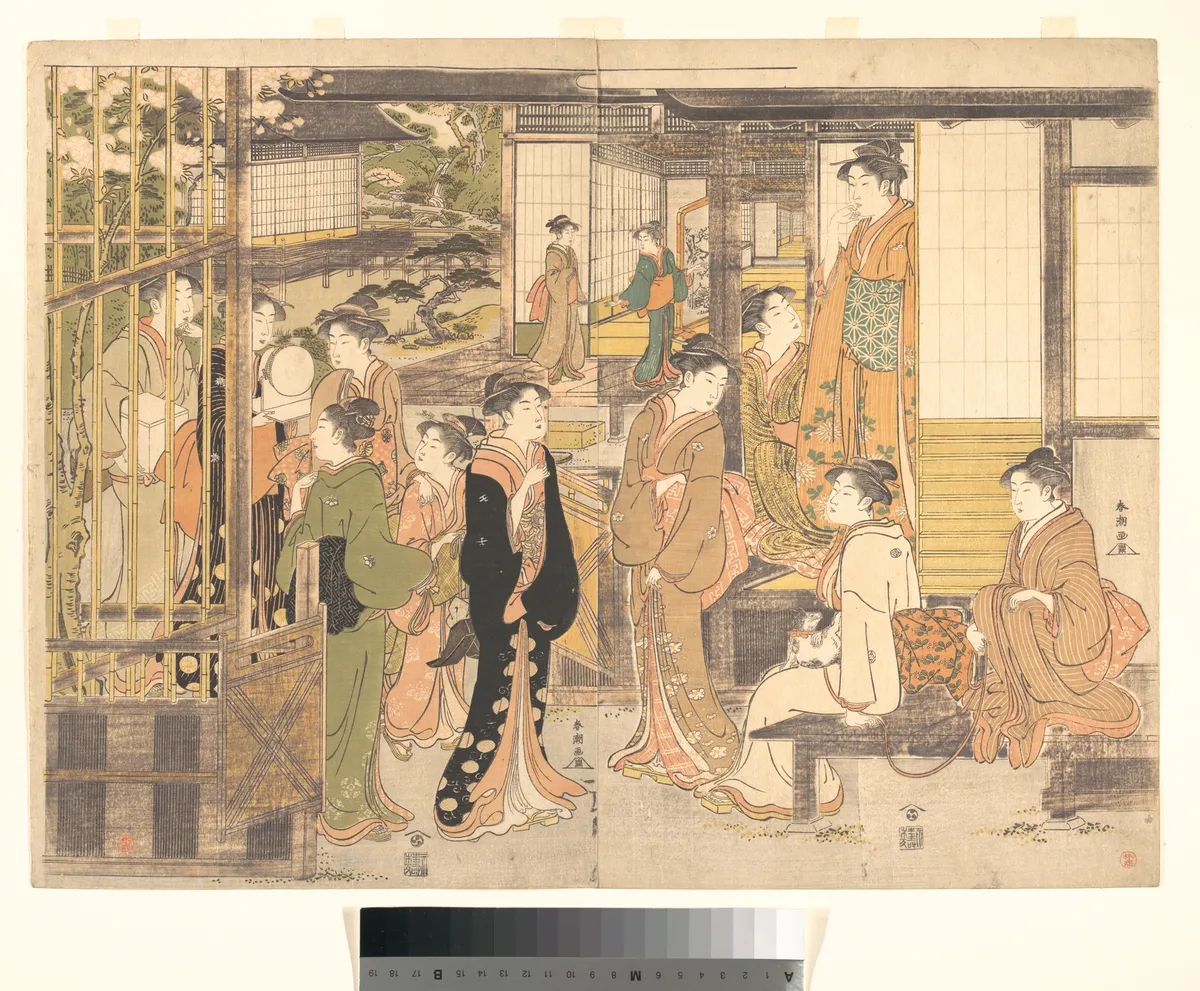
A Quiet Parody
The room is silent, save for the gentle rustle of silk. The Third Princess, her face half-shrouded in shadow, sits with a delicate poise. Her eyes, dark and unfathomable, gaze into the distance. A whisper of incense lingers in the air, mingling with the faint scent of cherry blossoms.
A woman beside her, adorned in layers of silk, leans slightly forward. Her expression is one of quiet amusement. Her fingers, pale and slender, play with the edge of her sleeve. The fabric shimmers subtly in the soft light, catching the flicker of a nearby lantern.
The air is thick with expectation. Outside, the world is hushed. A gentle breeze stirs the paper screens, carrying with it the distant murmur of a river. Each movement within the room is deliberate, echoing the restrained elegance of the court.
This is a parody, a gentle nod to tales of yore. Yet, beneath the surface, the weight of tradition bears down. The Third Princess, caught between roles, remains an enigma. Her silence speaks volumes in this world of subtle gestures.
Historical Echo
Katsukawa Shunchō captured this scene in the late 18th century. The print offers a playful take on the classic tale of the Third Princess. It reflects the Edo period's fascination with parody and reinvention. Through delicate lines and muted tones, Shunchō invites the viewer into a world where tradition meets whimsy.