

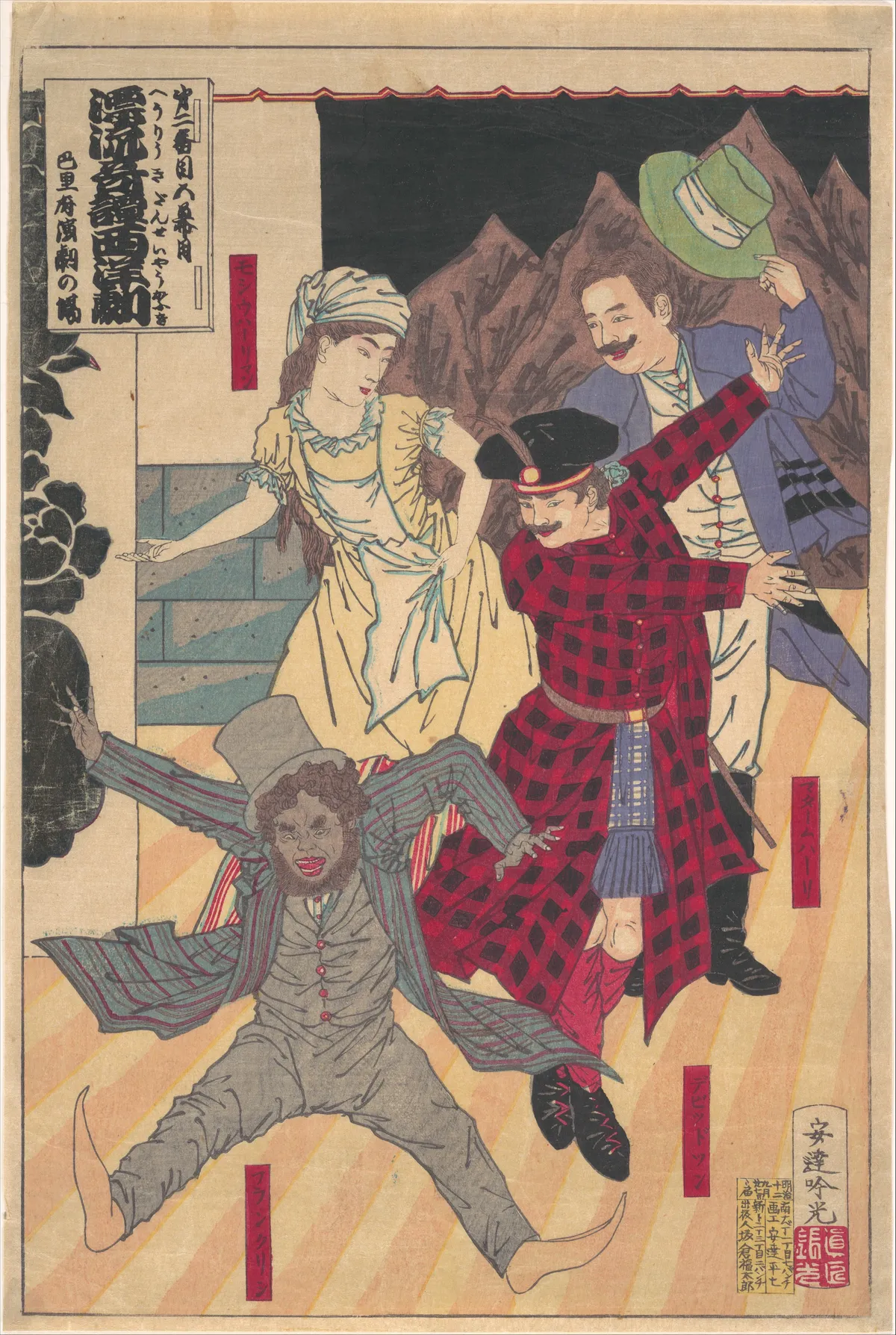
At the Opera in Paris
The air hummed with anticipation. Velvet curtains framed the stage, heavy and rich. A sea of figures dressed in Western finery filled the theatre. Gentle whispers floated through the warm, perfumed air, mingling with the rustle of silk and the soft thud of boots on polished wood.
Onstage, a scene unfolded—alien yet familiar. Actors in Kabuki costumes navigated a Parisian opera, their movements deliberate and expressive. The contrast was striking. Western attire met the precise art of Kabuki, a dance of cultures in an echo of faraway lands.
Gas lamps cast a golden glow, illuminating powdered faces and painted smiles. Fans fluttered, voices hushed. The notes of a distant piano drifted in, weaving through the dialogue, a reminder of the world outside.
Eyes glistened in the dim light, drawn to the spectacle's strange beauty. The audience leaned in, captured by the exotic blend of East and West. The air pulsed with the rhythm of a story, one that transcended borders and time.
Historical Echo
The year was 1879. Adachi Ginkō, a master of ukiyo-e, captured a moment where cultures collided. This woodblock print was part of a series, "The Strange Tale of the Castaways." It presented a unique fusion—Japanese Kabuki styled within a Western opera setting.
Japan was opening to the world. Curiosity and fascination with the West surged through its society. This artwork mirrored such sentiments, a testament to the era's transformative winds. Adachi's print was both a record and a reflection, echoing the cultural exchanges of his time.