

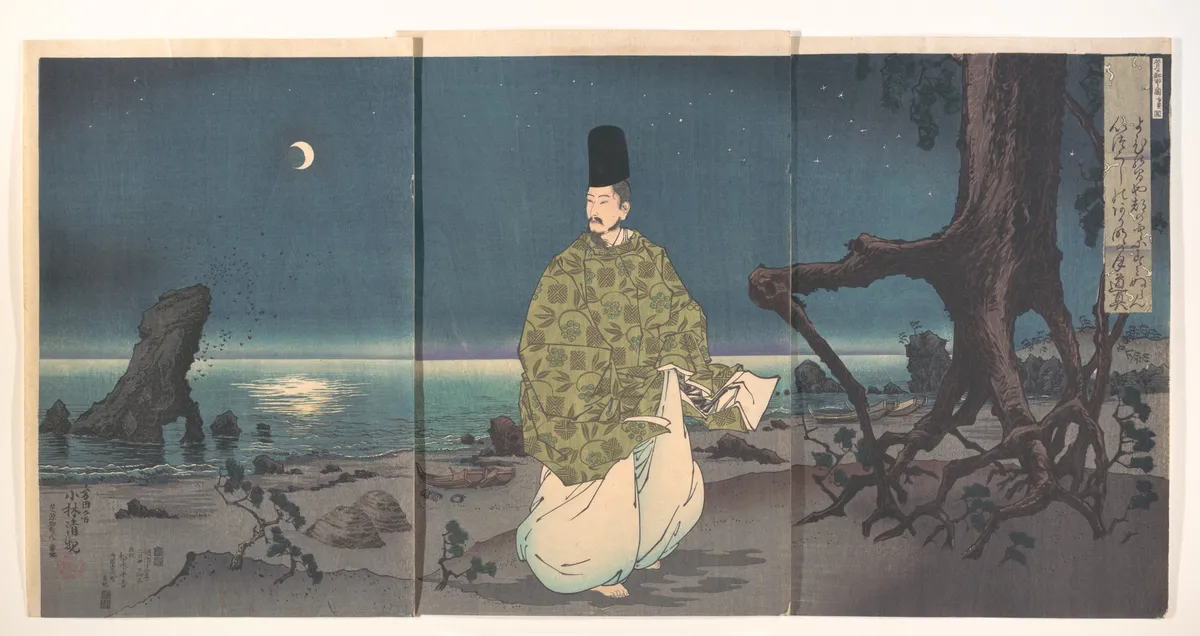
Moonlit Silence
The sand was cool beneath his feet. A courtier of the Heian period stood alone on the beach. The moon, round and bright, cast a pale glow over the waves. Each ripple seemed to whisper secrets from distant lands. His robes rustled softly in the night breeze, a faint echo of silk against silk.
He paused, listening. The sea sighed, a low and rhythmic sound. It mingled with the rustle of pine needles, a gentle symphony of the night. Overhead, the sky stretched vast and empty, a canvas of deep indigo pierced by the moon's light.
His gaze drifted to the horizon, where sea and sky met in a seamless line. The courtier, a silhouette against the night, was a solitary figure. Yet, he felt the weight of history pressing close—a thousand years of tradition, honour, and duty.
With each breath, he inhaled the scent of salt and seaweed. Memories of court life flickered like distant stars—a dance, a poem, a glance exchanged across a crowded room. Here, on this moonlit beach, those memories seemed both distant and near.
He turned, slowly, letting the moment linger. The night was still young, and the moon watched over him like a silent guardian. In this quiet solitude, the world seemed to hold its breath.
Historical Echo
In the 19th century, Japan was a country in transition. Kobayashi Kiyochika captured a moment from the Heian period—a time renowned for its courtly elegance and refinement. Through his art, he bridged centuries, offering a glimpse into a world both ethereal and enduring. The moonlit beach scene is more than a landscape; it is a tribute to a bygone era, a reflection on the passage of time and the constancy of nature.