

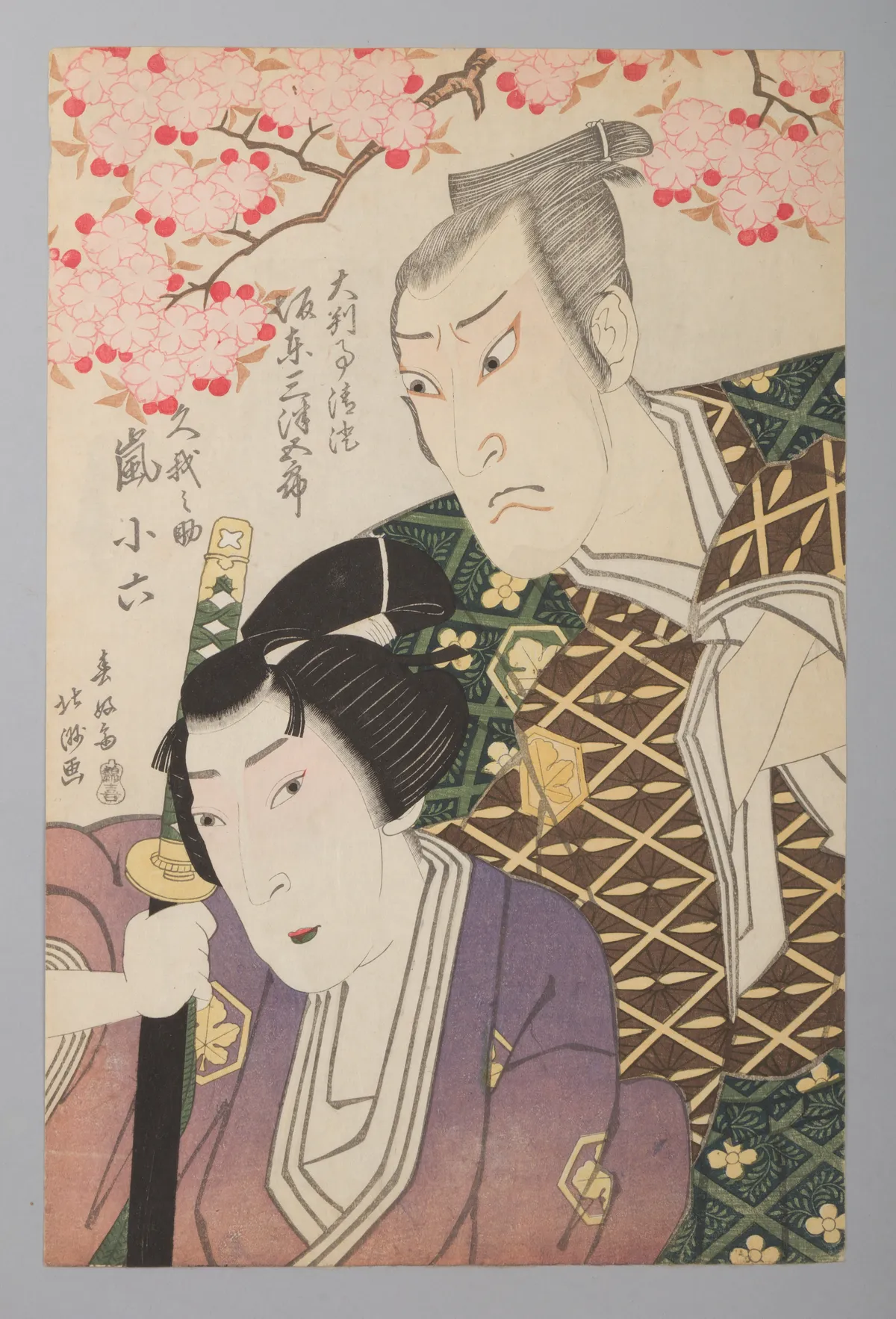
In the Theatre's Glow
The air was thick with the scent of incense. A soft murmur echoed through the theatre as the audience settled. On stage, the flickering lamplight cast long shadows. Bandō Mitsugorō III stood poised as Daihanji Kiyozumi. His gaze, steady and intense, pierced through the dimness. Beside him, Arashi Koroku IV, in the guise of Koganosuke, held a rigid stance. Their robes, rich and heavy, shimmered under the sparse light.
The silence was palpable, broken only by the faint rustle of silk. Mitsugorō's hand moved, a deliberate gesture, commanding attention. His face, a mask of painted intensity, revealed the turmoil beneath. Koroku, eyes sharp, mirrored the tension, a silent dialogue unfolding between them. The audience leaned in, breath held, as the story unravelled in gestures and glances.
The drama hung in the air, a tapestry woven of shadows and light. Each movement, each pause, a calculated echo of the narrative. The theatre itself seemed to breathe, alive with the pulse of the performance.
Historical Echo
In 1821, Shunkōsai Hokushū captured the essence of kabuki theatre. His print immortalised Bandō Mitsugorō III and Arashi Koroku IV. These actors defined their era with expressive power. Hokushū's work remains a testament to their artistry. The woodblock print is a window into the vibrant world of Edo theatre, where every gesture spoke volumes.