

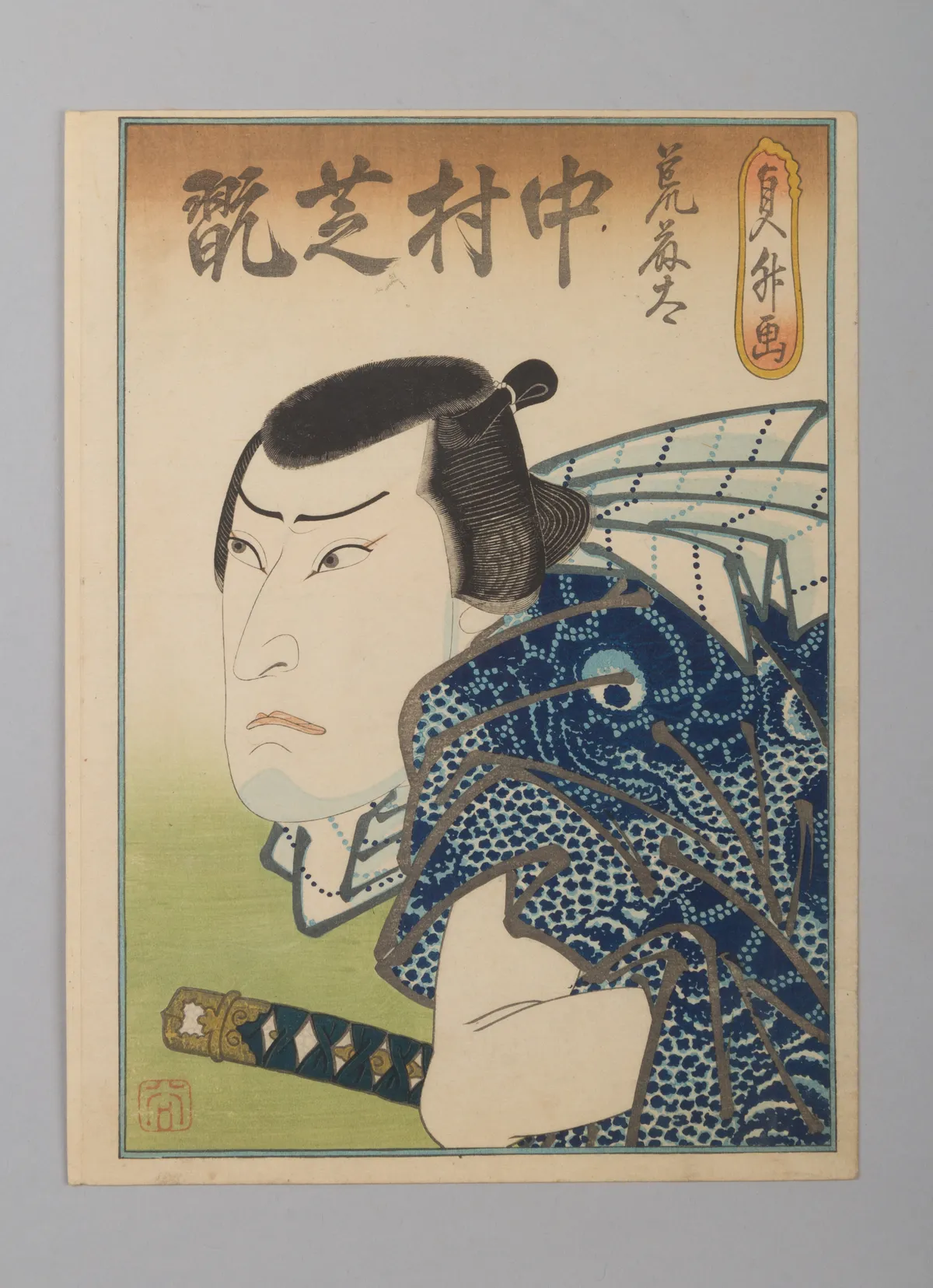
Nakamura Shikan IV as the Fishmonger Aratota
The air is thick with anticipation. In the dim glow of lanterns, Nakamura Shikan IV stands, his presence commanding yet unassuming. He embodies Aratota, the fishmonger, with a grace that defies the ordinary. The audience is hushed, breaths held as if the very air depended upon this moment.
Aratota’s garb is humble, yet the layers speak of tales untold. Each fold whispers of the sea, of early mornings and the scent of fresh catch. His eyes, dark and knowing, peer into the soul of the theatre, challenging the silence to break. The stage is his ocean, and he navigates it with an unseen current, pulling all in his wake.
The wood beneath his feet creaks softly, a testament to countless performances. Shadows play across his face, lending a depth to his character that transcends the painted lines of his visage. The audience, spellbound, leans in as if drawn by an invisible tide.
A distant echo of clattering geta reverberates from the wings, merging with the gentle rustle of silk and cotton. It is the sound of his world, a world where reality and theatre blend seamlessly. Nakamura Shikan IV, with every breath and pause, captures this essence, leaving an indelible mark on those who watch.
Historical Echo
In 1841, Hasegawa Sadamasu captured the essence of kabuki through this woodblock print. Nakamura Shikan IV, a revered actor, was immortalised as Aratota. The print speaks of a time when theatre was life, and actors were both storytellers and legends. This image, a relic of Edo’s vibrant cultural tapestry, continues to echo the spirit of kabuki, where every gesture and glance held profound meaning.