

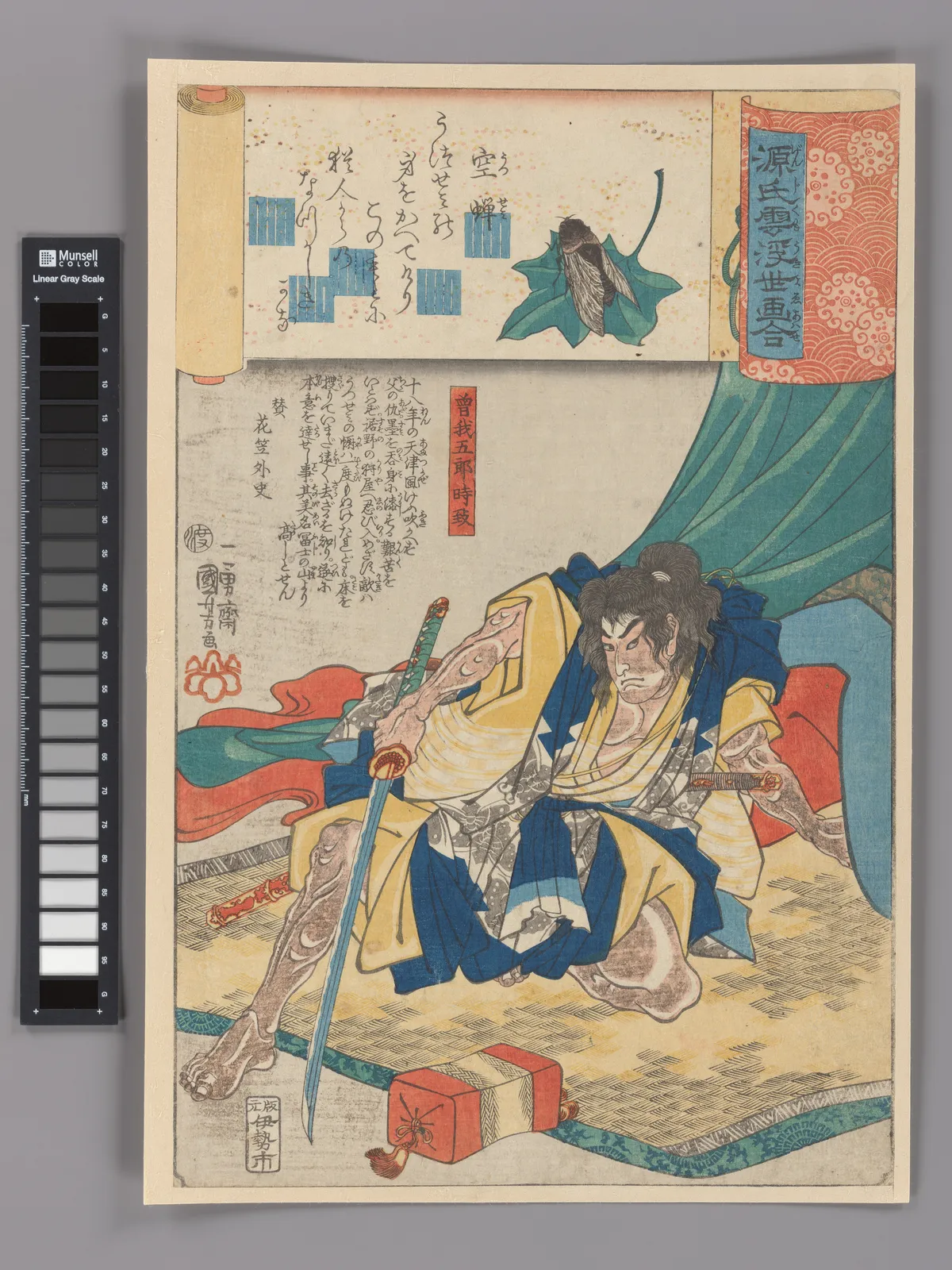
A Molted Cicada Shell
A darkened room flickers with the dim light of an oil lamp. Shadows dance across the walls, tracing the contours of Soga Gorō Tokimune. He stands alone, his armour clinking softly with each breath. The air is thick, humid, carrying the distant echo of cicadas. Their droning song fills the space, wrapping around him like an old, familiar shroud.
He is still, a figure sculpted from the shadows. His eyes, sharp and reflective, trace the patterns of the woodgrain, finding meaning in the simplest of lines. The cicada shell lies abandoned, a fragile casing left behind. It whispers of transformation, of the soul stepping out into the world anew.
The night is heavy with history. The Genji clouds, pale and ethereal, drift across the sky. They recall tales of honour and revenge, of the legendary vendetta that binds Tokimune. His heart beats with the rhythm of the past. A silent vow, etched deep within his core.
Outside, a breeze stirs, rustling the paper screens. The world is asleep, but Tokimune remains awake. He is a man caught between worlds, between the weight of duty and the whisper of freedom. The cicada sings on, a relentless testament to life's fleeting nature. In this moment, he is both present and elsewhere, a warrior in contemplation.
Historical Echo
The story of Soga Gorō Tokimune is one woven into the very fabric of Edo's collective memory. In 1193, the Soga brothers avenged their father's death, an act immortalized in countless tales and prints. This ukiyo-e, by Utagawa Kuniyoshi, captures the essence of that enduring legend. The cicada, a symbol of rebirth and transformation, parallels Tokimune's journey. The Genji clouds, floating above, evoke the ephemeral nature of life and honour. Such prints were not mere art; they were echoes of history, resonating with the soul of a nation.