

A Whispering Pause
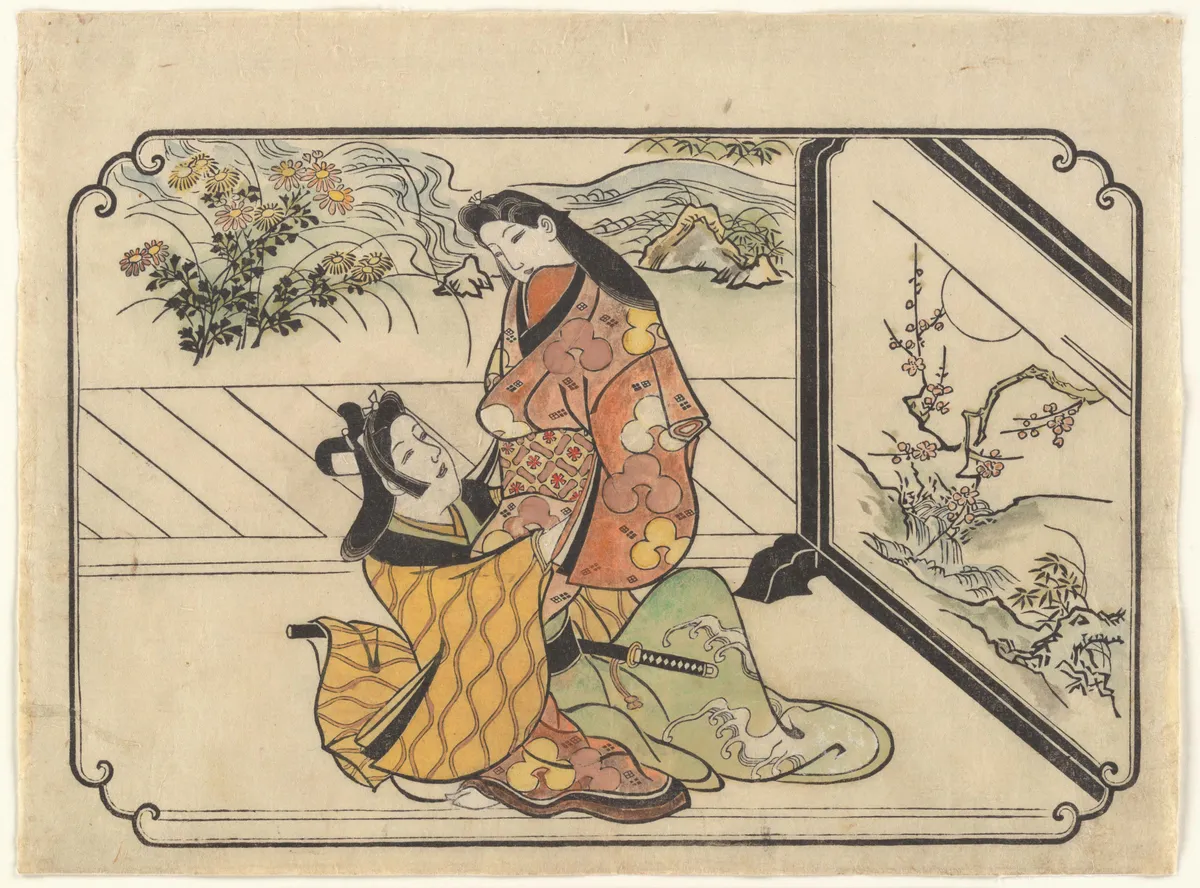
The room breathed in shadows, the light from the lanterns flickering against the painted screen. A courtesan sat, poised and serene, her kimono a cascade of silk and embroidery. Beside her, a young man, a wakashu, knelt in quiet reverence. The air between them shimmered, heavy with unspoken words and the faint scent of incense curling like a wisp through the room.
His eyes traced the lines of her form, following the curve of her hair ornaments, the intricacy of her garments. Her gaze, however, remained distant, lost in the depths of another world. The screen beside them, ornate and detailed, depicted a scene of distant mountains and serene waters, a world apart yet so near.
Outside, the night murmured, the city beyond the paper walls alive with its own stories. Yet here, in this intimate space, time seemed to pause. The courtesan's fan whispered open, a brief sigh against the silence. The young man shifted, the faint rustle of fabric barely disturbing the stillness.
In the delicate balance of the moment, the past and future melted away, leaving only the present, a fragile, fleeting breath of life between the two figures. The courtesan's eyes flickered, returning to the room, to the young man beside her. A soft smile played upon her lips, a promise of stories yet untold.
Historical Echo
In the late 17th century, the world of the ukiyo-e was a vibrant tapestry of life, colour, and transient beauty. Hishikawa Moronobu, an influential figure in the early days of ukiyo-e, captured the elegance and complexity of Edo's pleasure quarters. The courtesan and her wakashu companion embody the delicate dance of relationships in a society of strict hierarchies and fleeting pleasures. Through his work, Moronobu offers a glimpse into the intimate, often hidden corners of Edo life, where silence and gesture speak volumes.