

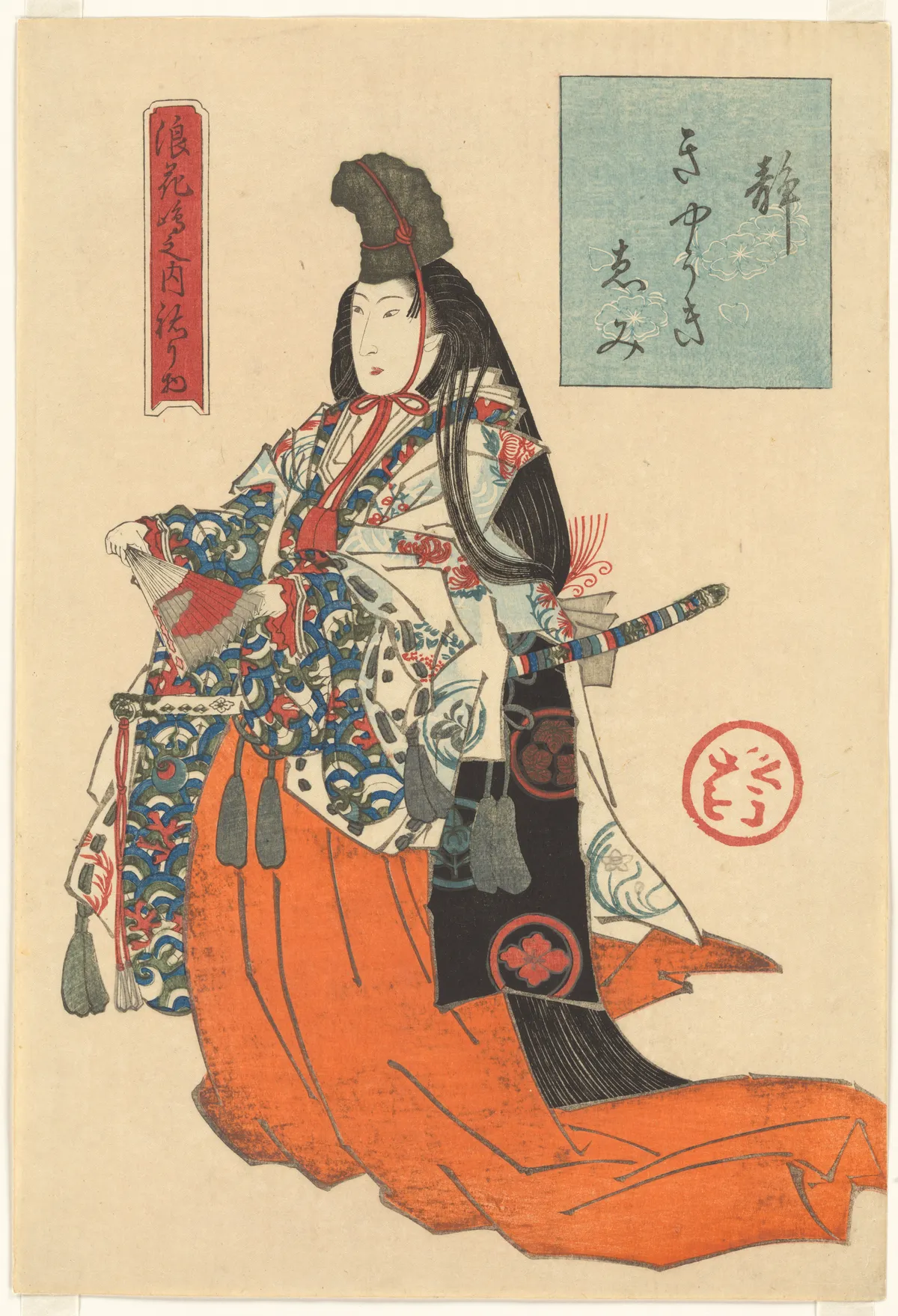
The Quiet Parade
The room is dim, lit only by the flickering glow of paper lanterns. Emi stands, her silhouette a delicate shadow against the shoji screens. She embodies Shizuka Gozen tonight, the tragic beauty of old tales. Her kimono whispers as she moves, a cascade of silks in hues of autumn leaves and twilight skies.
The air is thick with incense, carrying the sweet, cloying scent of sandalwood. Outside, the distant murmur of Osaka's Shimanouchi District filters in, a world of laughter and clinking cups. But here, in this moment, it is silent. The courtesan's eyes, dark and contemplative, gaze beyond the immediate, seeing something only she understands.
She raises a fan, its ribs creaking softly as she opens it with a graceful flick of her wrist. The fan catches the light, glinting like a secret. As she turns, her movements are slow, deliberate, as if tracing the memory of an ancient dance. Each step is a note, each gesture a chord in an unspoken melody.
The courtesans watch her, their faces half-lit, half-lost in shadow. They are captivated, drawn into the story she weaves with her presence. Emi, as Shizuka, is both here and elsewhere, breathing life into the echoes of history. Her performance is a quiet rebellion against the passage of time, a moment suspended between the past and the now.
Historical Echo
In the 1830s, the Shimanouchi District was a vibrant centre of entertainment in Osaka. It was known for its parades, where courtesans would don elaborate costumes, embodying figures from history and legend. Emi, portraying Shizuka Gozen, echoes the tale of the famous dancer and lover of the warlord Yoshitsune. Her portrayal is more than mimicry; it is a bridge to a time when stories were carried in the folds of silk and the steps of a dance.