

The Silent Stage
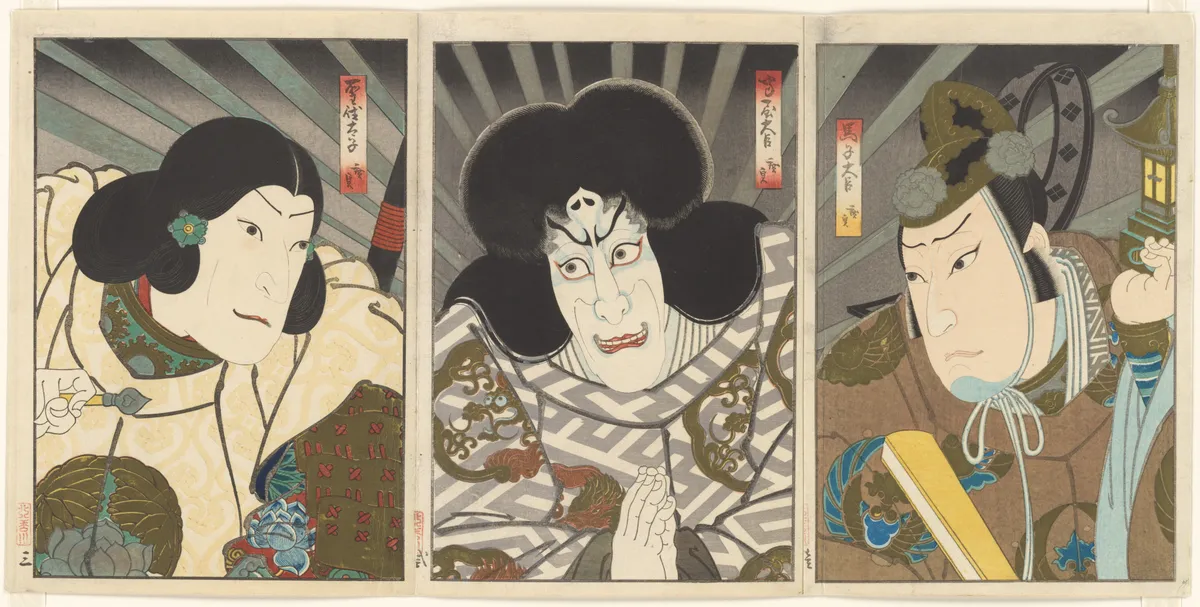
The air is heavy with anticipation. Mimasu Daigorō IV stands as Umako Daijin, his robes whispering with each movement. The lantern light flickers across his face, casting long shadows. Ichikawa Ebizō V, in the centre, embodies Umaya Daijin. His gaze is firm, as if he could command the very air around him. The scent of incense lingers, a reminder of ancient traditions.
Jitsukawa Ensaburō, as Prince Shōtoku, leans slightly forward. His ornate costume rustles like leaves in the wind. Behind them, the wooden stage creaks softly, a living entity beneath their feet. The audience holds its breath, entranced by the silent drama unfolding.
Each actor's expression tells a tale. Mimasu's resolute demeanour hints at hidden plots. Ebizō's eyes convey a mix of authority and vulnerability. Ensaburō's serene presence suggests wisdom beyond his years. The colours of their costumes are vibrant, yet softened by the dim glow of the lamps.
Time seems suspended, the weight of history palpable in the room. The actors, like ghosts, bring the past to life. Their performances echo with the voices of those who walked these halls long ago.
Historical Echo
In 1849, the ukiyo-e artist Gosōtei Hirosada captured a moment in time. He immortalised the essence of kabuki theatre through the visages of Mimasu Daigorō IV, Ichikawa Ebizō V, and Jitsukawa Ensaburō. Each actor represented not just a character, but a lineage of performers, carrying the torch of tradition.
Kabuki, a world of masks and mirrors, thrived on these portrayals. The print serves as a testament to the enduring allure of the stage. It whispers of a Japan where art and life were deeply intertwined, where actors were both revered and enigmatic. Even now, the echoes of their performances linger, inviting us to listen.