

A Glimpse of Quiet
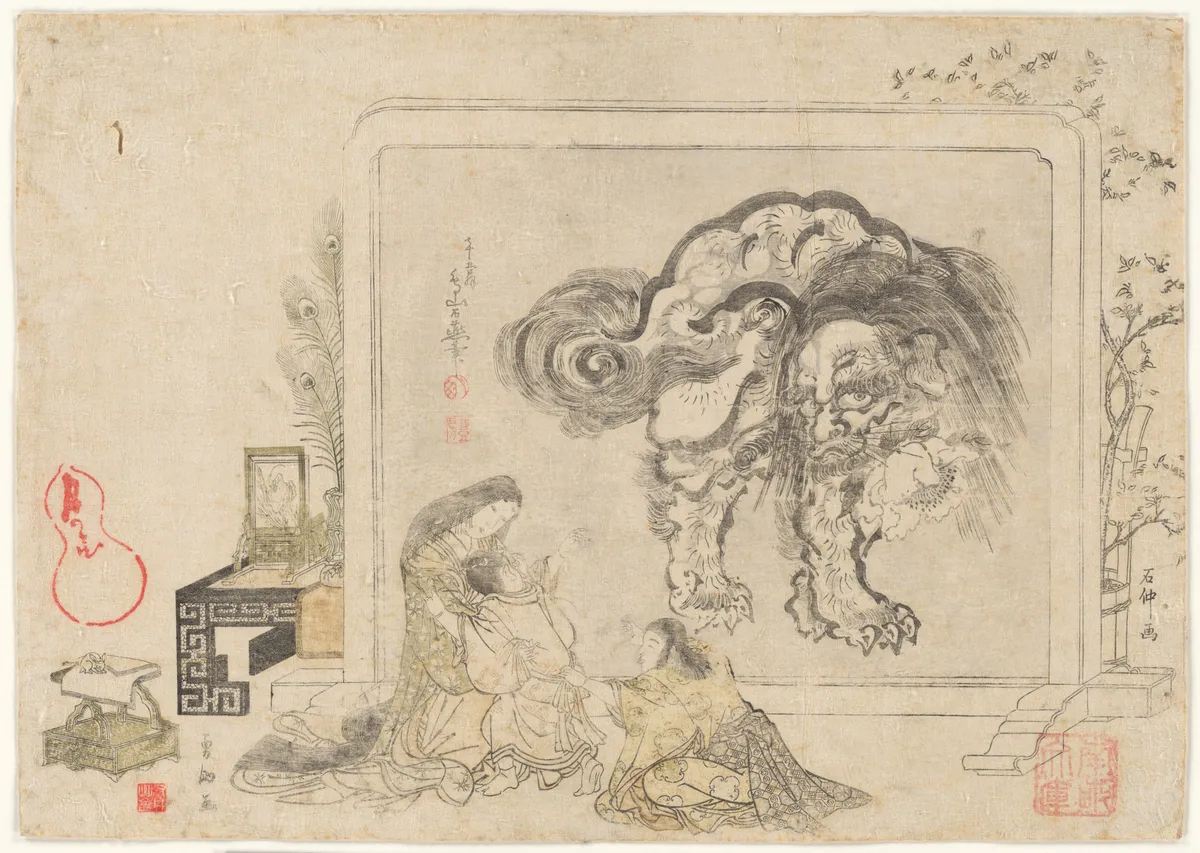
The room is hushed. A mother kneels on the tatami, her kimono whispering against the floor. Her children gather close, their eyes wide with curiosity. Before them rises a freestanding screen, its surface alive with the fierce visage of a Chinese lion. The lion's eyes glint with a strange life, as if watching them from another realm.
The air is warm and still, carrying the faint scent of incense. Shadows dance across the room, cast by the flickering candlelight. The mother’s gaze is gentle, her hand resting lightly on one child’s shoulder. She breathes in the moment, feeling the quiet weight of her role.
Her children are entranced by the lion, its painted fur bristling with imagined power. They lean closer, their small hands reaching out to touch the silk screen. The lion remains silent, a guardian from a distant land.
In the dim light, the screen’s colours seem to shift. Gold and black weave through the lion’s mane, echoing tales of far-off places. The children’s voices are soft, their laughter a delicate thread in the evening air.
The mother listens, her thoughts drifting to her own childhood. She remembers similar evenings, the warmth of family, the stories hidden within painted worlds. Her heart feels full, a quiet echo of those past comforts.
Historical Echo
Kitagawa Utamaro's print captures a tender domestic scene. In the Edo period, such screens were both decorative and functional, often depicting exotic animals and landscapes. The Chinese lion, or shishi, symbolised protection and strength, a fitting presence in a family home. Utamaro's work is known for its delicate portrayal of women and children, a window into the intimate moments of everyday life in 18th-century Japan.