

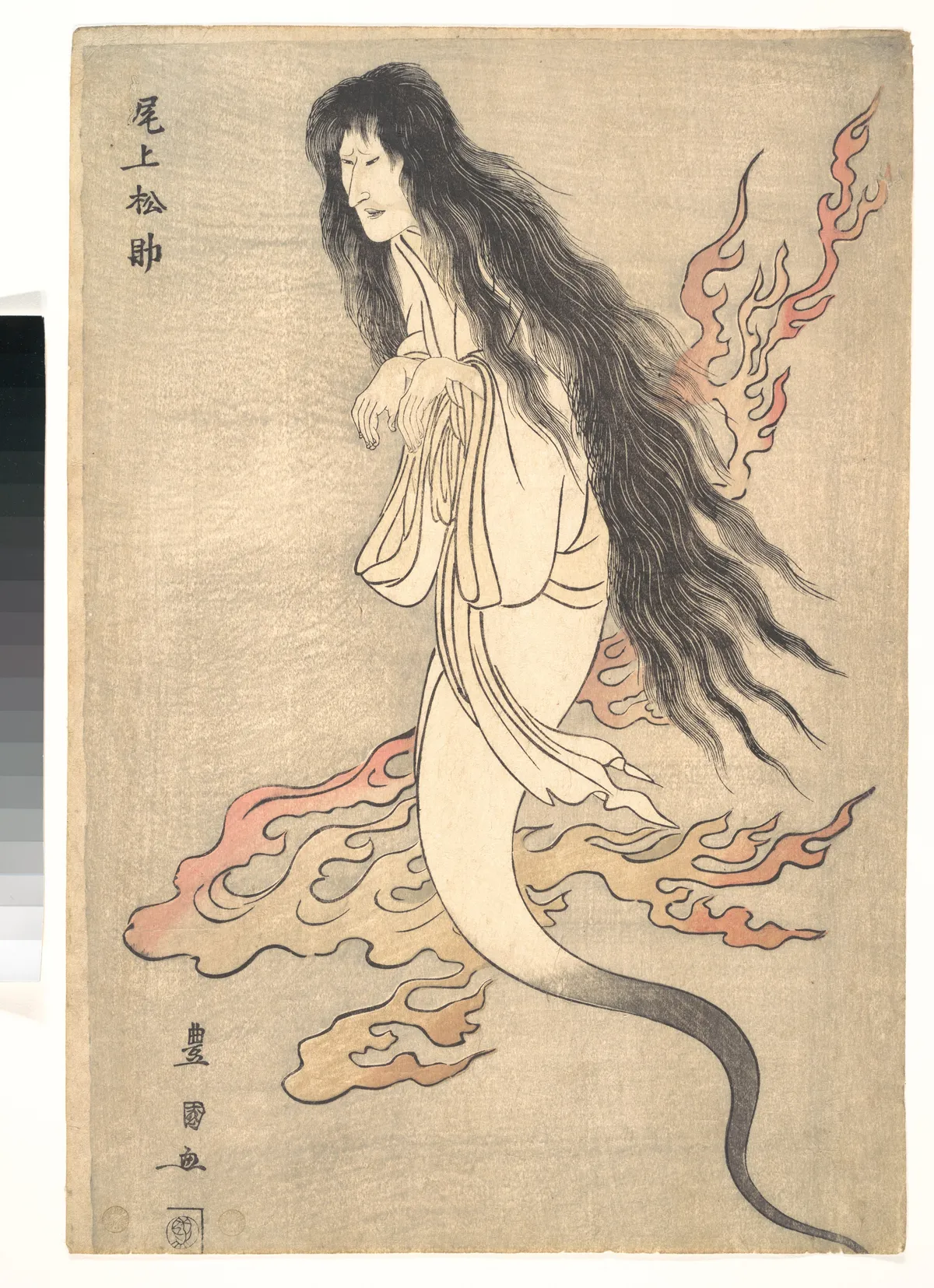
The Silent Wail
The lantern light flickered, casting erratic shadows. Onoe Matsusuke stood transformed, his visage twisted with sorrow and vengeance. His robe, heavy and damp, clung to him like the cloying past. Before him, a stage, but not just any stage. This was the haunted realm of Yotsuya.
Oiwa's ghost lingered here, in the air thick with incense and whispers. Her tale, a macabre dance of betrayal and poison. The audience held their breath, caught between the world of the living and the spectral. Matsusuke's eyes, hollow yet fierce, captured her torment. A gentle breeze rustled, lifting the edge of his kimono, as if Oiwa herself reached out from beyond.
The sound of footsteps, soft and deliberate, echoed through the theatre. Each step a reminder of her husband's treachery, each pause a testament to her suffering. The air grew colder. Matsusuke's voice, a chilling lament, wove through the silence. The scent of chrysanthemums, bitter and sweet, mingled with the musty wood of the stage.
Somewhere, a single tear fell, unseen. It was not rain, but the mourning of a wronged spirit. Matsusuke, the vessel of her wrath, moved with deliberate grace, a marionette of fate and fury. The audience shivered, skin prickling with the spectral presence that seemed almost tangible.
The night deepened, shadows lengthening. The ghost of Oiwa, both ethereal and undeniable, had made her mark. The tale of Yotsuya, a tapestry of horror and tragedy, echoed long after the final curtain fell.
Historical Echo
In 1812, Utagawa Toyokuni I captured the spectral essence of Onoe Matsusuke portraying Oiwa's ghost. This print reflects the Edo fascination with kaidan, tales of the supernatural. The Yotsuya Kaidan story, rooted in betrayal and revenge, resonated deeply within Japanese culture. Matsusuke, a renowned kabuki actor, brought Oiwa's tragic tale to life, intertwining theatre and ghostly lore. The ukiyo-e immortalises this haunting performance, a testament to the enduring power of storytelling in the Edo period.