

The Pale Lantern
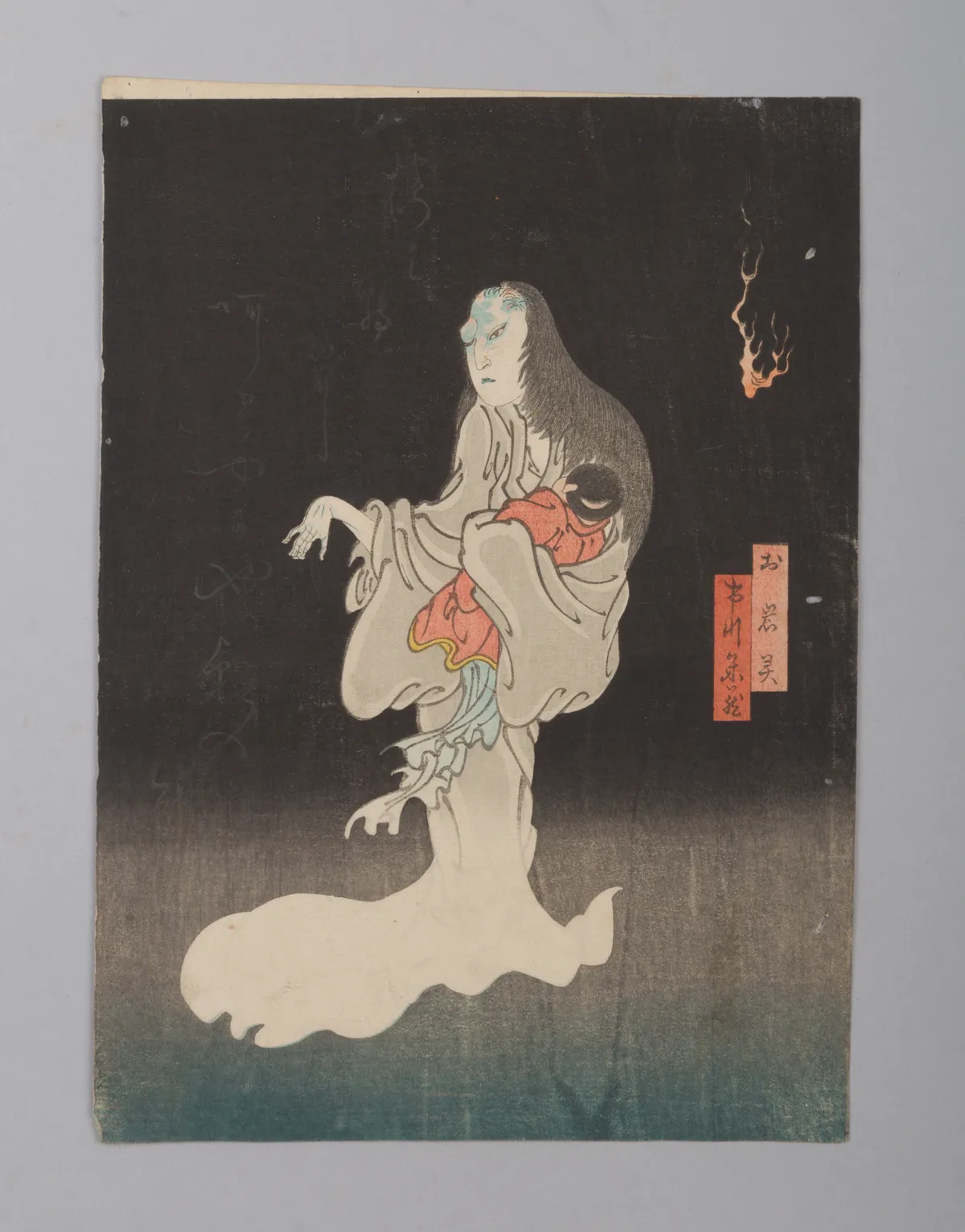
The dim glow of a lantern flickered. Shadows danced on the walls. The air was thick, heavy with incense and secrets. A figure emerged, ghostly pale, eyes wide, filled with sorrow. It was Oiwa, the betrayed spirit, her hair wild, like tangled seaweed.
The room was silent, save for the rustle of silk robes. Ichikawa Yonezō, the actor, embodied the spirit, every movement deliberate, every gesture haunted. The crowd watched, breath held, as if the ghost might slip from the stage into their midst.
A faint breeze stirred the paper screens. It carried whispers of betrayal, of poison, of vengeance sought beyond the grave. The tale of Oiwa was well-known, her tragic story woven into the fabric of Edo's nights. Yet, in this moment, she was alive, her presence palpable.
The lantern's light flickered again, casting eerie reflections on Yonezō's painted face. His eyes met those of the audience, an unspoken promise of the spectral tale yet to unfold. The theatre breathed as one, caught in the ghost's lingering embrace.
Historical Echo
In 1865, Enjaku 猿雀 captured the spectral essence of Oiwa in his ukiyo-e. The print immortalises Ichikawa Yonezō's performance, a renowned Kabuki actor of his time. Oiwa's tale, rooted in betrayal and vengeance, was a beloved ghost story, chilling audiences with its portrayal of the supernatural. This print, with its haunting details, remains a testament to the enduring allure of Kabuki theatre and its spectral narratives.