

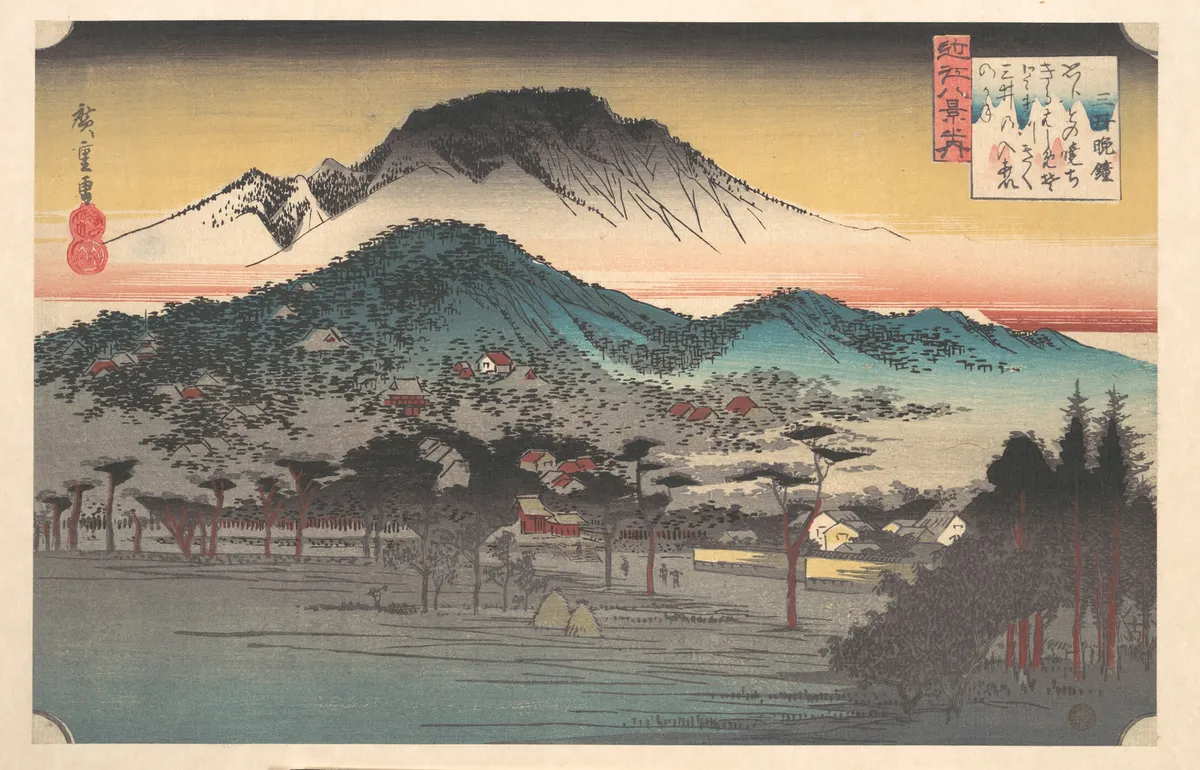
Vesper Bell at Mii Temple, Lake Biwa
The air is heavy with the scent of pine. Evening shadows stretch across the temple grounds. A bell hangs solemnly in the temple's belfry, poised to break the silence. Below, Lake Biwa mirrors the fading light, capturing the last hues of day.
A monk stands by the bell, robes rustling in the gentle breeze. His hand reaches for the rope, fingers brushing the worn fibres. He pauses, listening to the quiet murmur of the lake, the whisper of leaves. The bell tolls, a deep resonant note that rolls across the water, stirring the stillness.
Echoes ripple like waves, mingling with the twilight air. The sound is a call, a reminder of the day's end. Fishermen on distant boats pause, heads bowed in silent reverence. The village beyond the trees grows still, as if holding its breath.
As the bell's voice fades, night descends, wrapping the temple in its shrouded embrace. Stars begin to flicker, reflections dancing on the lake's surface. The monk turns away, footsteps soft on the temple's path. The vesper bell has spoken. Darkness settles, bringing with it the promise of a new dawn.
Historical Echo
In the Edo period, the Mii Temple was a place of quiet reflection. Hiroshige's print captures this tranquil moment, where nature and humanity coexist in harmony. The vesper bell marks not just the end of the day, but a transition, a reminder of life's cyclical nature. Such scenes offered solace and contemplation, a brief pause in the relentless march of time.