

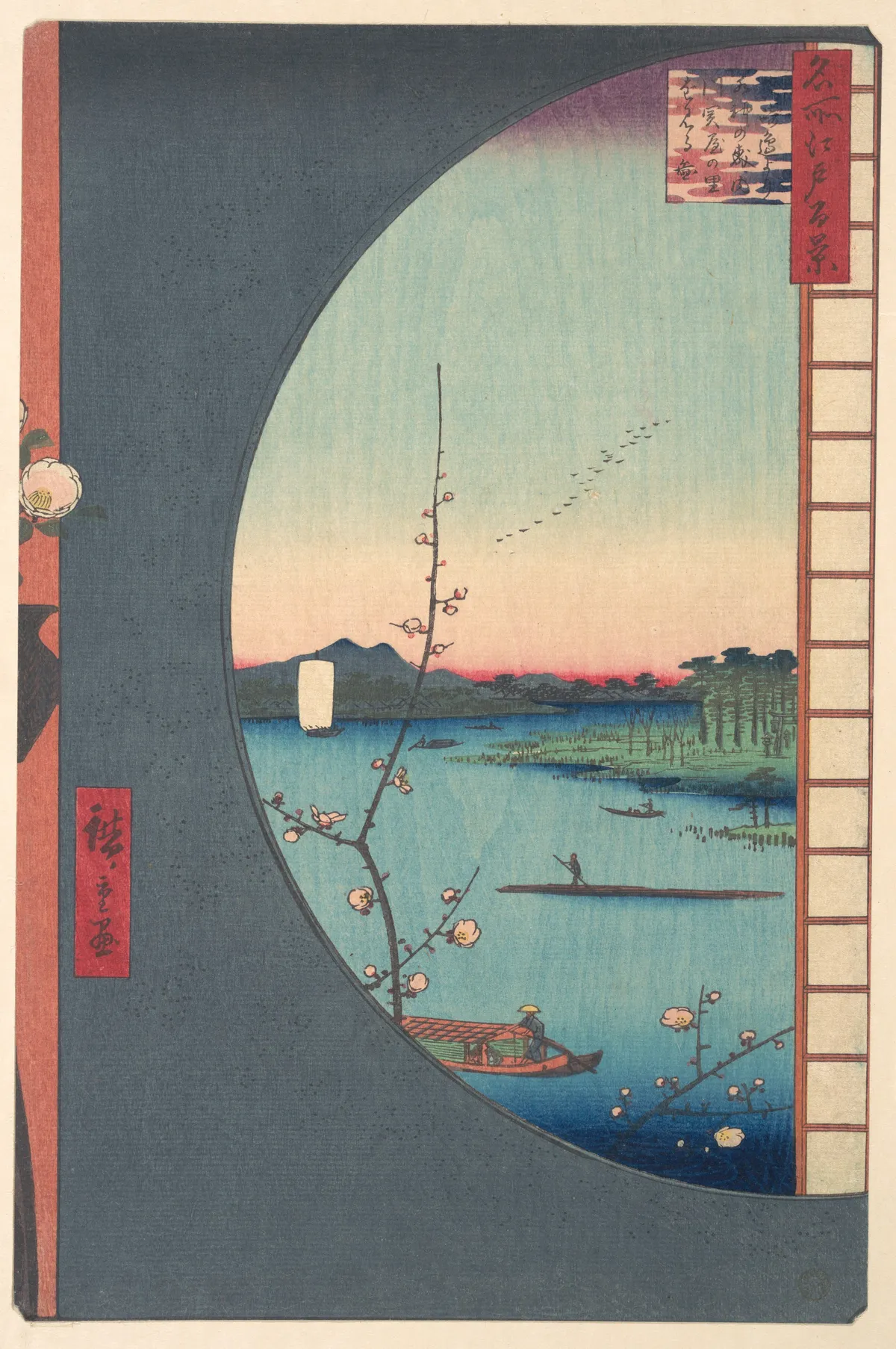
The Suijin Temple Grove
The air hangs heavy with the scent of damp earth. Trees whisper in the wind, their leaves murmuring secrets to the river below. A small boat drifts silently on the Uchikawa, its lone passenger lost in thought, the oar barely disturbing the water's surface. The Suijin Temple stands solemnly among the trees, its presence both grounding and ethereal.
The village of Sekiya lies quiet. Smoke rises in thin tendrils from the thatched roofs, vanishing into the evening sky. A lone figure walks along the bank, footsteps muffled by the soft ground. Lanterns flicker to life as dusk settles, their warm glow dancing on the river's gentle waves.
The scene feels timeless, as if the world pauses to breathe with the rhythm of the leaves, the river, the quiet village. Shadows grow long as night approaches, wrapping the grove in a cloak of deepening blue. The silence is profound yet comforting, a reminder of the eternal dance between nature and the human heart.
Historical Echo
In the late Edo period, Utagawa Hiroshige captured the soul of Japan's landscapes. His prints, like 'The Suijin Temple Grove, Uchikawa, and the Village of Sekiya,' transform ordinary scenes into windows of contemplation. The Suijin Temple, a sacred site, whispers stories of water deities, while the Uchikawa flows with ancient tales. Hiroshige's art invites the viewer to step into a moment suspended in time, where the ordinary and the eternal coalesce.