

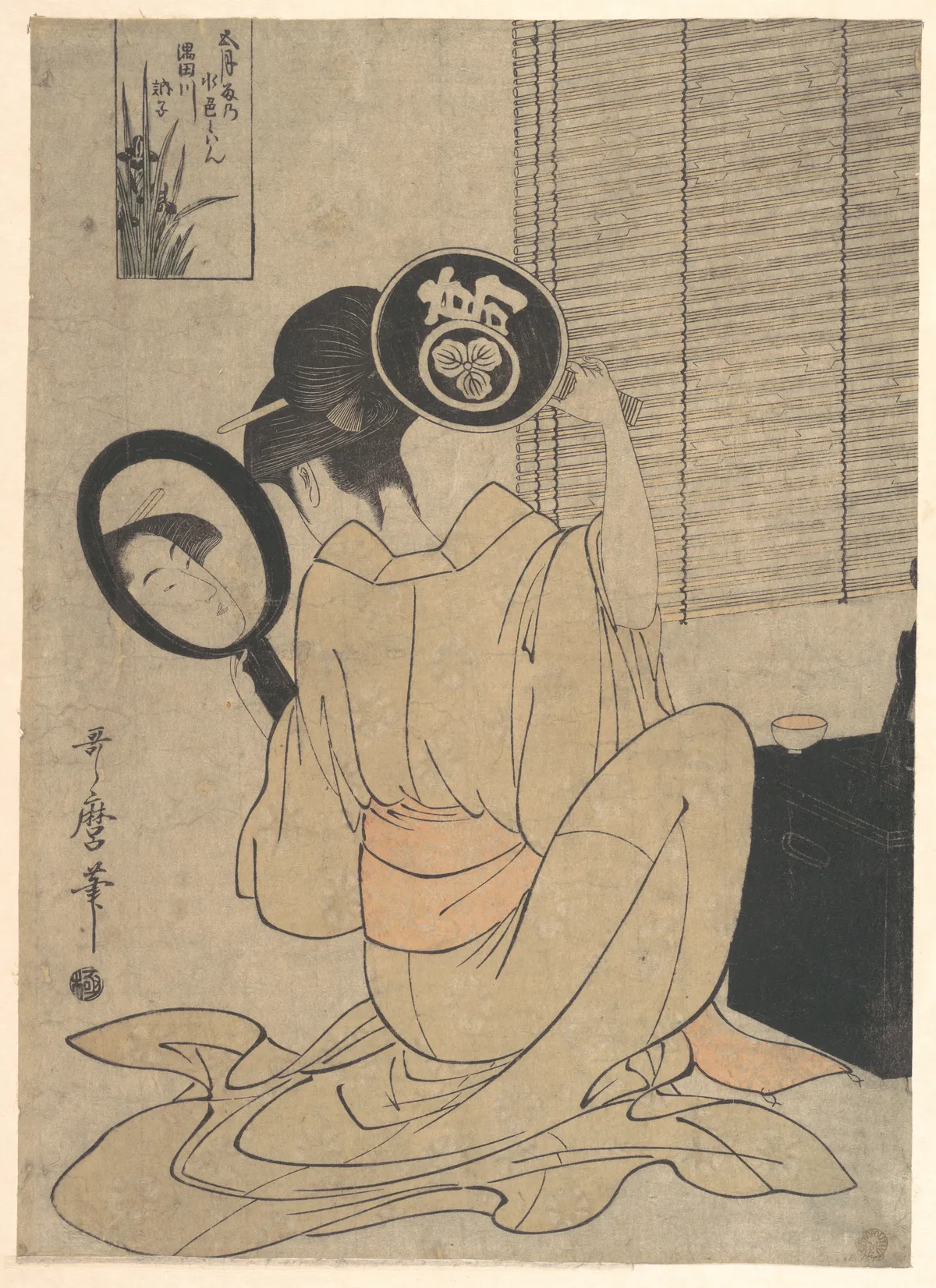
In the Mirror's Quiet Reflection
Takashima Ohisa leaned closer to the mirror. Her fingers deftly adjusted the pins in her hair. The room was silent, save for the soft rustling of silk and the faint creak of wood. The light from a nearby lantern flickered, casting shadows across her face.
In her hands, two mirrors caught the glow, reflecting her image back and forth. Ohisa's eyes, calm and focused, moved with the precision of a practiced artist. Each twist of hair was deliberate, each glance measured. The air was heavy with the scent of camellia oil, lingering like a whisper.
Outside, a gentle breeze rustled through the bamboo, a quiet murmur against the paper walls. The world beyond was distant, a shadowy presence held at bay by the warm cocoon of her chamber. Ohisa's focus remained unbroken, her hands moving with a grace only time could teach.
The mirrors captured more than her coiffure—they held a fragment of her world. A world where beauty was an art form, a silent language spoken through brushstrokes and reflections. For a moment, time seemed to pause, held within the delicate balance of glass and light.
Historical Echo
Takashima Ohisa was a renowned beauty of her time, immortalised by Kitagawa Utamaro in his intricate woodblock prints. Utamaro's work often explored the intimate moments of women's lives, capturing the elegance and grace of Edo-period beauties. His attention to detail and ability to convey emotion through subtle gestures made his prints timeless. This scene, depicting Ohisa with her mirrors, invites us into a private world where the art of appearance was both personal and profound.