

The Silent Prayer
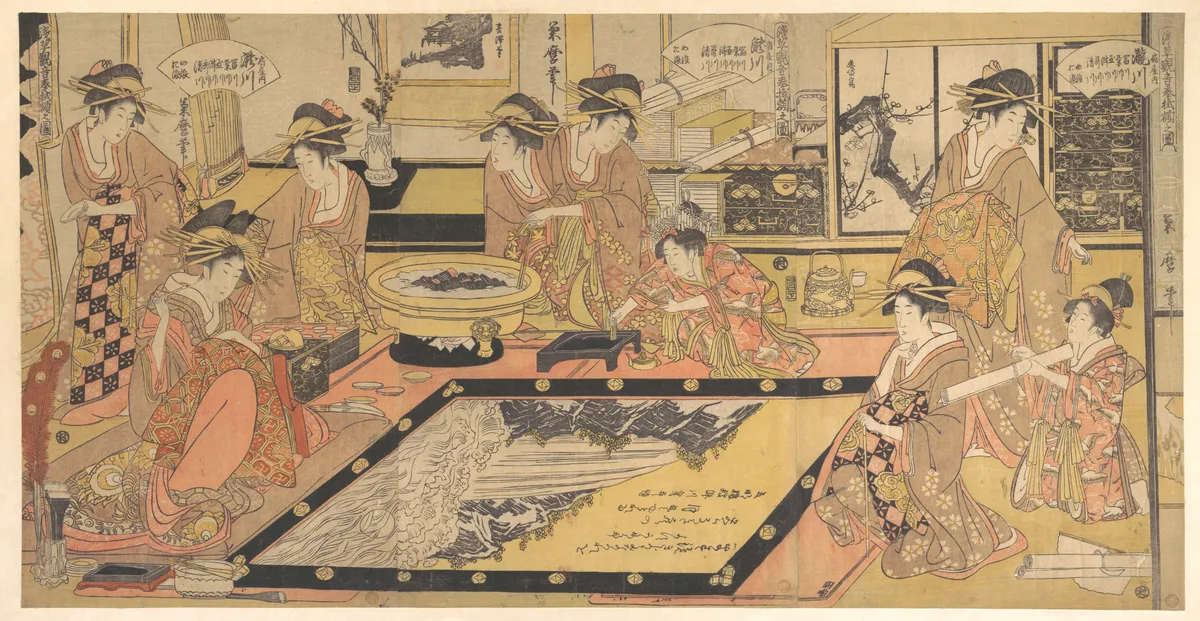
A soft rustle of silk fills the air. Takigawa of the Ōgiya stands poised. Her kimono, heavy with embroidered cranes, whispers as she moves. The lantern light flickers, casting shadows that dance along the wooden floorboards.
Kamuro Menami and Onami, delicate as spring blossoms, follow closely. Their eyes, wide with anticipation, gaze upon the sacred scroll—a votive offering to the Kannon of Asakusa. It rests gently in Takigawa’s hands, a promise of devotion and gratitude.
The evening is still, the temple grounds hushed as if holding its breath. The distant murmur of the city fades, leaving only the sound of footsteps and the soft rustle of robes. The air is thick with incense, the sweet, smoky tendrils winding upwards like prayers.
Behind them, a retinue of courtesans—Tomikawa, Kumegawa, Tamagawa, Tsugawa, Utagawa, and Kiyokawa—stand solemnly. Each dressed in vibrant hues, their kimonos glimmer like the night sky dusted with stars. They carry with them the weight of tradition, the honour of their house, the quiet strength of women who weave their lives into art.
As they approach the altar, the votive scroll is unfurled. The image of Kannon, serene and compassionate, gazes back at them. In this moment, time seems to still. The world outside the temple walls fades to a distant memory. Here, there is only the present, the silent prayer, the whispered hopes carried on the night air.
Historical Echo
In the late Edo period, courtesans held a unique place within the social framework. They were artists, entertainers, and cultural icons. The votive offering to Kannon, the bodhisattva of compassion, reflects a deep-rooted tradition of seeking protection and blessings. Kitagawa Kikumaro captures this ritual with elegance and reverence, immortalising the ephemeral beauty of the ukiyo-e world. The Asakusa Kannon Temple remains a beacon of spiritual solace amidst the bustling city, echoing the past in its tranquil embrace.