

The Silent Transformation
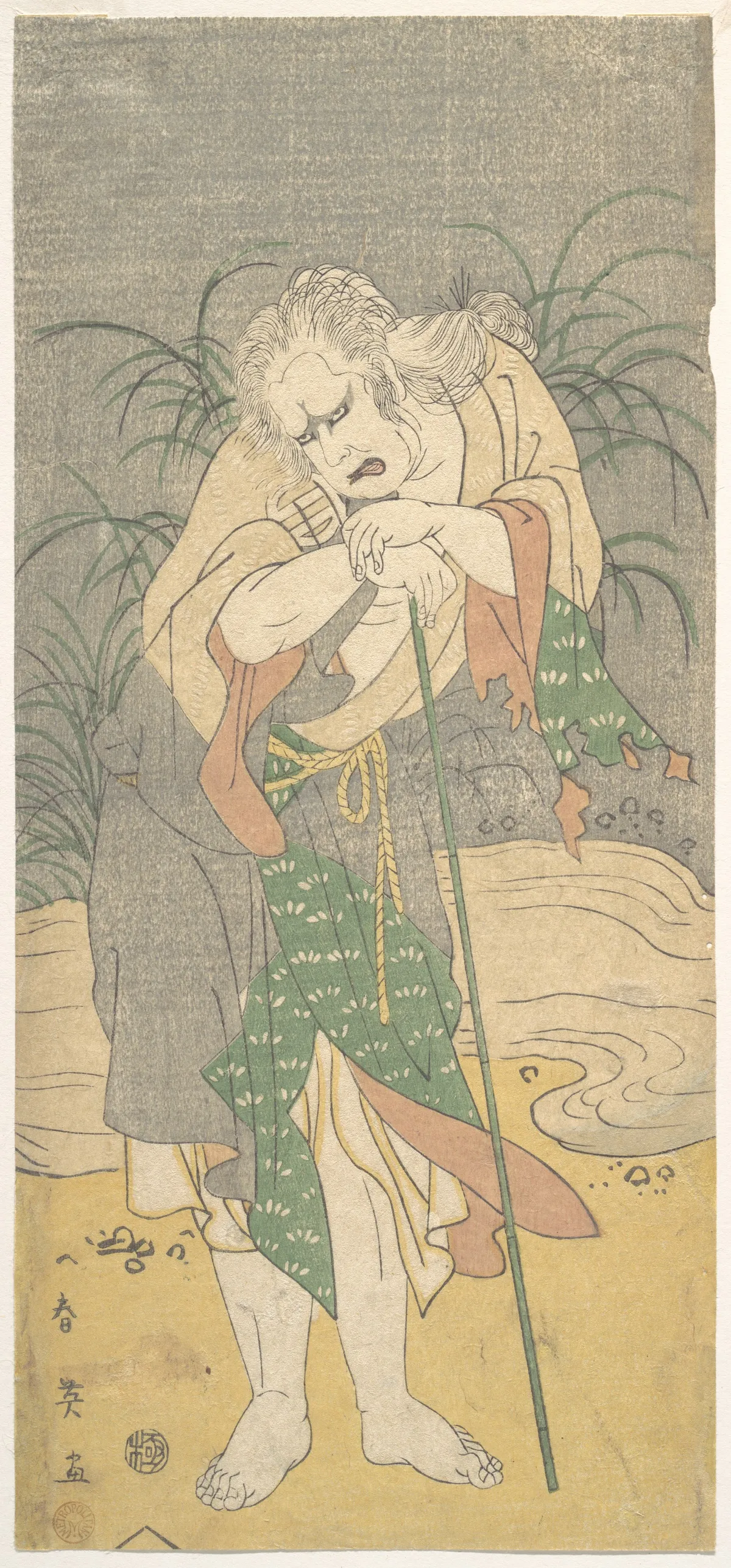
A brittle wind crept through Adachigahara. The moon hung low, casting a pallid light upon the earth. She stood alone, the beggar woman, her tattered robes whispering secrets of old tales. Her frail hands clutched a worn staff, each knuckle a story of its own.
Kataoka Nizaemon VII, in the guise of Kurozuka Babā, moved with a deliberate grace. The stage was silent save for the rustle of fabric and the soft thud of footsteps on wooden boards. Shadows leapt and danced, echoing the legends of the past.
The air was thick with anticipation. The audience, unseen, held their breath. Each heartbeat matched the rhythm of the flickering lanterns. The actor's eyes, hidden beneath the guise of age, glimmered with youthful fire. He embodied the spirit of transformation, the thin line between reality and illusion.
As the scene unfolded, the scent of incense wafted through the theatre, mingling with the dampness of the night. It was a world suspended between history and performance, where the boundaries blurred and the ordinary became extraordinary.
Historical Echo
The depiction of Kataoka Nizaemon VII as Kurozuka Babā captures the essence of Edo theatre. In 1795, the art of transformation was revered, celebrated through the skilled portrayal of characters. This print by Katsukawa Shun'ei immortalises a moment where the mundane meets the mythical. The audience would have been drawn into the narrative, a testament to the power of the actor and the enduring allure of the tale from Adachigahara.