

Hakone's Quiet Breath
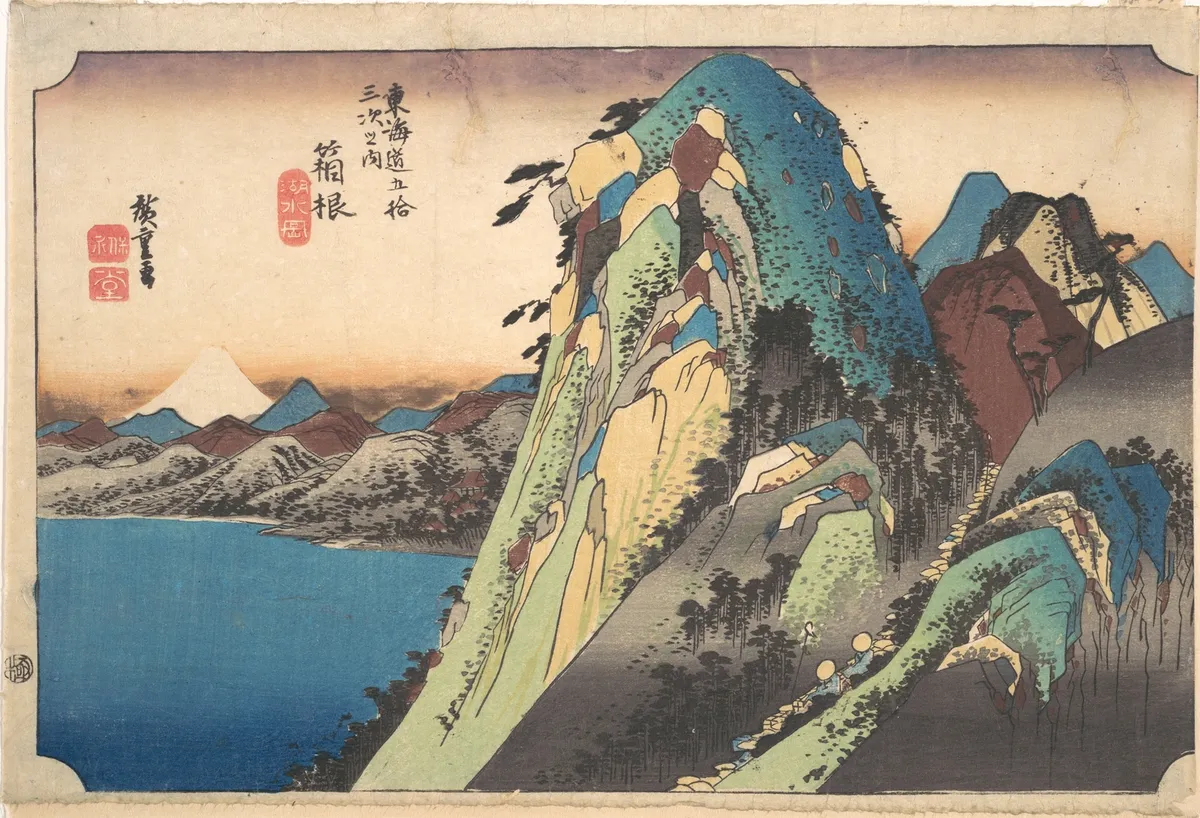
The mist clung to the mountains like a shroud. It drifted lazily over the lake, blurring the lines between sky and water. Pine needles glistened with dew, their scent mingling with the cold, crisp air. A lone boatman steered his vessel silently across the still water, each stroke of his oar a whisper in the dawn.
Hakone was waking slowly. The echoes of distant travellers' footsteps on the mountain paths were almost swallowed by the thickness of the morning fog. The world felt suspended in time, every motion softened, every sound muted.
In the distance, the silhouette of a torii gate stood against the pale light, an ancient guardian watching over the tranquil landscape. It seemed to pulse with the slow, rhythmic breath of the world around it.
A gentle wind stirred, rustling the pines and lifting the veil of mist briefly. It revealed the snow-capped peaks in the distance, majestic and timeless. The boatman paused, gazing at the horizon, as if seeking something beyond the confines of the earthly realm.
The scene whispered of stories untold, secrets hidden within the folds of the mountains. The air was thick with the weight of history, with memories of travellers who had passed this way long ago. Yet, in this moment, all was still. Only the quiet breath of Hakone remained, echoing softly through the ages.
Historical Echo
In the early 19th century, Hakone was a pivotal checkpoint on the Tōkaidō road, a major route for travellers and merchants. Hiroshige captured its serene beauty and the ethereal quality of its landscape. The print reflects the tranquillity and timelessness of Hakone, a place where nature's breath could be felt in every rustle of the leaves and ripple of the water.