

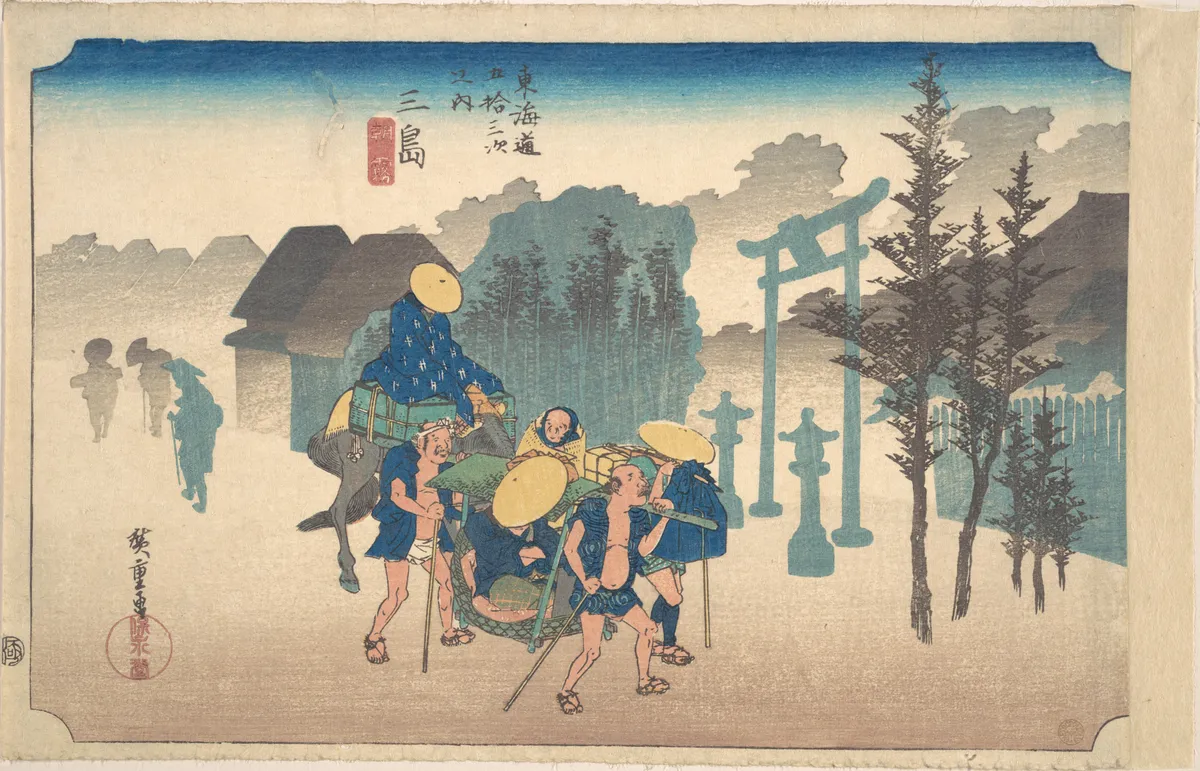
Morning Mist at Mishima
The air is thick with silence. Morning mist curls around the path like a living thing. Each step is muffled, absorbed by the damp earth. A lone traveller walks, his figure subdued by the fog's embrace. Tall trees flank him, their trunks fading into the grey void above.
The town of Mishima still sleeps. Yet, the traveller moves with purpose, the weight of his pack heavy against his back. He pauses, listens to the quiet. The only sound is the distant call of a bird, lost somewhere in the haze.
The path stretches ahead, a winding line through the mist. It whispers of journeys yet to be taken, of destinations unknown. The traveller adjusts his hat, beads of moisture clinging to its brim. He steps forward, swallowed again by the morning's gentle shroud.
Historical Echo
In the early 1830s, Hiroshige captured the essence of Japan's Tōkaidō road. Mishima, a post station along this route, comes alive in his depiction. The morning mist in "Mishima, Asa Kiri" evokes a sense of solitude and transience. Travellers, much like the one in the print, were a common sight. They moved between Edo and Kyoto, their lives woven into the fabric of the land. Hiroshige's work remains a testament to the quiet beauty of these landscapes, forever shrouded in mist and memory.