

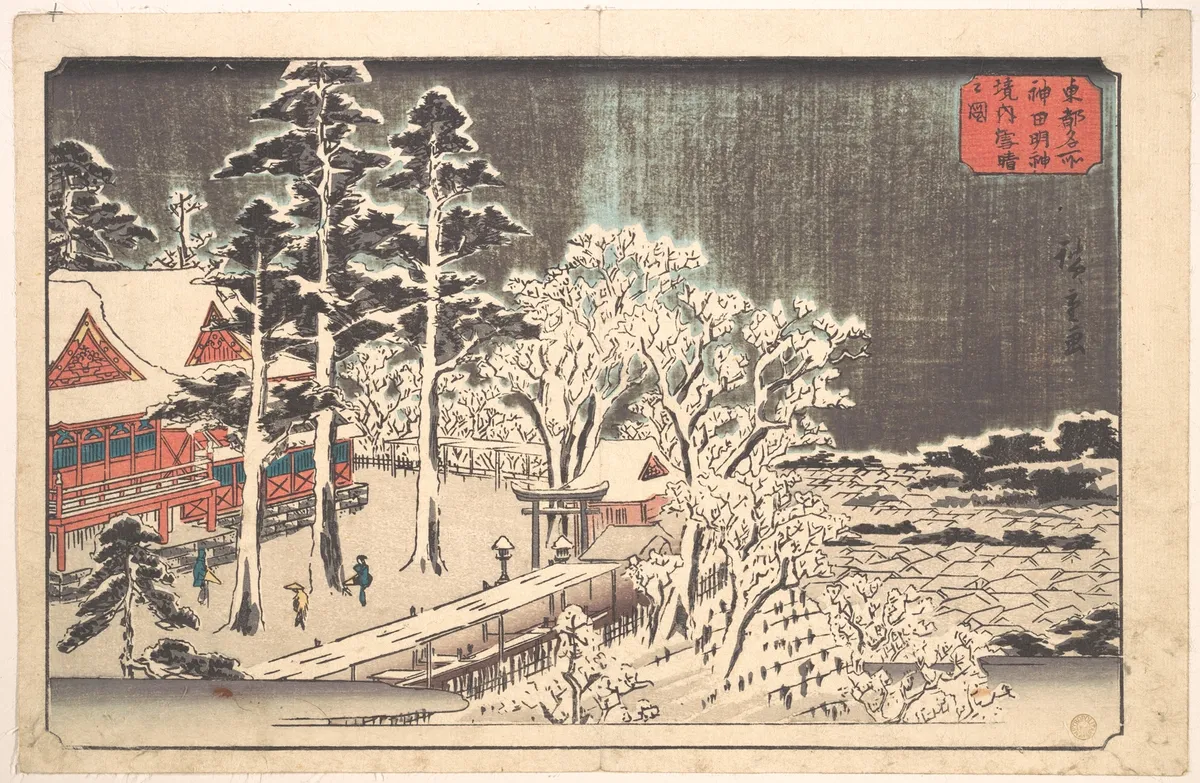
Clear Weather after Snow
The air feels crisp, biting at exposed skin. A gentle breeze carries the scent of pine, mingling with the fresh, clean smell of snow. The Kanda Myōjin Shrine stands quietly, its red-lacquered beams glistening under the morning sun. Snow blankets the precincts, softening the edges of the stone pathways. There is silence, profound and unbroken, except for the occasional caw of a crow or the soft crunch of snow under a lone traveller's feet.
A few visitors make their way slowly through the shrine grounds. Their breath hangs in the air like fleeting ghosts. The shrine's guardians, stone foxes, watch with solemn eyes, dusted with a fine layer of white. Overhead, branches heavy with snow sway gently, casting intricate shadows on the ground.
Sunlight pierces the cloud cover, creating a delicate interplay of light and shadow. The shrine, a place of reverence and tradition, stands resilient amidst the ephemeral beauty of winter. Time seems to still here, held in the quiet embrace of the snow-covered landscape.
Historical Echo
The Kanda Myōjin Shrine, nestled in the heart of Edo, serves as a spiritual anchor for the city's inhabitants. Known for its vibrant festivals and enduring legends, it remains a sanctuary of calm amidst life's tumult. This particular day, marked by the delicate aftermath of snowfall, captures a fleeting moment of serenity. It reminds of the enduring cycle of seasons, where even the most bustling city finds pause. The shrine's history whispers through the crisp air, a testament to the resilience and beauty of tradition amidst change.