

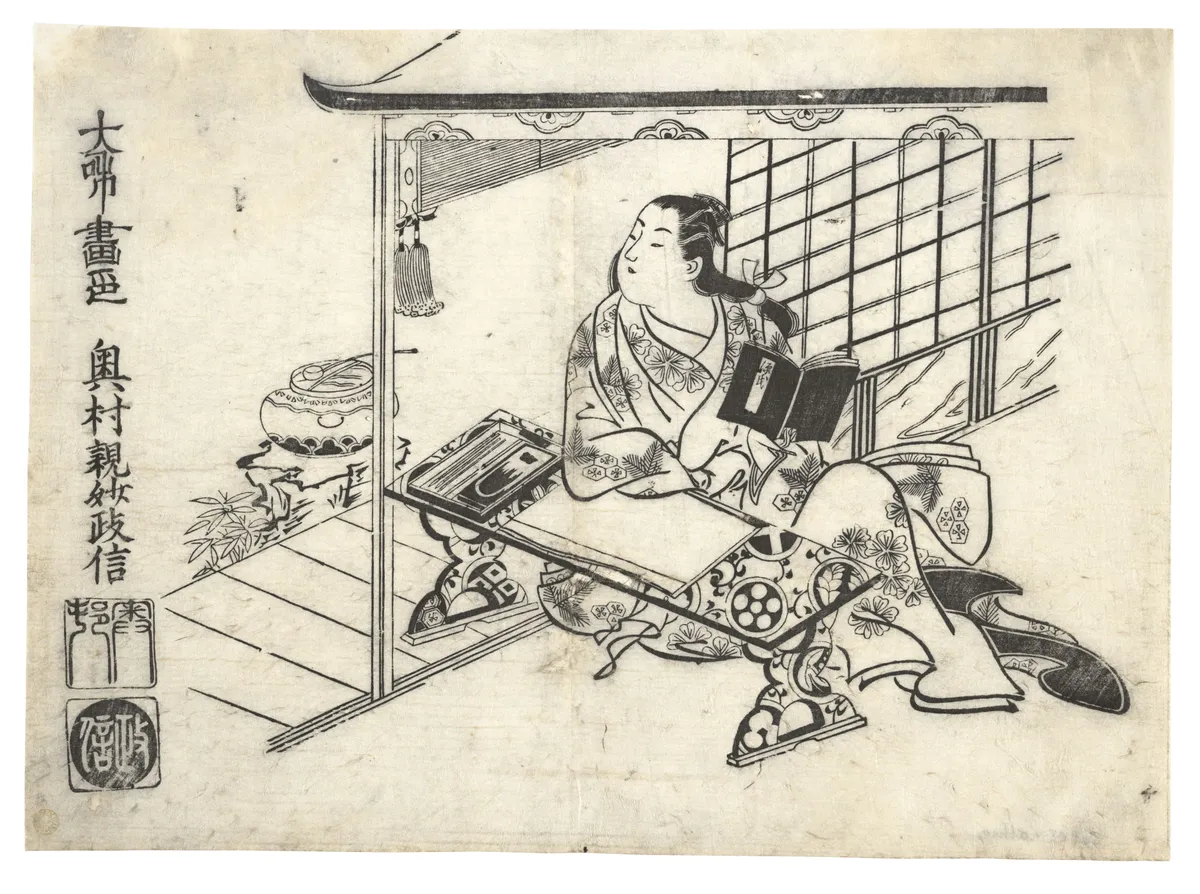
The Desk of Whispers
A candle flickers. Shadows dance upon the paper. The room holds its breath. Murasaki Shikibu sits at her desk, quill poised. Her eyes scan the parchment, as if seeking lost words. The scent of ink mingles with the faint aroma of incense, lingering in the air. Outside, the world is hushed, wrapped in the blanket of night.
She pauses, listening to the silence, to the echoes of distant times. Each stroke of the quill is deliberate, a whisper of history. The paper rustles softly, a gentle protest to the weight of her thoughts. Her kimono rustles as she shifts, the fabric heavy with tradition.
In the dim light, Murasaki's face is serene, yet there is an undercurrent of mischief. Her fingers grip the quill with purpose, her mind weaving tales both profound and playful. The room is her cocoon, a space where reality bends to her will.
Her desk, cluttered with scrolls and brushes, hints at a mind both meticulous and chaotic. A subtle parody unfolds, an echo of her own life, a reflection in ink. The candle sighs, its flame a small beacon in the enveloping darkness.
Historical Echo
In this parody, Okumura Masanobu captures not just the writer, but the spirit of creativity. Murasaki Shikibu, famed for The Tale of Genji, is reimagined with a touch of humour. The Edo period thrived on such playful interpretations, blending reverence with wit. Masanobu's work invites the viewer to ponder the delicate balance between the sacred and the mundane.