

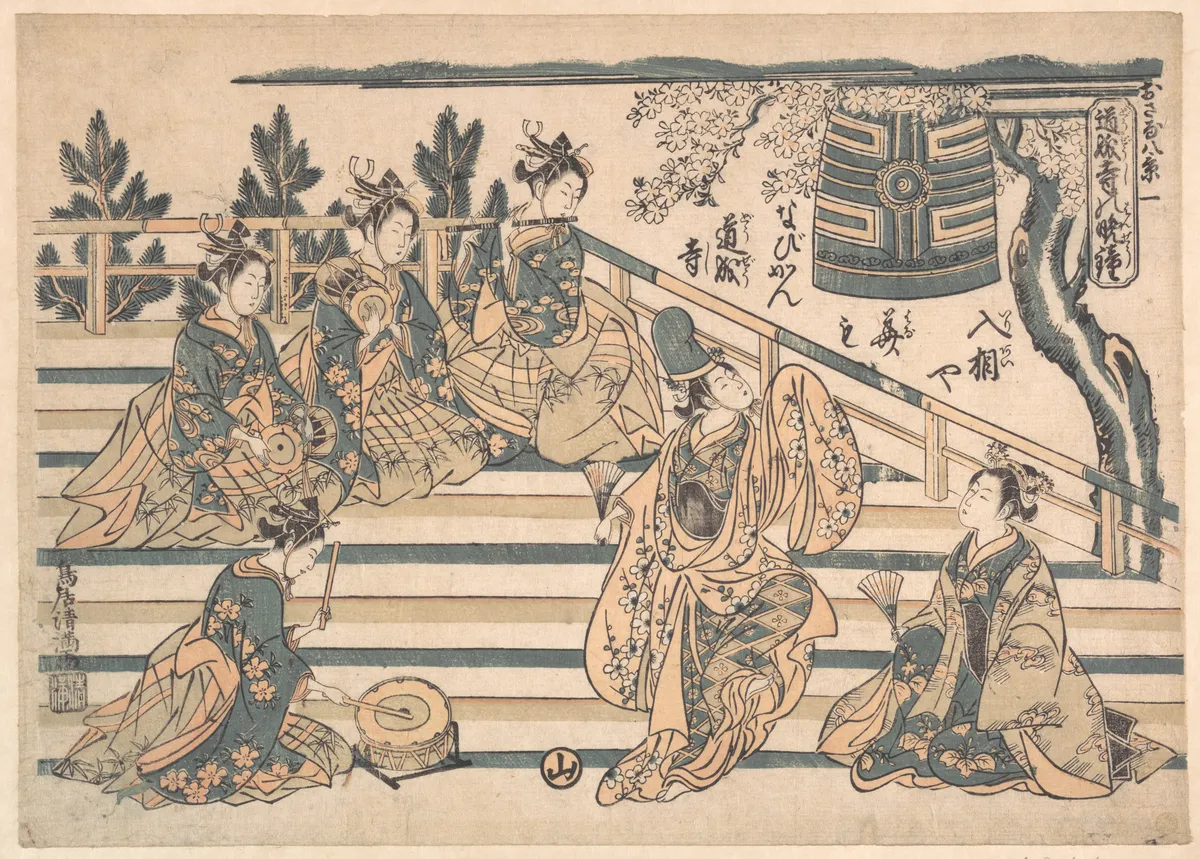
The Curfew at Dōjōji
Beyond the paper screen, a hush falls. The air is thick with anticipation. Wooden beams creak softly under the weight of gathered spectators. Shadows stretch across the stage, where an actor stands poised, his kimono a vivid cascade of colour. His face, painted in bold strokes, is a mask of controlled intensity.
A distant bell tolls the curfew at Dōjōji. Its echo lingers, a ghostly reminder of time slipping away. The actor moves, his feet sliding silently on polished wood. With each gesture, he draws the audience into the tale of passion and haunting.
The smell of incense weaves through the air, mingling with the earthy scent of damp wood. A lantern flickers, casting a dance of light and shadow. Eyes follow the actor, entranced by the unfolding drama.
In the silence, the rustle of silk and the whisper of paper fans are the only sounds. The world outside fades, leaving only the stage and its spellbinding tale.