

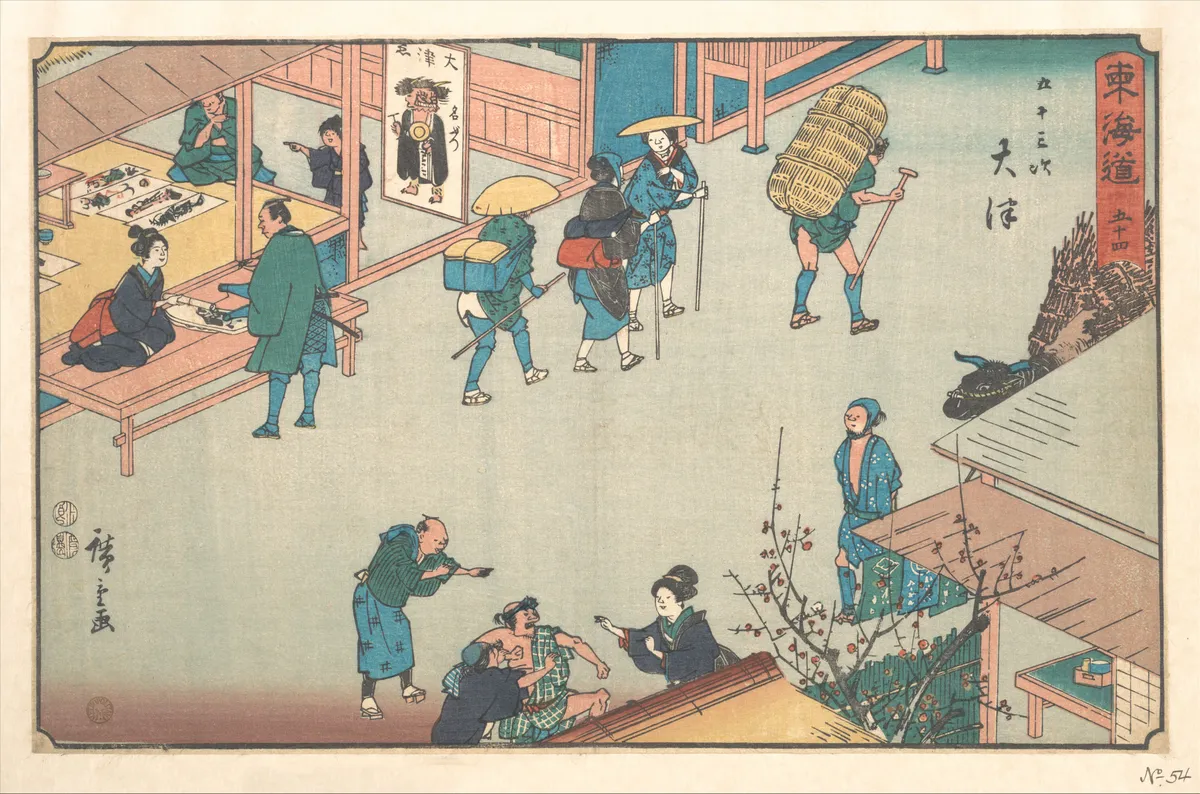
The Last Light of Ōtsu
The sky above Ōtsu held the weight of dusk. Travellers moved slowly along the Tōkaidō Road, their footsteps heavy on the worn path. A chill hung in the air, mingling with the scent of pine and damp earth.
Lanterns flickered to life as daylight waned. In the distance, Lake Biwa shimmered under the fading sun, its surface a mirror of shifting colours. A solitary figure paused, gazing at the water. The burdens of journey etched into his silhouette.
Nearby, the soft murmur of voices and the rustle of fabric broke the silence. Merchants haggled over wares while a child clutched his mother’s hand, eyes wide with wonder.
The scene breathed with the rhythm of a thousand stories. The road stretched endlessly, a lifeline between places and people.
As the last light ebbed, shadows deepened, painting Ōtsu in shades of grey. The travellers continued on, their presence a fleeting echo in the evening air.
Historical Echo
Ōtsu, a town at the edge of Lake Biwa, stood as a vital junction on the Tōkaidō Road. This route connected Edo with Kyoto, a conduit for commerce and culture. Each station along the way buzzed with life, as travellers sought rest and refreshment.
In the ukiyo-e series "The Fifty-Three Stations of the Tōkaidō," Ōtsu captured the essence of movement and transition. The artist, unknown yet skilled, rendered this scene with precision. In the mid-19th century, such prints offered glimpses into the everyday world of Edo-period Japan, preserving moments of transient beauty.