

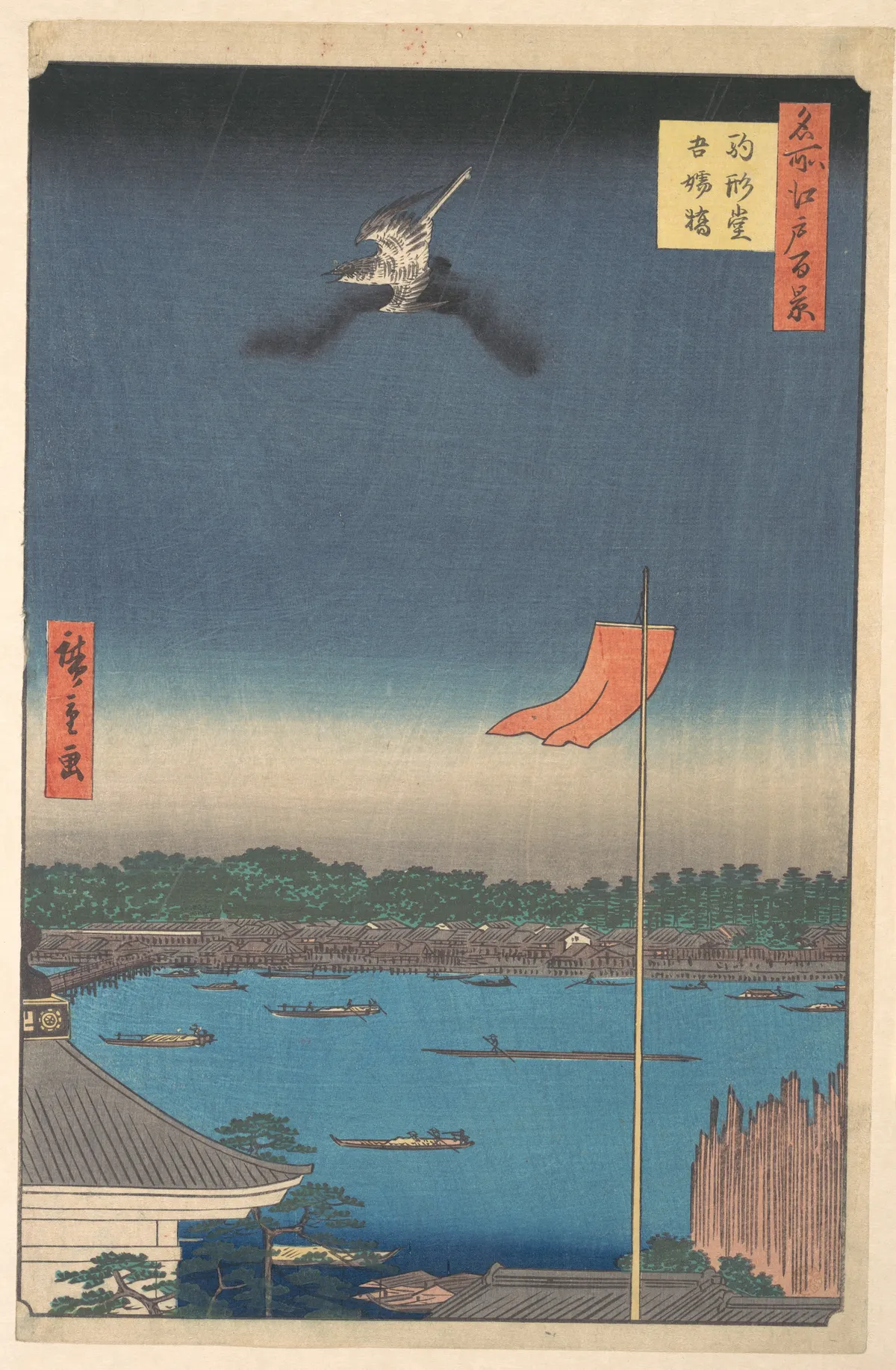
Azuma Bridge at Dusk
Soft dusk descends over Edo. The Azuma Bridge stretches across the river like a silent guardian. Beneath its sturdy wooden arches, the water flows with a languid grace. A lone boat drifts gently, its oars barely disturbing the surface. The air is thick with the scent of the river, mingling with the distant aroma of incense from Komagatadō Temple.
The temple looms on the bank, its silhouette etched against the fading light. Pilgrims meander along the path, their footfalls muffled in the evening's hush. They pause, gazing out over the bridge, where the city breathes slowly in the twilight.
The world feels suspended in this moment. The bridge, the boat, the temple—each a quiet witness to the eternal flow of time. A crane calls from the reeds, its cry echoing across the water, a fleeting note in the symphony of the night.
In this stillness, Edo holds its breath, waiting for the first stars to pierce the dusk.
Historical Echo
In 1857, Edo stood on the cusp of change. Utagawa Hiroshige captured its essence in his series, "One Hundred Famous Views of Edo." The Azuma Bridge was more than a crossing; it was a conduit of stories, of life moving in rhythm with the river. Komagatadō Temple, a place of reflection, anchored the scene with spiritual gravitas. Hiroshige's prints offered a window into a world where nature and human existence flowed seamlessly together, a world poised on the brink of modernity.