

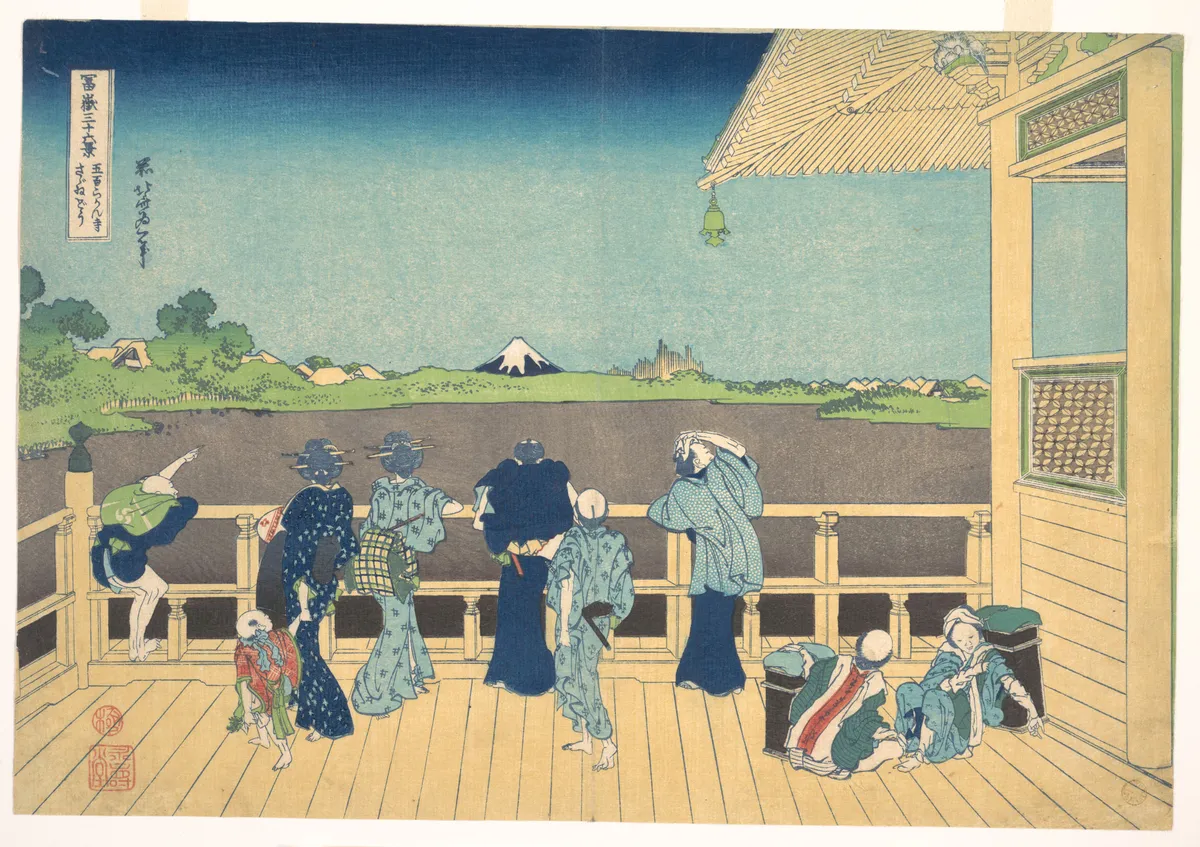
Sazai Hall's Quiet Reverie
The air was crisp, imbued with the scent of pine. Sazai Hall stood silent, a sentinel overlooking the temple grounds. The temple of the Five Hundred Arhats lay hushed, bathed in the soft light of dawn. A gentle breeze rustled through the leaves, carrying whispers of ancient prayers. Wooden planks creaked underfoot as a lone figure ascended the spiral stairs. He paused, resting a hand on the worn railing, eyes drawn to the distant silhouette of Mount Fuji. The mountain loomed majestic, its peak piercing the sky like a solemn guardian.
The world below stirred with life, yet the hall remained an island of solitude. From its heights, the city unfolded, a tapestry of rooftops and winding paths. The figure exhaled slowly, his breath visible in the morning chill. In this sacred space, time seemed suspended. The hall cradled its secrets, a witness to countless dawns and dusks. Below, the Arhats stood vigil, their serene expressions etched in stone.
This was a place where stories lingered, where the past and present coalesced. The figure closed his eyes, listening to the heartbeat of the hall, the echo of footsteps long gone.
Historical Echo
Hokusai's depiction of Sazai Hall captures a moment of introspection. The Temple of the Five Hundred Arhats, with its unique architecture, was a spiritual haven. In the early 19th century, such scenes resonated with a society in transition, seeking solace and reflection. Mount Fuji, ever-present, symbolised endurance and beauty, a muse for Hokusai's creative spirit. This print, part of his renowned series, offers a glimpse into a world where nature and reverence intertwine seamlessly.