

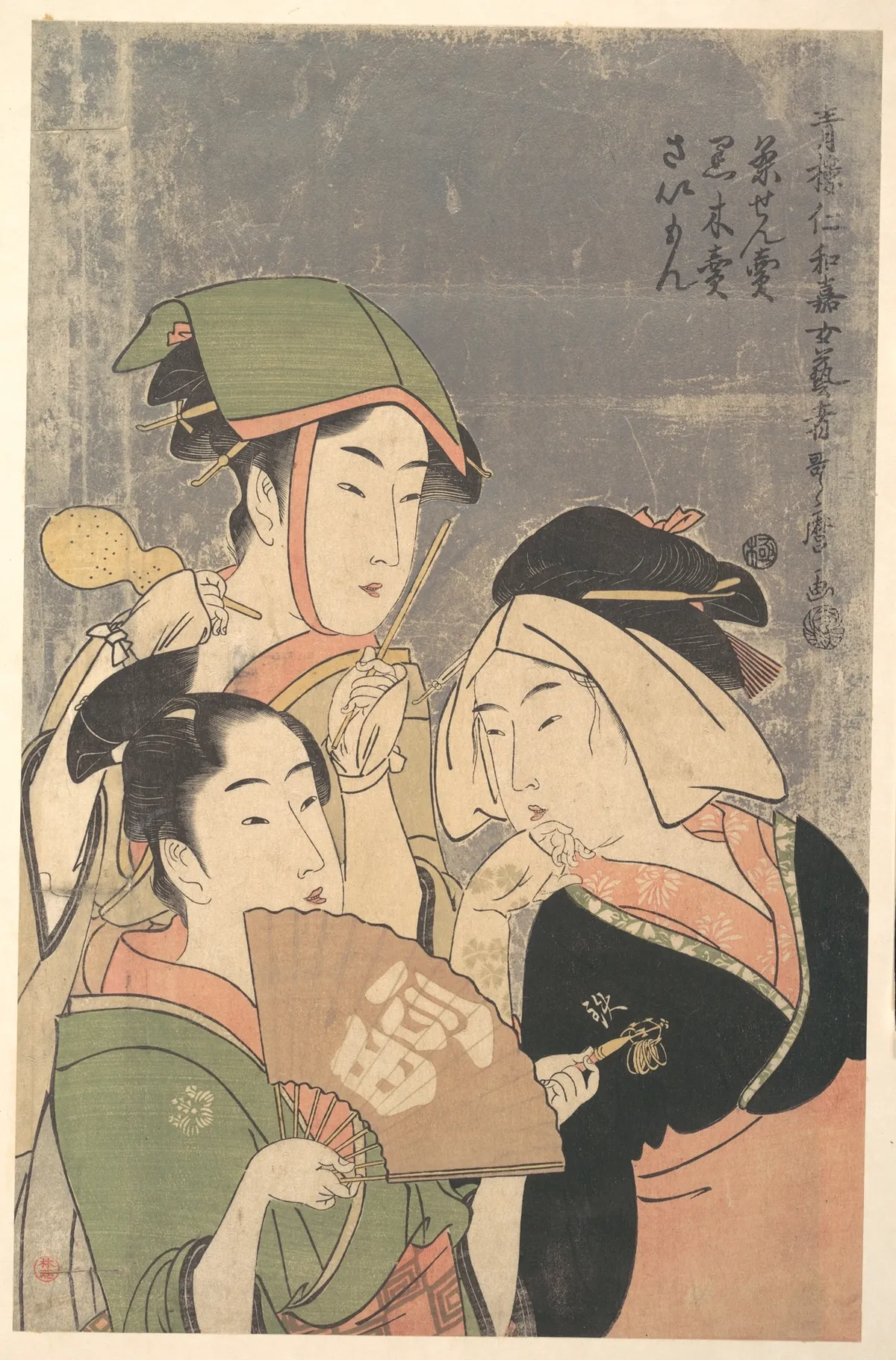
Three Figures in the Lantern Glow
The paper lanterns flicker softly, casting shadows on the cobblestone path. Three figures stand poised, captured in a moment of lively discourse. Their costumes are vivid, each one a splash of colour against the night.
Chasenuri, the tea-whisk seller, balances his goods with a practiced ease. His eyes dart, catching the light, alive with the night’s energy. The scent of fresh tea leaves clings to him, subtle yet inviting.
Beside him, Kurokiri, the firewood seller, stands solid and grounded. His garments are rougher, earth-toned, speaking of his trade. A faint scent of pine clings to his being, the memory of forests far from the bustling streets.
Saimon, the shrine festival performer, completes the trio. Her attire is bright, almost ceremonial. Bells tinkle softly with her slightest movement, echoing the distant sounds of festival drums.
The air is thick with anticipation, the night pregnant with stories yet to unfold. Each performer, a thread in the tapestry of the Yoshiwara Niwaka Festival, stands ready to weave their tale.
Historical Echo
In the late 18th century, the Yoshiwara district was alive with festivals, particularly the Niwaka Festival. This time of year brought together performers, merchants, and townsfolk in shared celebration. Kitagawa Utamaro captured these vibrant scenes, immortalising the ephemeral joy and the bustling energy of Edo's pleasure quarter. Each print, like this one, whispers tales of a world now lost to time, yet echoing still in the quiet moments of the night.