

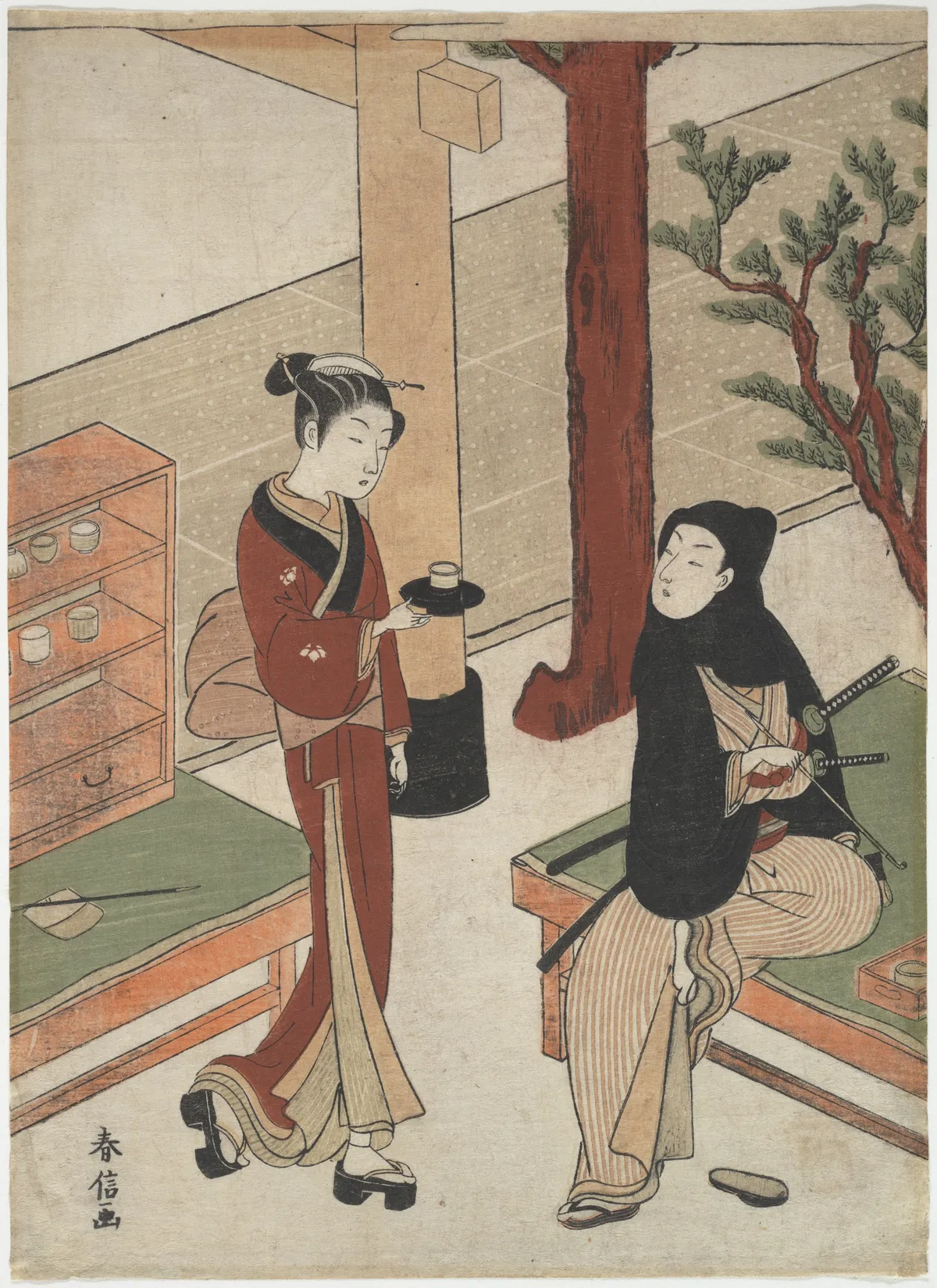
Osen's Vigil
The room was bathed in muted light. Osen sat quietly, her kimono a fluid cascade of silk. The paper doors stood partially open, allowing a whisper of wind to brush across her face. Outside, the soft patter of rain created a gentle rhythm against the earth.
She held a parasol, its bamboo ribs creaking softly as she adjusted her grip. Her gaze was steady, fixed on the path where the young samurai would appear. His visits were rare, but each time, the anticipation was palpable, filling the air with an unspoken tension.
The scent of damp pine lingered, mingling with the fragrance of fresh ink on paper. A distant bird called, its song fading into the mist. Osen's heart beat in time with the rain, each drop a reminder of the waiting, the longing.
The samurai's shadow eventually appeared, elongated by the lantern's glow. His armour clinked faintly as he approached, a symphony of metal and fabric. Osen breathed deeply, grounding herself in the moment, in the presence of the warrior she awaited with such quiet yearning.
Historical Echo
In the Edo period, Osen's image was immortalised by the brush of Suzuki Harunobu. Known for his delicate portrayal of women, Harunobu captured the restrained elegance of the era. This print, "Osen Waiting on a Young Samurai," speaks to the timeless theme of longing and anticipation that resonated deeply in the woodblock art of the 18th century. Osen, a celebrated beauty, became a symbol of refined grace, her story echoing through the corridors of time. The young samurai, a figure of nobility and honour, stands as a reminder of the societal roles and expectations that shaped lives in those days. In the quiet space between them, history whispers softly, leaving its indelible mark.