

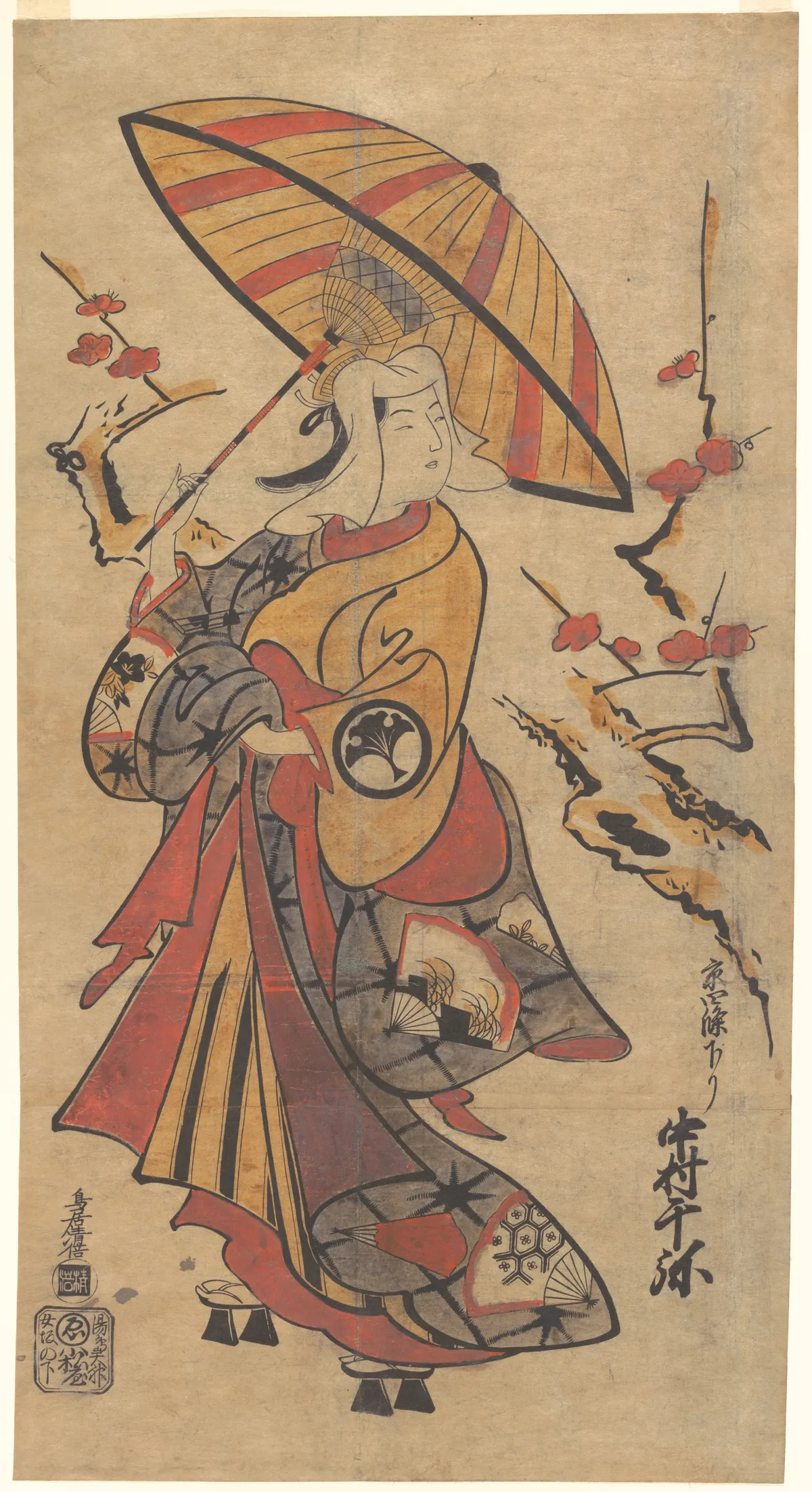
The Actor's Gaze
The paper smells of damp wood and ink. In the dim light, Tokonatsu stands, poised, on stage. His kimono flows, a cascade of silken waves. Each fold whispers of distant tales, of lives beyond the footlights. Nakamura Sen'ya, beneath the layers, breathes life into the role. His gaze is steady, eyes shadowed by painted brows.
The theatre is hushed. An expectant silence hangs, thick as smoke. The audience leans forward. Each slight movement, each deliberate pause, holds them captive. Sen'ya's voice, when it comes, is a low murmur, rising like a gathering storm. His hands move, slow and precise, cutting through the still air.
Outside, the night is cold and clear. The echoes of the city are distant, muffled by the theatre's wooden walls. Inside, time is suspended, caught in the weave of fabric and the gleam of lacquered wood. The legacy unfolds, a dance of shadows and light.
Historical Echo
In 1716, the kabuki stage was a realm of transformation. Torii Kiyomasu I, with his deft hand, captured its ephemeral beauty. Nakamura Sen'ya, the actor immortalised, was a master of the craft. Tokonatsu, the character, a thread in the intricate tapestry of Edo's theatre. Each print, a moment frozen, holds the echoes of a world both vibrant and fleeting.