

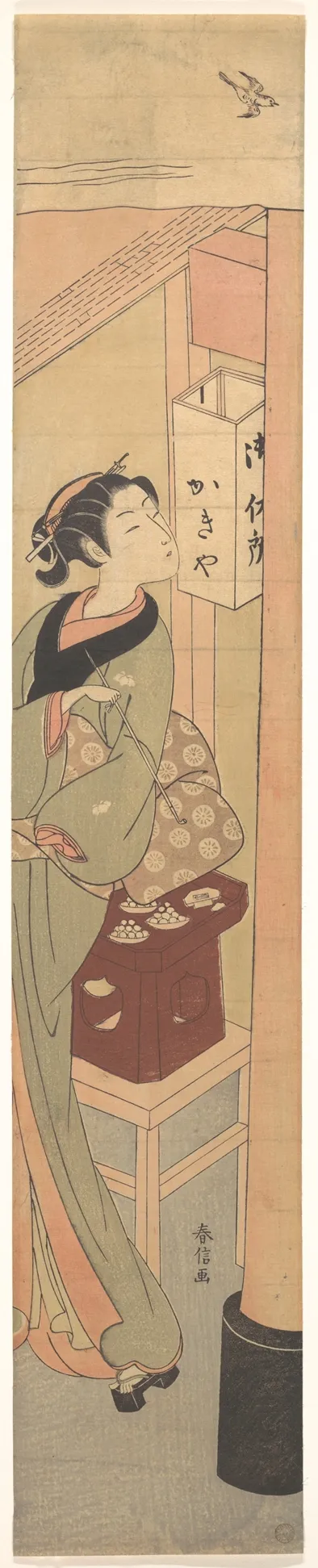
Osen of the Kagiya Teahouse
The paper door slid open with a whisper. Osen stepped gracefully onto the polished wooden floor. Her kimono rustled softly, echoing the quiet murmur of the distant street. She moved with a serene fluidity, her presence a gentle anchor in the teahouse's warmth.
Outside, the evening air was cool, carrying the faint scent of distant cherry blossoms. Lanterns flickered, casting gentle shadows that danced along the walls. The teahouse was a haven, a place where time seemed to pause, suspended in a delicate balance of tradition and fleeting moments.
Osen poured tea, the liquid a rich, dark amber in the dim light. Her hands, steady and practiced, moved with the grace of one who belonged to this world of quiet elegance. The tea's steam mingled with the air, a fleeting ghost of warmth and aroma.
The patrons watched her, their voices hushed in respect for the ritual unfolding before them. Osen's eyes, deep and knowing, met theirs with a quiet understanding. She was more than a server; she was a keeper of stories, a silent witness to the lives that intersected here.
Each gesture, each movement, was a dance, a reflection of a world where beauty lay in simplicity, where the everyday was elevated to art. The teahouse was her stage, and she, its graceful performer.
Historical Echo
In the heart of Edo, teahouses were sanctuaries of refinement and subtlety. Suzuki Harunobu captured this essence in his woodblock prints. Around 1769, he immortalised Osen, a figure of elegance and poise, known for her service at the Kagiya Teahouse. Through his art, Harunobu offered a glimpse into a world where the ordinary was transformed into the extraordinary, and where the delicate interplay of light, shadow, and human presence became a part of the cultural tapestry of the era.