

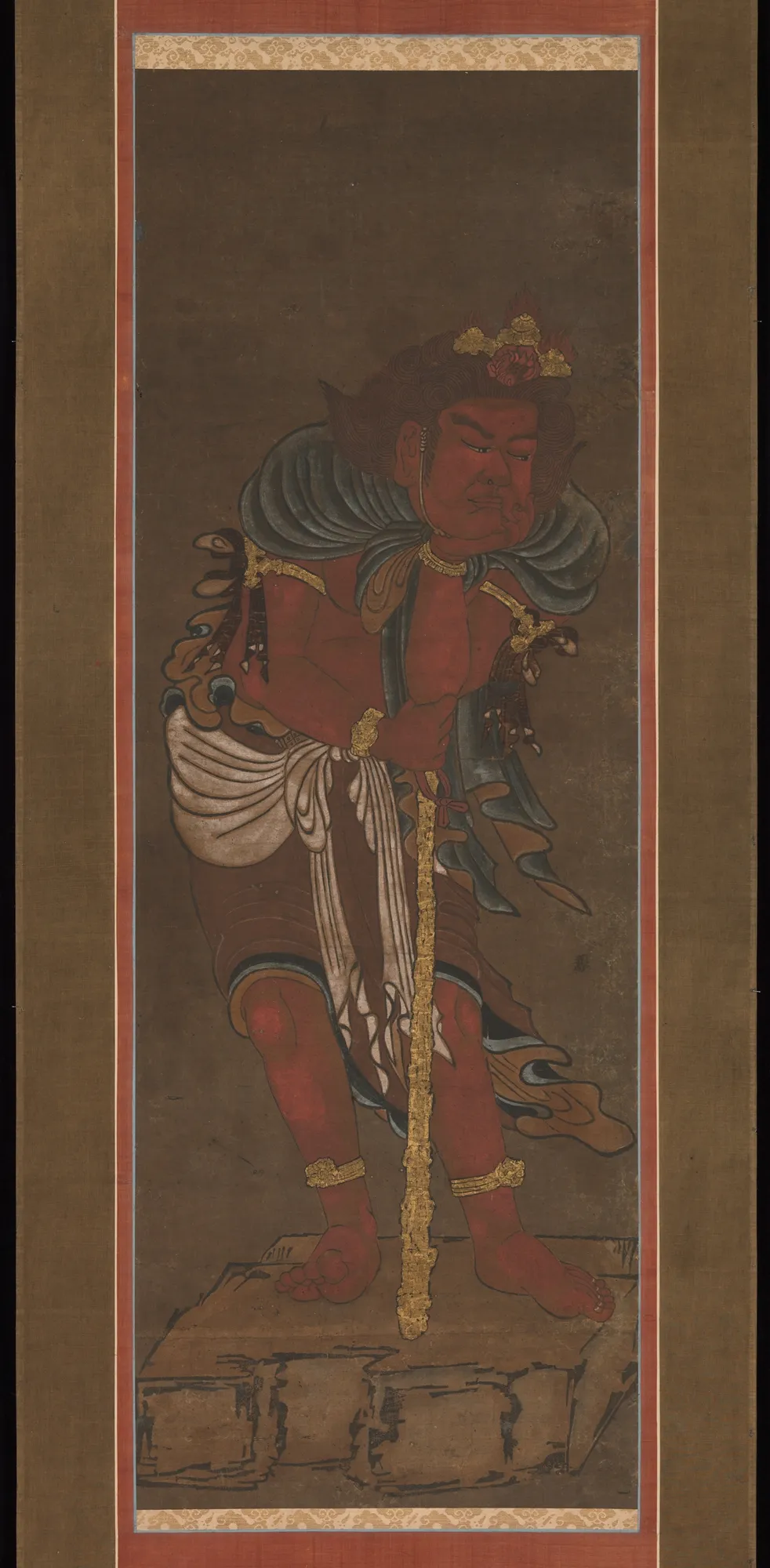
The Guardian's Gaze
In the dim glow of an ancient temple, Fudō Myōō stands unyielding. Flames dance around him, casting flickering shadows on the worn wooden floor. His eyes pierce through the smoke, unwavering and fierce. He holds a sword in one hand and a rope in the other, symbols of his power and wrath. The air is thick with incense, its scent mingling with the faint dampness of the temple walls.
Beside him, two attendants stand vigilant. Their postures mirror their master's, embodying strength and resolve. The silence is heavy, broken only by the occasional crackle of flames and the distant echo of a temple bell. The attendants' robes rustle softly as they shift, their eyes never leaving the deity.
Outside, the wind whispers through the trees, carrying with it the spirit of the mountain. The temple stands alone, a sentinel in the night, guarding secrets as old as the stones beneath it. The presence of Fudō Myōō is palpable, a reminder of protection and the unwavering gaze of a guardian deity.
Historical Echo
Fudō Myōō, known as the Immovable Wisdom King, is revered in Japanese esoteric Buddhism. His fierce expression and fiery surroundings symbolize his role as a protector against evil. The sword represents wisdom, cutting through ignorance, while the rope binds the forces that threaten enlightenment. This print, attributed to Ryūshū Shūtaku (Myōtaku) in the 14th century, captures this powerful deity and his attendants in a moment of eternal vigilance.