

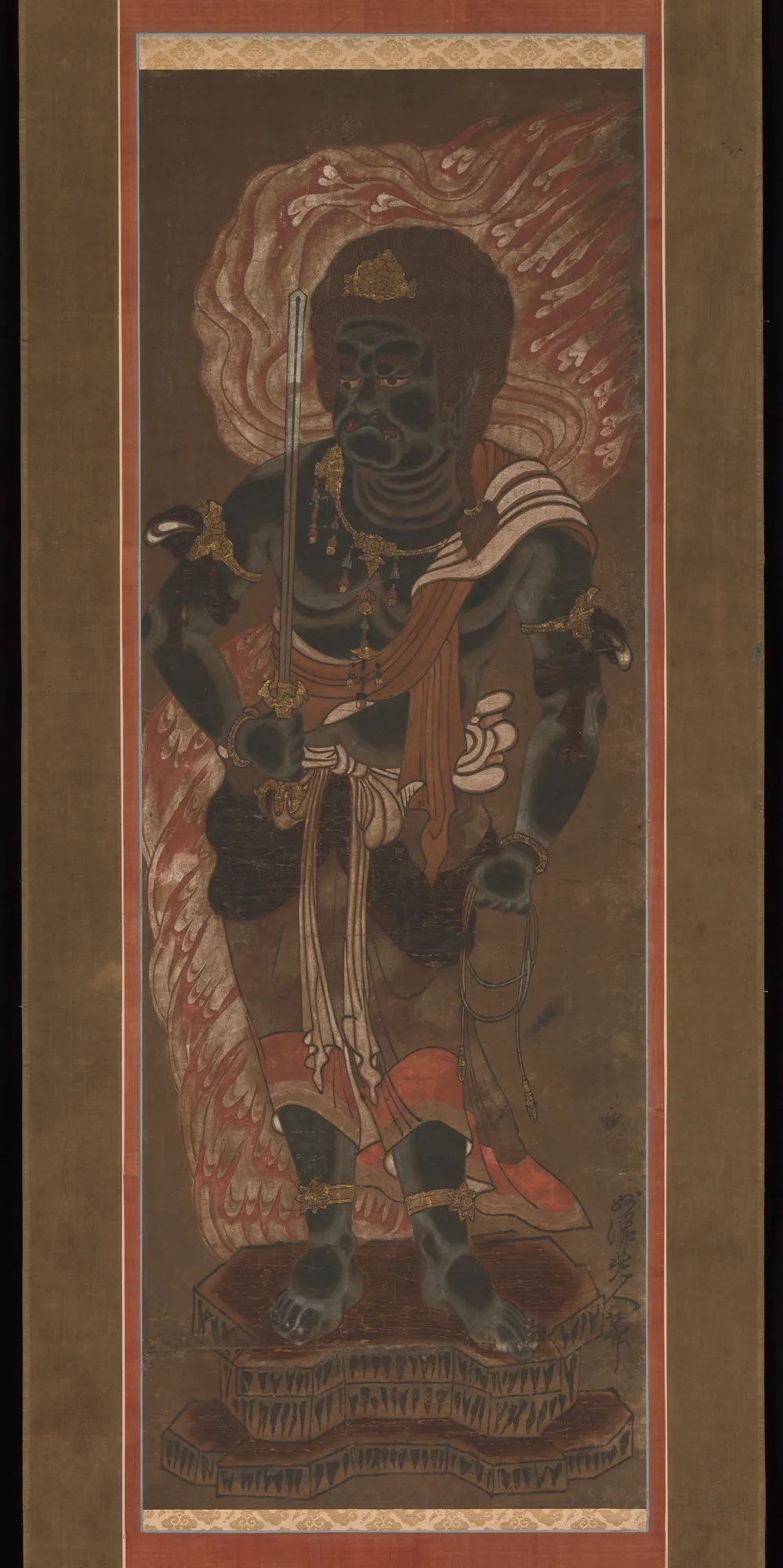
Fudō Myōō's Vigil
In the shadowed stillness of the temple, Fudō Myōō stands resolute. Flames flicker around him, casting harsh, dancing shadows against the stone walls. His eyes burn with an intensity that pierces the dark air. The smell of incense clings to everything, mingling with the earthy scent of old wood.
Two attendants flank him, their presence solemn and unwavering. They hold swords, their blades catching the dim light, reflecting sharp, silver slivers. Silence envelops the space, heavy and ancient. It presses against the skin, a palpable reminder of the sacred.
Fudō's expression is fierce, immovable. His mission is to subdue evil, to protect the devout. The air is thick with anticipation, as if waiting for an unspoken command, a divine judgement. The paper of the print itself feels alive, infused with the weight of devotion and the passage of centuries.
The temple breathes quietly, a relic of time, holding within its confines stories of faith and power. Outside, the wind whispers through the trees, a hushed reverence echoing the guardian's eternal watch.
Historical Echo
Fudō Myōō, known as the Immovable Wisdom King, is a protector deity in Japanese Buddhism. He is often depicted with a fierce visage, symbolising his role in subjugating evil and guiding the faithful. The 14th-century artist Ryūshū Shūtaku (Myōtaku) captures this essence, embedding it in the woodblock's fibres. The print reflects the spiritual gravitas of the era, a testament to enduring faith and tradition.