

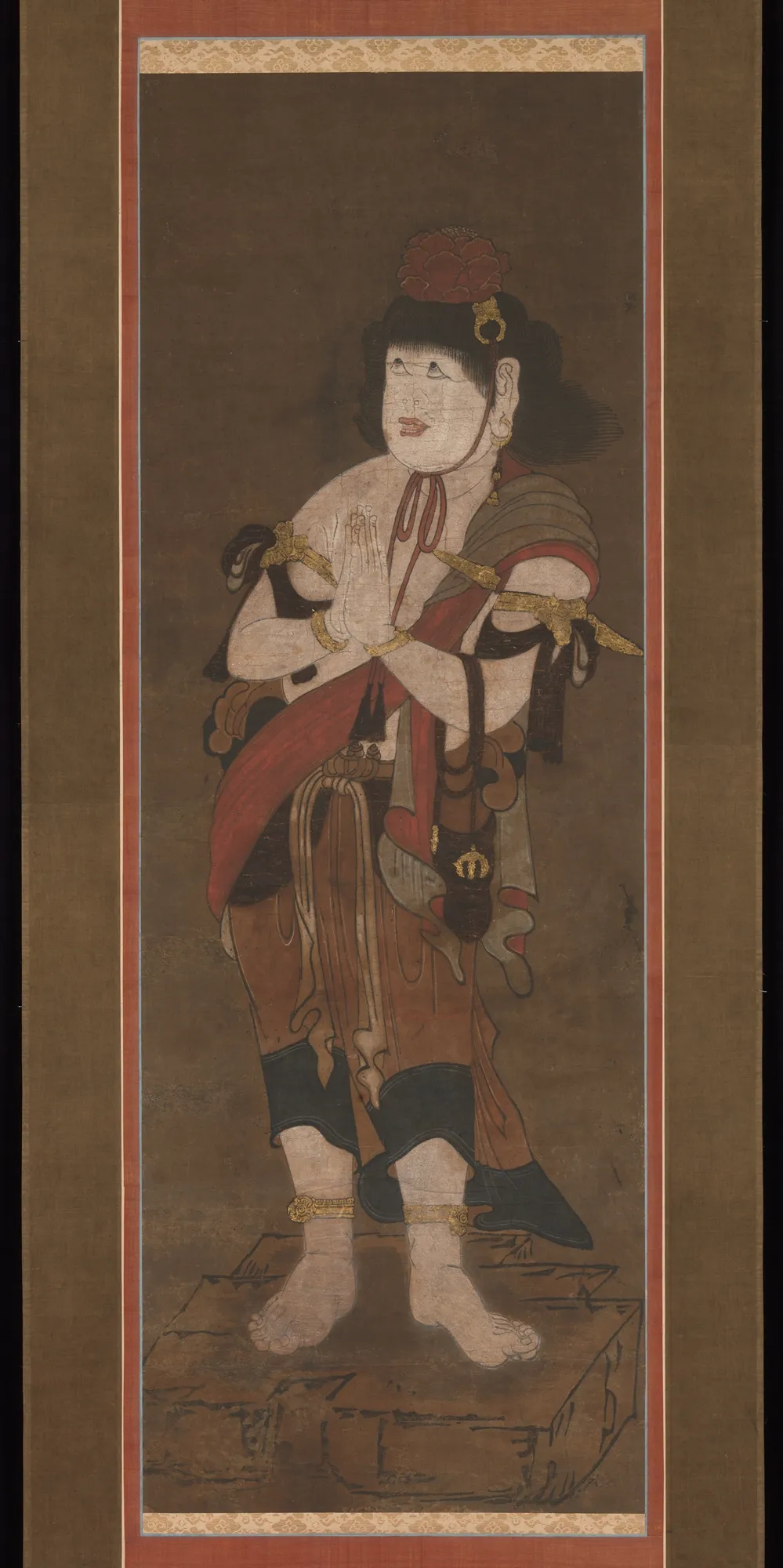
Fudō Myōō's Vigil
In the depths of the forest, the air stood heavy, cloaked in a shroud of shadow. Fudō Myōō, the Immovable One, loomed large against the night, a silhouette of divine wrath and compassion. Flames danced at his feet, casting flickering light upon his fierce visage. His eyes, sharp and unyielding, pierced the darkness, unearthing secrets hidden in the silence.
Beside him, two attendants stood in solemn reverence. Their robes rustled softly, a whisper against the hush of leaves. One held a sword, its blade gleaming cold and resolute, a guardian of the sacred space. The other clutched a noose, ready to bind the wicked, to pull them from their earthly tethers.
The scent of incense hung in the air, mingling with the earthy aroma of damp soil. A quietude enveloped the scene, broken only by the crackle of flames and the soft rustle of the forest. Each figure, a sentinel against the encroaching dark, stood firm in their vigil.
The night deepened, stars peeking through the canopy, distant and watchful. Fudō Myōō's presence remained unwavering, a bastion of divine justice and mercy. In this sacred grove, time stilled, held captive by the gravity of the moment.
Historical Echo
The 14th-century depiction of Fudō Myōō reflects a period steeped in esoteric Buddhism. As a protector, Fudō Myōō embodies the fierce compassion necessary to guide souls towards enlightenment. His attendants, often depicted with him, symbolize the dual forces of restraint and liberation. The artist Ryūshū Shūtaku (Myōtaku) captures this profound spiritual balance, using stark contrasts and dynamic forms. This image served as more than art; it was a spiritual tool, a focus for meditation, guiding practitioners through the complexities of human existence towards a path of inner peace.