

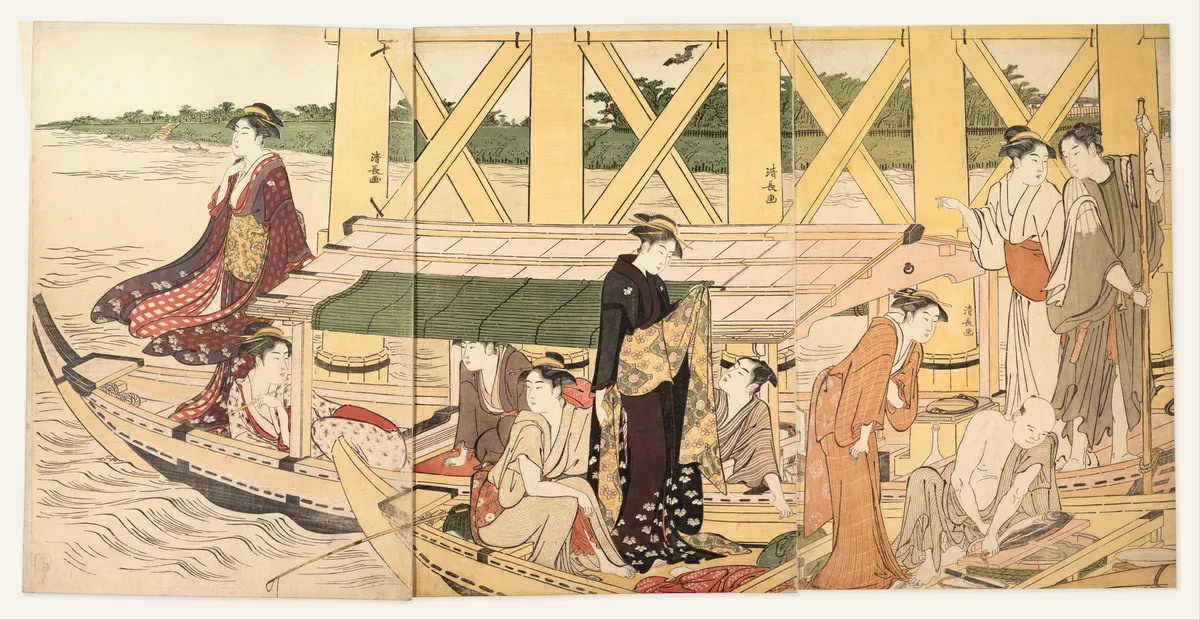
Under Azuma Bridge
The river's surface shimmered with the pale light of late afternoon. A slight breeze rustled the paper lanterns hanging from the boat's edge. Laughter and quiet conversation floated across the water. The boat rocked gently, cradling its passengers in a rhythm as ancient as the river itself. Above, the wooden frame of Azuma Bridge stretched across the sky, casting shadows that danced with the sunlit ripples below.
Women in elegant kimonos reclined on soft cushions, their silken sleeves brushing lightly against one another. Their fans moved lazily, stirring the warm air with a scent of sandalwood and jasmine. A man, his face half-hidden by a wide-brimmed hat, played a soft tune on a shamisen. The notes mingled with the murmuring river, creating a sound only the late Edo period could conjure.
The world beyond the bridge seemed distant, fading into a soft haze of pink and blue. Time slowed, as if the day hesitated to end. A boatman, his silhouette stark against the sky, guided the craft with careful strokes. His gaze followed the river's curve, where the city of Edo lay, bustling and alive.
In this moment under Azuma Bridge, the world was suspended. The sun dipped lower, painting the scene with hues of gold and shadow. Each passenger, lost in their thoughts, felt the gentle pull of the river, the weight of the day slipping away like the softest whisper of a dream.
Historical Echo
Torii Kiyonaga, a master of his craft, captured the ephemeral beauty of Edo's leisure life. In the late 18th century, the city was a vibrant tapestry of culture and commerce. The Sumida River, a lifeline of transport and recreation, witnessed countless such gatherings. Kiyonaga's work, delicate yet vivid, offers a window into a world where time was marked by the flow of water and the grace of a boating party.