

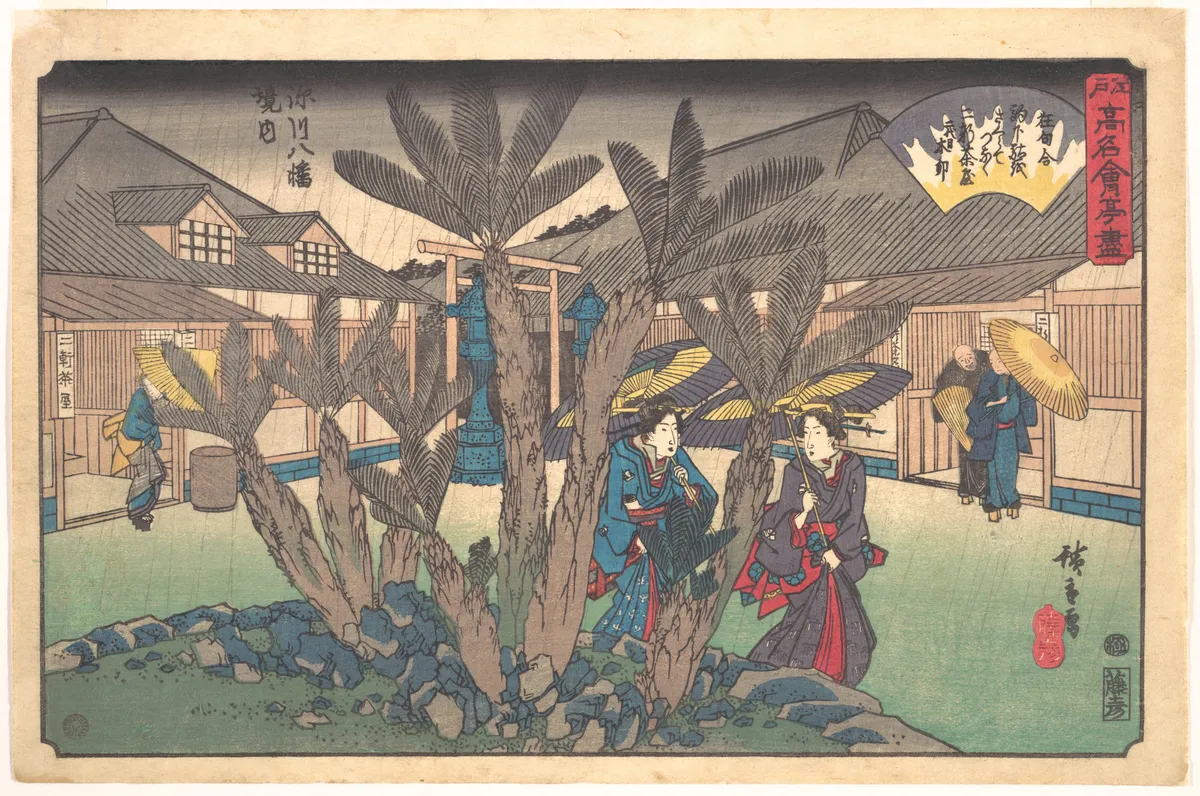
Inside the Hachiman Shrine
The air hung heavy with the scent of pine and distant rain. Inside the tea-house, soft whispers mingled with the rustling of paper screens. A lone attendant moved quietly, arranging cups with deliberate care. The wooden floor creaked under light steps, each sound absorbed by the quiet reverence of the shrine.
Outside, the Hachiman Shrine stood silent, its presence a comforting weight. Leaves trembled in the cool breeze, their reflection dancing on the surface of a nearby pond. The tea-house offered refuge, a pause in the rhythm of life.
Visitors, cloaked in layers of silk, sought warmth in steaming cups. The tea, earthy and fragrant, filled the space with a sense of calm. Shadows played across the tatami, echoing the tranquil spirit of Hiroshige's brushwork.
Time seemed to stretch, each moment lingering like a held breath. The world outside faded, leaving only the gentle cadence of tea being poured, the subtle shift of light and shadow.
Historical Echo
Hiroshige's world was one of transitions. The Hachiman Shrine was a place of both worship and respite. In the Edo period, shrines served as communal havens. They were spaces where the sacred met the everyday. The tea-house within the shrine offered a moment of solace, a brief escape from the bustling world.
Hiroshige captured these nuances, his prints a mirror to the subtle beauty of transient moments. The interplay of nature and human presence was a dance of quiet harmony. Each element, from the towering pines to the humble tea-house, held its place in the delicate balance of Hiroshige's vision.