

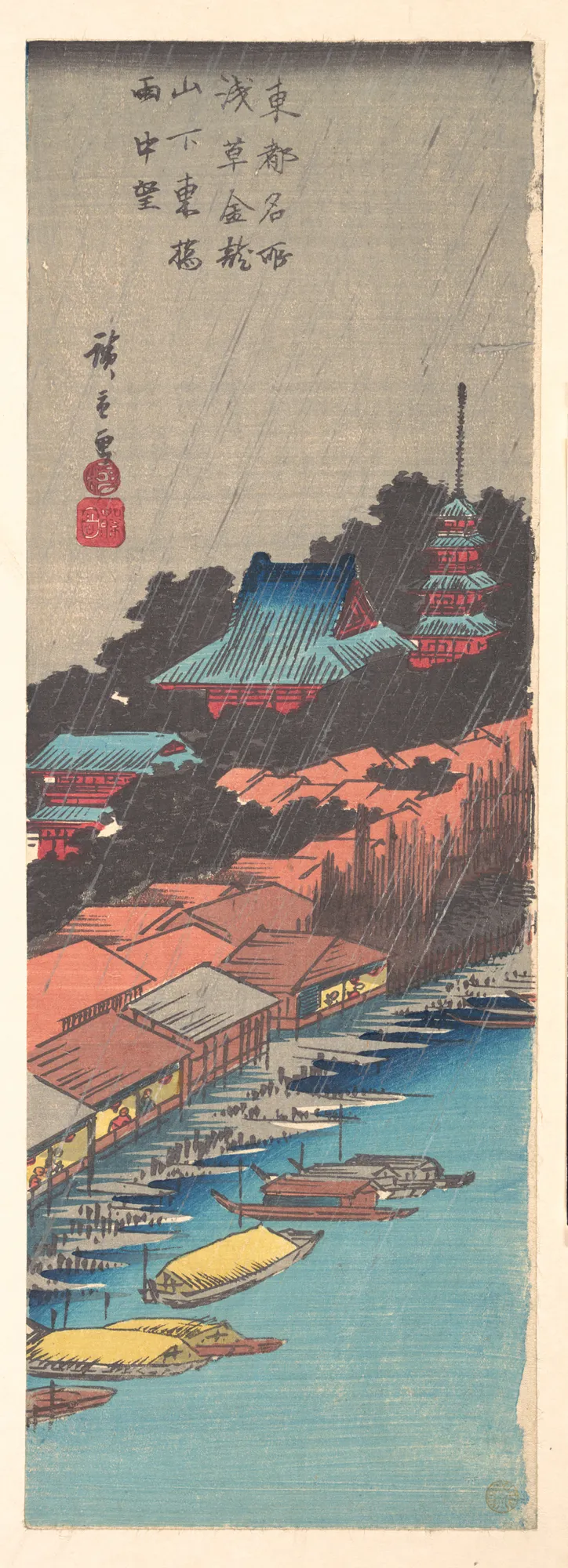
Asakusa in the Rain
Rain whispers against the wooden planks of Azuma Bridge. Each droplet echoes in the still, grey air. Figures move slowly, draped in muted colours. Umbrellas blossom like dark flowers, sheltering them from the persistent drizzle. The damp air clings to their robes, heavy with the scent of wet earth and the distant hint of incense.
Beyond the bridge, the silhouette of the Kinryuzan Temple looms. Its structure is softened by the curtain of rain, a shadow against the pale sky. The temple stands silent, its golden spire reaching towards the heavens, gleaming faintly despite the overcast day. It watches over the bustling life of Asakusa, a constant amidst the ephemeral.
Footsteps patter softly on the bridge. A merchant hurries by, his sandals slapping against the wet wood. A woman pauses, adjusting her grip on a child's hand. The child gazes upwards, mesmerised by the droplets dancing on the umbrella's surface. Their world is small, contained beneath the canopy, safe from the falling sky.
The river flows beneath them, its surface dappled with raindrops. It carries the reflection of the grey heavens, broken only by the occasional ripple of a fish. The water murmurs, a quiet conversation heard only by those who pause to listen.
The scene is transient, captured in the brief moment before the rain passes. Yet, the memory of it lingers in the air, a delicate echo of Edo's heartbeat.
Historical Echo
Hiroshige's print captures a moment suspended in time. The Edo period was an age of both tradition and change. Asakusa, with its temples and markets, was a microcosm of this world. The Azuma Bridge, a conduit between the everyday and the sacred, embodies the flow of life in Edo. Rain was not just a weather condition but an artist's muse, a means to blur and blend the edges of a rapidly modernising city. Hiroshige's work invites the viewer to step into this world, to feel the weight of the air and the gentle insistence of the rain, to become part of a story told in silence and shadow.