

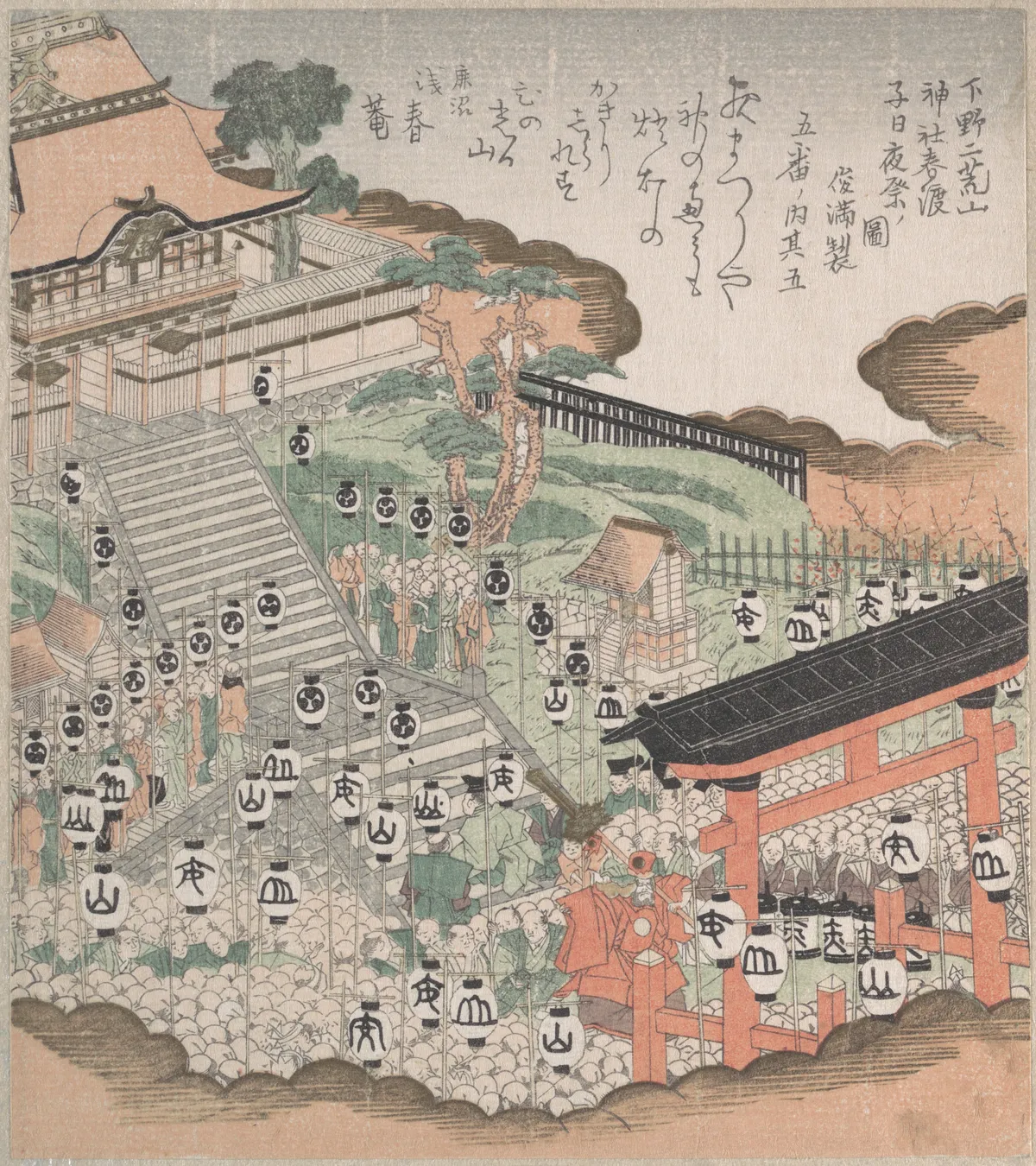
Festival Dance at Futaara Shrine
The night air was damp with anticipation. Lanterns flickered softly, casting a warm glow over the gathered crowd. The shrine loomed ahead, ancient and solemn, its wooden beams whispering tales of the past.
Children clutched their mothers' sleeves, eyes wide with wonder. The scent of pine and earth mingled with the subtle fragrance of incense. A gentle murmur of voices rose like the rustling leaves.
Dancers began to move, their garments a blur of colour, each step precise and deliberate. The rhythm of drums echoed in the air, a heartbeat shared by all. Shadows danced along the shrine's façade, alive with the spirit of the festival.
In the crowd, an old man tilted his head, listening as if to a memory. The festival was a bridge to the past, each note a thread weaving through time. The night wore on, moments suspended in the lantern's glow.
Historical Echo
The Futaara Shrine has long been a centre of cultural gatherings. During the Edo period, festivals were a time of community, where the boundaries of social class blurred. Kubo Shunman captured these moments, turning them into timeless echoes of celebration. His prints reveal the essence of Edo life, where the sacred and the everyday intertwined. In this scene, the dance is more than movement; it is a connection to tradition, a living history celebrated under the watchful eyes of the past.