

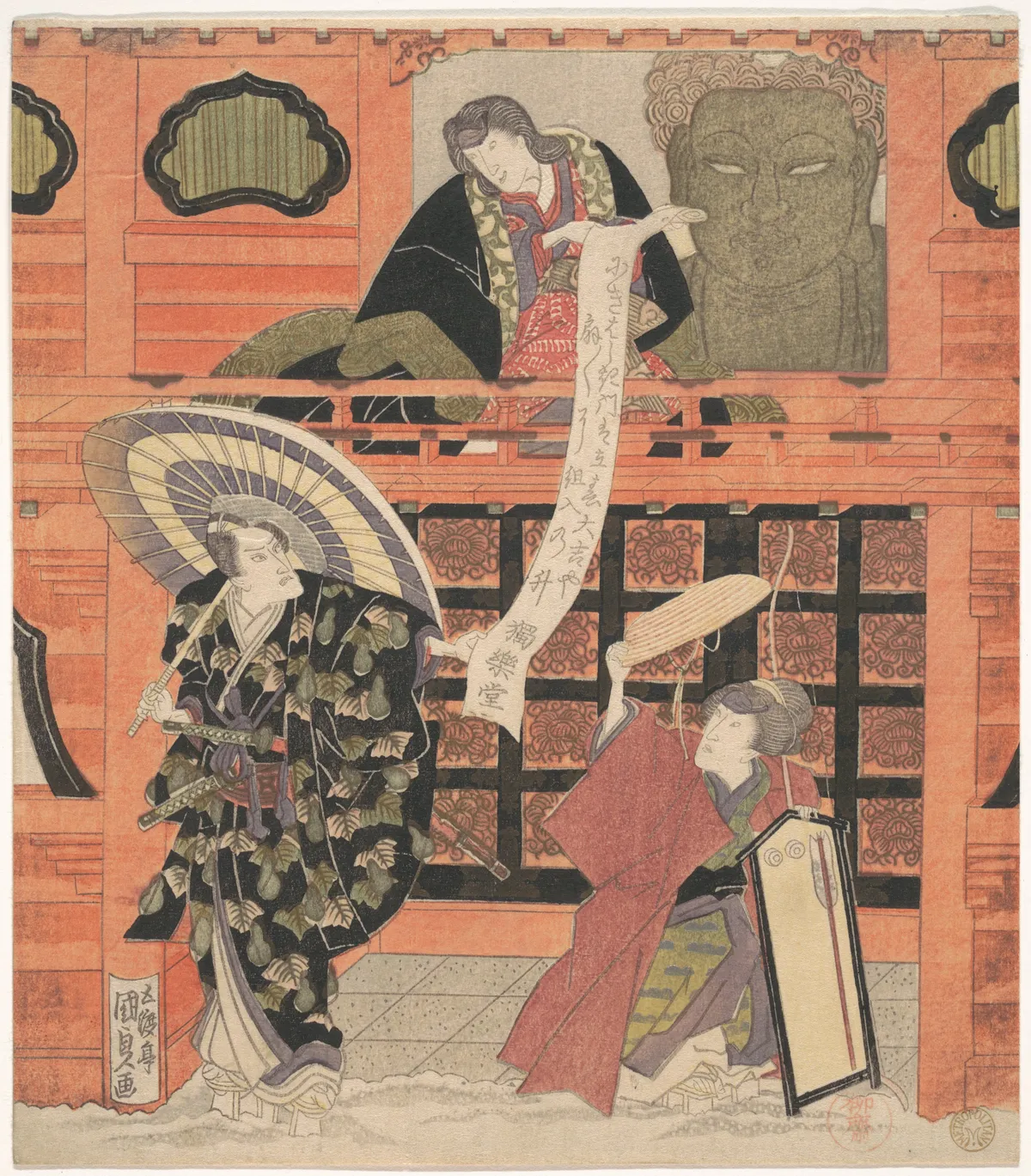
A Night Under the Lanterns
The stage is a world of its own. Shadows flicker against the delicate paper screens. The air is thick with anticipation. Ichikawa Danjuro VII stands as Konoshita Tokichi. His presence commands silence. The rustle of his robes echoes in the stillness. Nakamura Daikichi, his wife in the play, adjusts her hairpin. Her movements are slow and deliberate. Each gesture holds weight. Iwai Hanshiro V, as Masago, enters the scene. Her expression is poised, eyes sharp with intent.
The audience holds its breath. Lanterns cast a warm glow, illuminating painted faces. The scent of incense mingles with the musty scent of the theatre. It is a night where reality and performance blur. Tokichi's voice booms, breaking the silence. Words flow like a river, heavy with emotion. His wife listens, eyes downcast, yet attentive. Masago watches from the shadows, her presence a silent storm.
Wood creaks underfoot as actors move gracefully across the stage. The audience remains entranced. Each character's story unfolds in a dance of dialogue and silence. The theatre is alive. Every sound, every silence is a note in the evening's performance. The world outside fades away, leaving only the echo of voices and the glow of lanterns.
Historical Echo
In the early 19th century, Kabuki theatre thrived in Edo. Utagawa Kunisada captured its essence in vivid prints. Actors like Ichikawa Danjuro VII were celebrated figures. Their performances were lifelines to a world of drama and emotion. Each role was a tapestry of gestures and expressions. Kunisada's woodblock prints immortalised these fleeting moments. They served as windows into the heart of Edo's vibrant theatre culture.