

The Silent Vigil
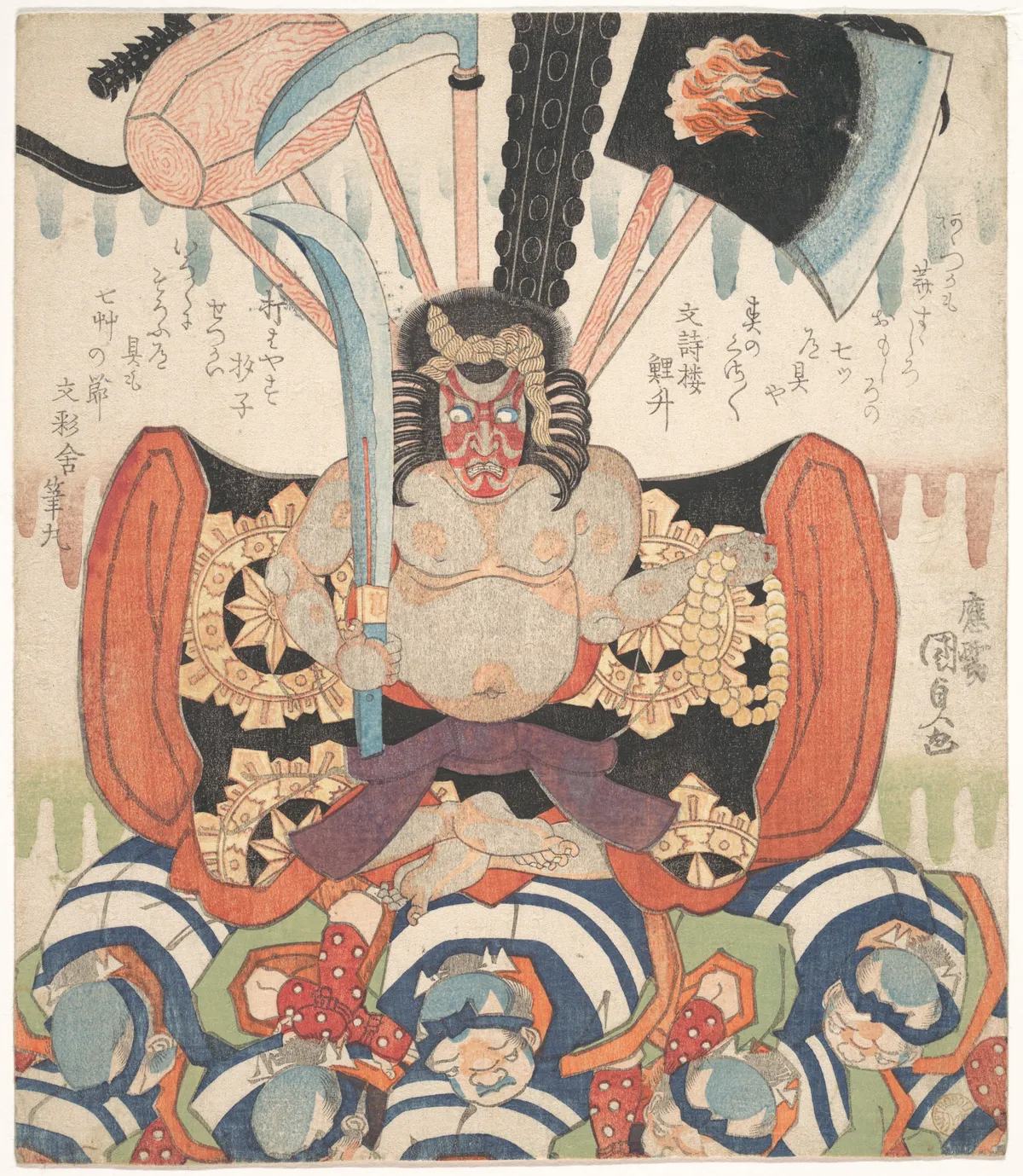
The lanterns flicker against the night. Shadows stretch across the stage. Danjūrō VII stands as Benkei, yet not just Benkei. The air is thick with incense. He embodies Fudō Myōō, the Immovable One. His eyes, fierce and unyielding, pierce through the dimness. The robe clings to his frame, heavy with the weight of legend.
Silence envelops the audience. Only the rustle of silk punctuates the stillness. A faint breeze carries the scent of pine and the distant echo of temple bells. The actor's presence commands reverence, a living statue against the backdrop of painted screens. His hand grips the hilt of a wooden sword. The weapon feels cold and solid, an extension of his will.
Time slows. Each breath from the audience is a whisper. Danjūrō's transformation is complete. He is both man and deity, flesh and spirit. The wood beneath his feet creaks softly, resonating with the echoes of past performances. The night watches, holding its breath, as the stage becomes a sacred space.
Historical Echo
In 1824, Utagawa Kunisada captured the transformation of Danjūrō VII on stage. A celebrated Kabuki actor, Danjūrō was known for his powerful portrayals. Here, he assumes the role of Benkei, merging with the divine presence of Fudō Myōō. The print by Kunisada embodies this metamorphosis, immortalising a moment where theatre and spirituality converge. The ukiyo-e serves not only as a depiction of art but a testament to the actor's skill and the era's theatrical grandeur.