

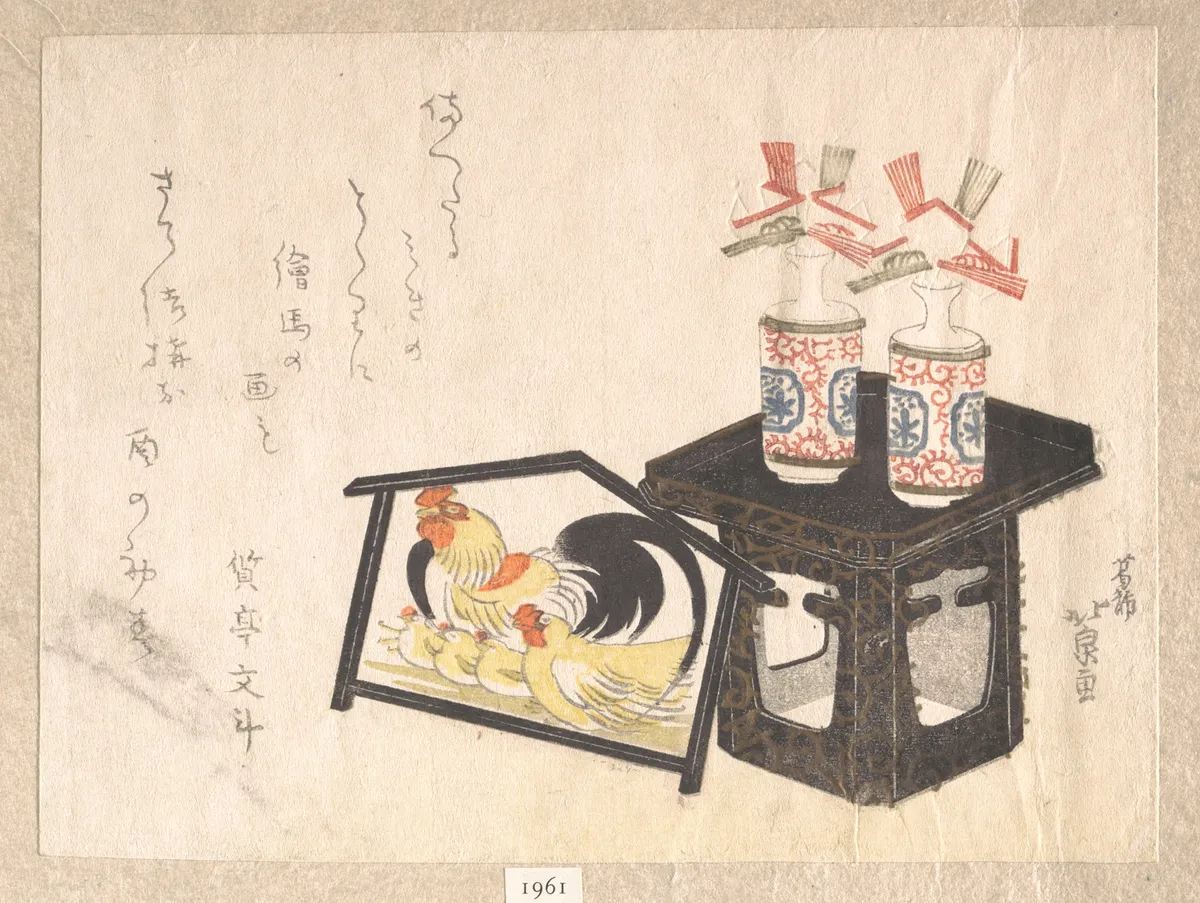
New Year’s Dawn
The air hung heavy with the promise of a new year. A faint chill crept through the wooden beams of the shrine, whispering against the painted ema. Each stroke of ink on the plaque echoed the crow of a distant rooster, heralding the Year of the Rooster.
Sake bottles, lined like sentinels, stood beneath the plaque. Their surfaces glistened with morning dew, each drop capturing the first light of dawn. The scent of fermented rice mingled with the crisp smell of pine. It was a moment suspended in time, where the past year exhaled its final breath.
Soft footsteps approached, the crunch of gravel underfoot. A figure, cloaked in layers of silk, paused before the offerings. Silence enveloped them, save for the gentle rustle of cloth and the distant call of birds.
With a careful hand, the figure lifted a bottle, pouring sake into a wooden cup. The liquid shimmered, reflecting the shrine’s solemnity. A quiet prayer escaped their lips, a whispered hope for prosperity and peace.
The rooster’s call pierced the stillness once more, a reminder of the cycle’s endless turn. As the first rays of sunlight warmed the earth, the shrine stood as a testament to renewal. The ema, with its painted rooster, watched over the scene, guardian of wishes yet unspoken.
Historical Echo
In the Edo period, the turning of the year was marked by rituals and offerings. Ema, wooden plaques bearing images or written prayers, adorned shrines. Each plaque carried the hopes of the believers, a silent conversation with the divine.
Sake, a symbol of purification and celebration, was an essential part of these rituals. The rooster, a harbinger of dawn, represented vigilance and the promise of a new beginning. In the quiet of the shrine, these elements wove a tapestry of belief and tradition, a fleeting glimpse into the heart of Edo culture.