

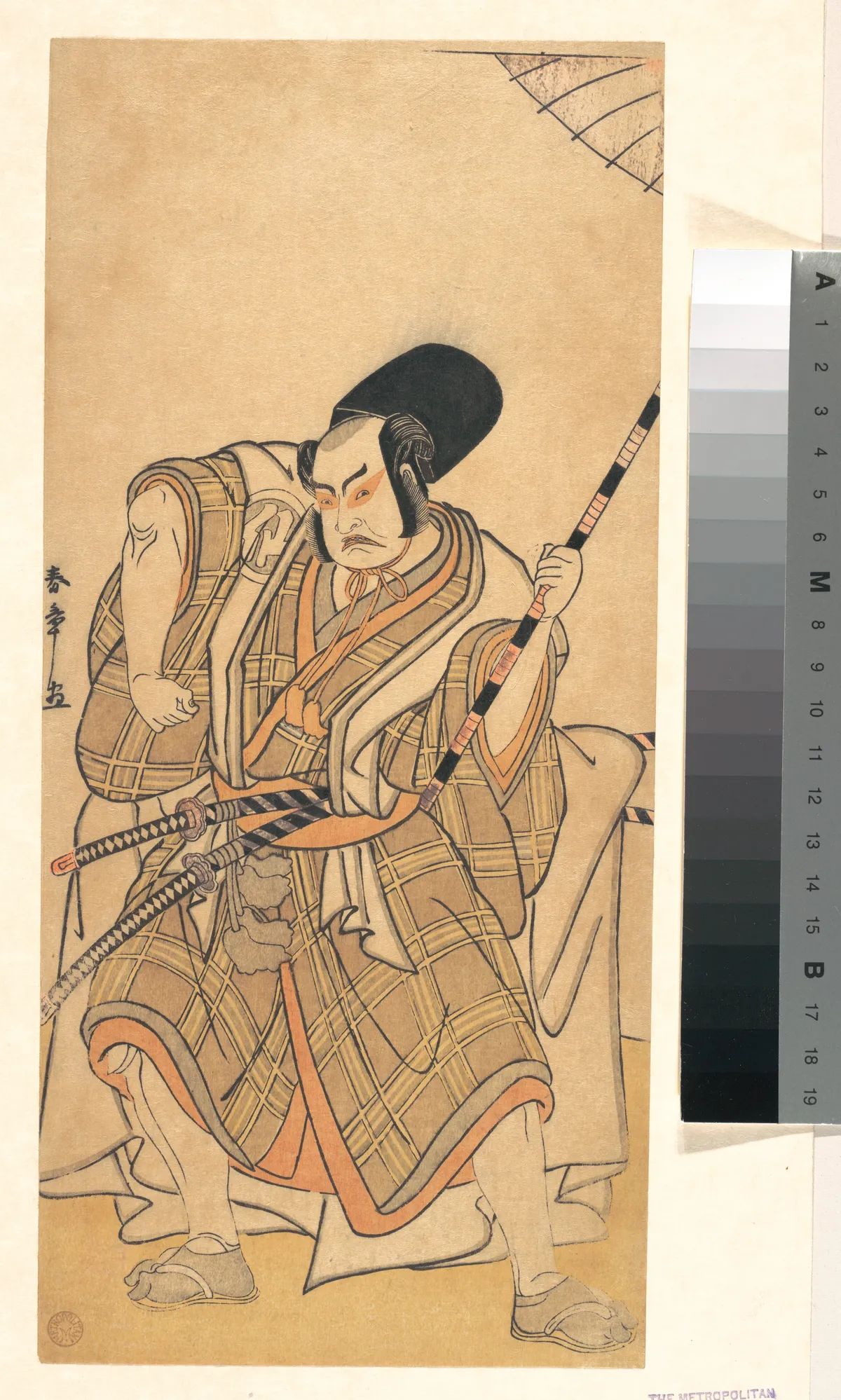
The Disguise
The actor stands under the dim glow of lanterns. Nakamura Sukegorō II, his face a mask of calm. The air is thick with incense and whispers. He wears the robes of a shichō, an attendant, the fabric heavy on his shoulders. Yet, beneath the guise, a samurai’s spirit stirs.
His movements are measured. Every step deliberate. The wooden floor beneath him creaks softly, echoing the quiet tension in the shrine. Around him, shadows dance with the flicker of candlelight, playing across his resolute features.
Outside, a gentle rain begins to fall. The patter of droplets on the roof becomes a rhythm, a heartbeat. The scent of rain mingles with the incense, grounding him in this moment of transformation. Here, the boundary between actor and samurai blurs.
The shrine’s silence deepens. An audience unseen, anticipating. Beneath the attendant’s attire, his hand brushes against the concealed blade. A reminder of his hidden strength. His eyes, focused and unwavering, hint at the true nature masked by borrowed garb.
The performance is a delicate balance. The art of deception honed through years on stage. Each gesture, each breath, a testament to his craft. In this sacred space, the actor becomes the samurai, and the samurai the attendant. The lines fade, leaving only the essence of a man caught between roles.
Historical Echo
In the Edo period, the theatre was a space of transformation. Actors like Nakamura Sukegorō II embodied dual roles, transcending their own identities. Katsukawa Shunshō captured this duality in his prints, preserving the ephemeral art of kabuki. The roles of samurai and attendant, separated by social order, were united on stage. Here, art imitated life, and life, art. Shunshō’s work remains a testament to this layered existence, where reality and illusion intertwined seamlessly.