

The Weight of Ink
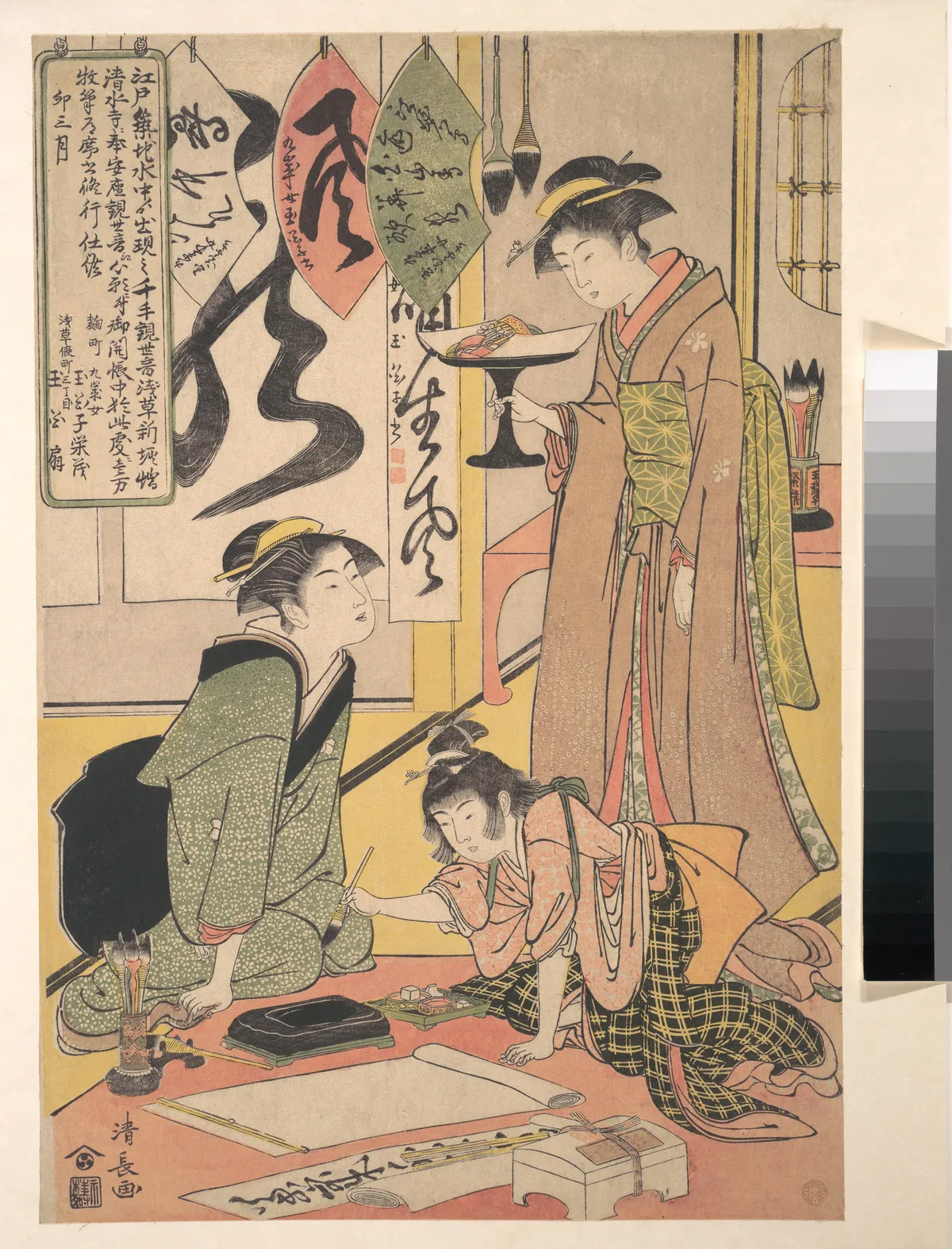
The room is hushed, the air heavy with the scent of ink and paper. Gyoku-kashi Eimo sits poised, her fingers deftly arranging the calligraphy tools before her. The light of a paper lantern flickers, casting delicate shadows over her serene face, accentuating the concentration that furrows her brow.
Eimo lifts a brush, its bristles dark and ready. The silence is broken only by the soft rustle of her silk kimono as she shifts slightly. Each movement is deliberate, as if choreographed in a sacred dance. Her breath is steady, a quiet rhythm that matches the gentle sway of the lantern's flame.
The inkstone whispers as she grinds the ink, a sound like distant rain against ancient tiles. She dips the brush, its tip soaking in the deep, black pool. Her hand hovers above the blank paper, a moment suspended in time, where possibility and creation hang in the balance.
With a graceful stroke, the brush meets the paper. Lines flow with an elegance that seems otherworldly, the characters forming like spirits summoned from the ether. Each mark is a prayer, each curve a testament to the fleeting nature of beauty.
Eimo's eyes are focused, yet there is a distant sadness in them. The offerings she prepares are not merely ink on paper; they are echoes of her soul, whispered promises to the unseen. The room holds its breath, as if aware of the sacred act unfolding within its walls.
Historical Echo
In the late Edo period, the art of calligraphy reached its zenith, revered as both spiritual practice and aesthetic pursuit. Torii Kiyonaga, a master of capturing feminine grace, immortalised Gyoku-kashi Eimo in this quiet moment. The print embodies the elegance and restraint of an era where every brushstroke was a bridge between the earthly and the divine.