

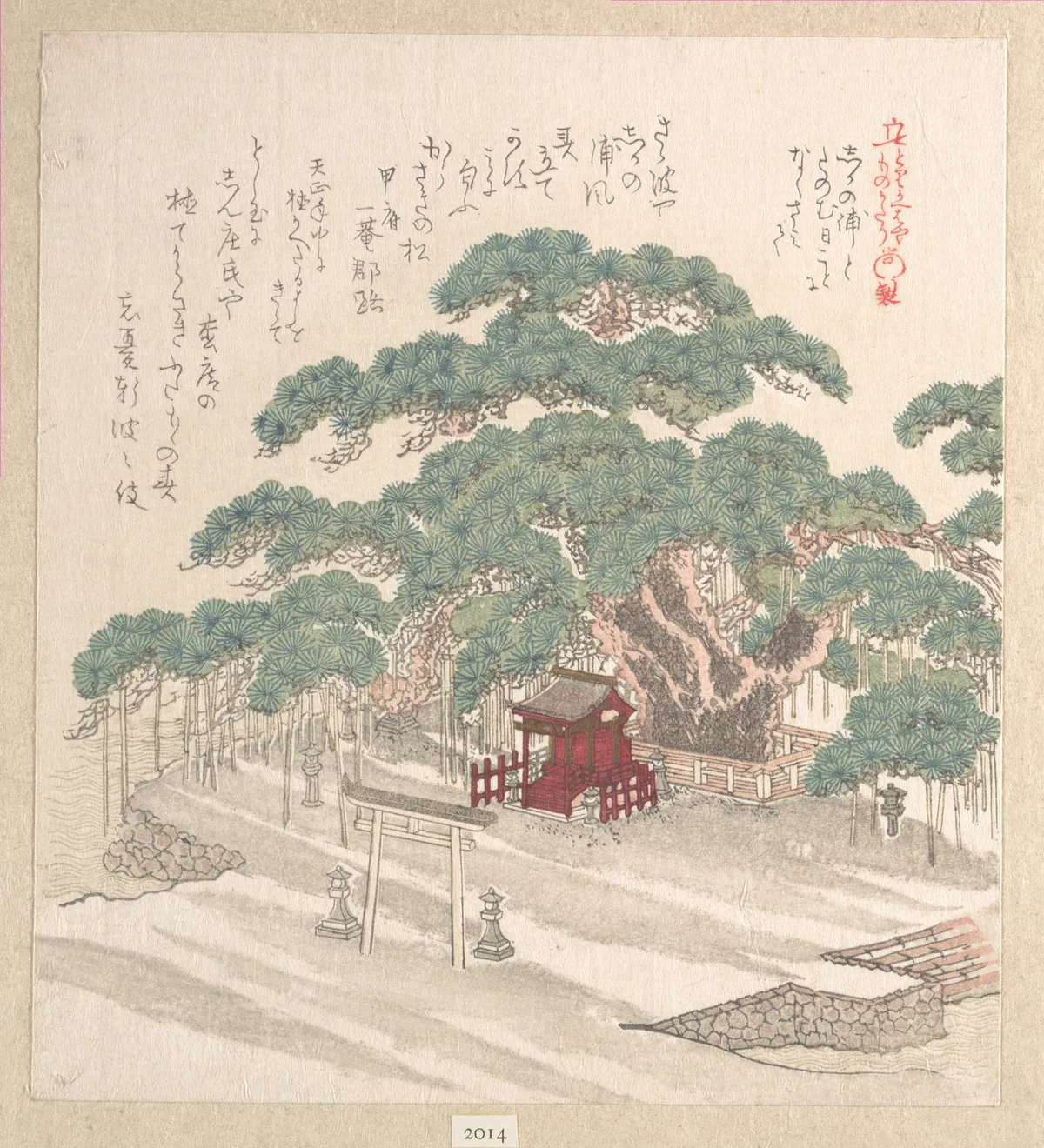
Shrine Under the Pine
A gentle breeze rustled the pine needles. They whispered secrets only the forest knew. Beneath the ancient boughs, a shrine sat, timeless and serene. Shadows danced on its worn steps, cast by the sun filtering through the dense canopy. Incense smoke curled lazily, mixing with the crisp scent of pine resin. Silence reigned, broken only by the distant call of a lone bird. The ground was soft underfoot, a tapestry of fallen needles and damp earth. A woman knelt before the shrine, her kimono brushing the ground. She placed an offering, her movements deliberate and reverent. Her whispered prayer mingled with the rustling leaves, as if nature itself listened. The shrine stood in quiet dignity, a guardian of secrets and solace. Here, time moved like the shadows—slow, deliberate, infinite.
Historical Echo
In the Edo period, shrines were sanctuaries from the bustling life of the city. They offered a place of reflection amidst nature's embrace. Kubo Shunman, known for his delicate compositions, captured this harmony. His work reflects a world where nature and spirituality entwined seamlessly. The pine tree, a symbol of longevity, frames the scene with quiet majesty.