

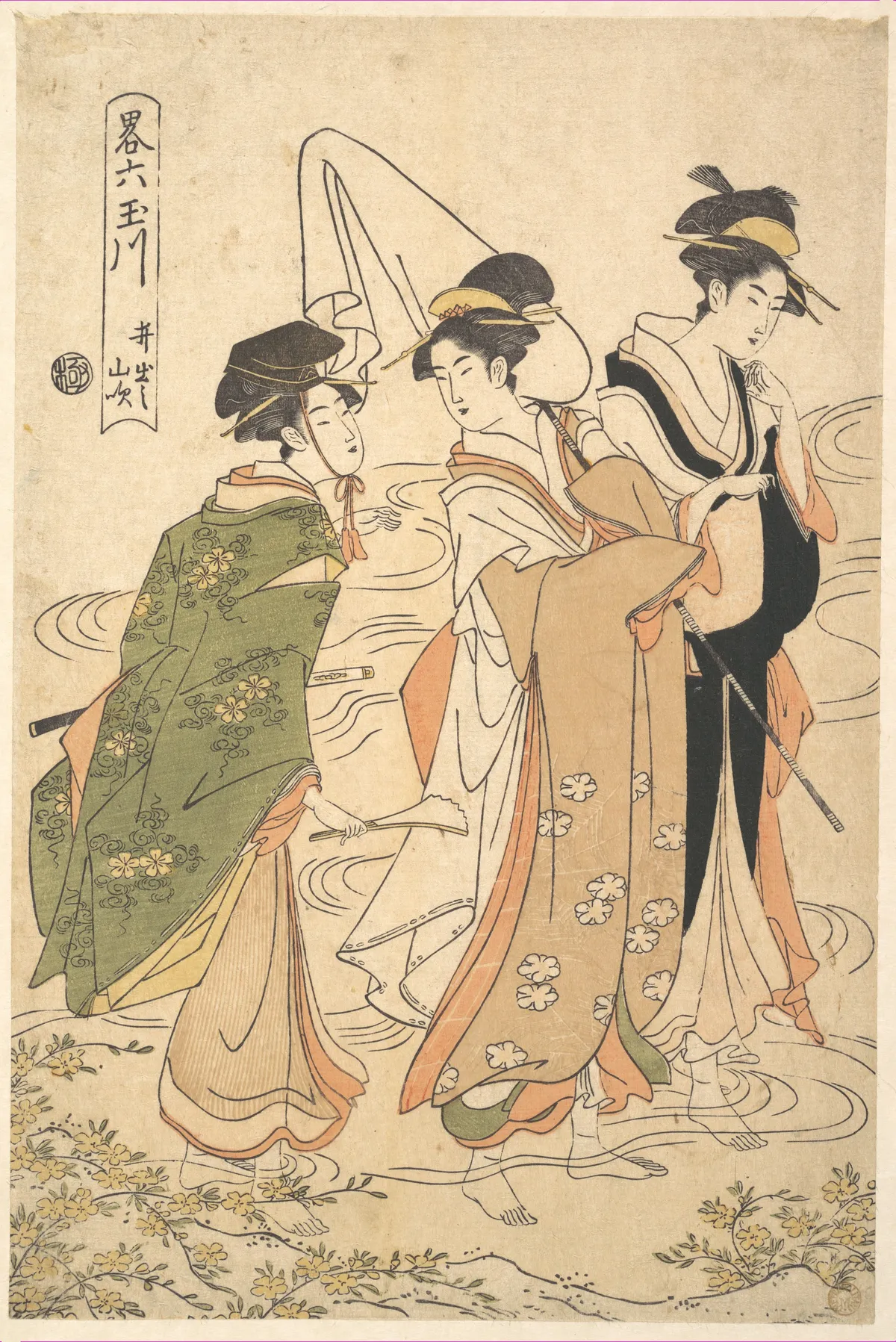
Mountain Roses of Ide
A gentle hush falls over the Ide River. The air is thick with moisture. Petals of yamabuki, mountain roses, drift along the water's edge. Their yellow hue catches fleeting sunlight, a momentary glow in the overcast morning. A lone traveller stands by the bank, robes heavy with the dampness of the early hour. His straw hat casts a shadow over his face, obscuring his eyes but not the intentness of his gaze upon the flowing river.
The grass underfoot is slick and cool. He adjusts his stance, feeling the earth give slightly beneath his sandals. A breeze stirs, carrying the faint scent of wet leaves and distant pine. The river murmurs softly, a constant companion in this transient world. Above, clouds hang low, pregnant with unshed rain, promising yet more solitude and reflection.
In the distance, the outline of mountains looms, their presence both comforting and daunting. The traveller's thoughts drift like the petals, mingling with the murmur of the river. Time stretches and bends, the scene eternal and fleeting all at once.
Historical Echo
In the late 18th century, ukiyo-e artists like Rekisentei Eiri captured the serene beauty of Japan's landscapes with deft precision. This print, part of the "A Parodic Six Jewel Rivers" series, echoes the cultural reverence for nature and the transient beauty of life. The yamabuki, or mountain rose, is a symbol of both resilience and fragility. Eiri's work invites contemplation, a pause in the ceaseless flow of time, much like the river it portrays.