

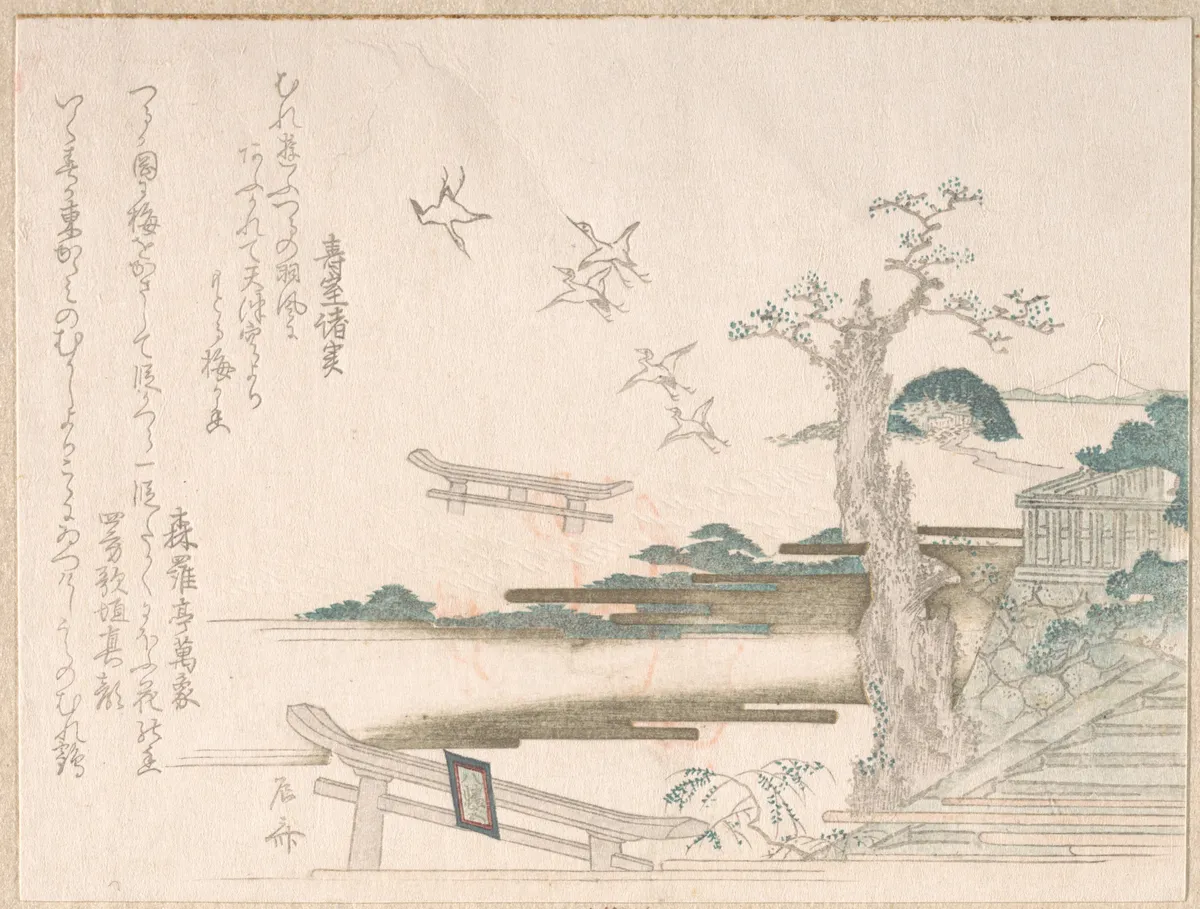
Cranes at Tsurugaoka
The air is thick with the scent of rain-soaked earth. A gentle drizzle falls, whispering against the wooden slats of the shrine. Tsurugaoka Hachimangō looms quietly, its presence a silent guardian amidst the green. Cranes stand elegantly, their feathers unruffled by the soft spring rain. They move with deliberate grace, each step a careful dance upon the slick ground.
The shrine's lanterns flicker, casting pale light upon the scene. Shadows play among the trees, weaving through the branches like ancient spirits. The world feels suspended, held in the quiet embrace of the season's breath.
A lone figure stands beneath the eaves, watching the cranes. Raindrops cling to their sleeves, their face obscured by the brim of a straw hat. The steady patter of rain merges with the distant murmur of the sea. It is a moment of stillness, timeless in its simplicity.
The cranes, symbols of longevity and peace, continue their measured dance. They are unperturbed by the passage of time, their presence a living echo of the land's enduring spirit.
The rain falls gently, a soft veil over Kamakura, as if nature herself pauses to breathe.
Historical Echo
In the Edo period, the Tsurugaoka Hachimangō Shrine stood as a testament to the samurai's spiritual heart. Cranes, revered in Japanese culture, embodied grace and longevity. They were believed to link heaven and earth, their presence a blessing upon the shrine. Ryūryūkyo Shinsai captures this ethereal moment, the cranes poised amidst the quiet rain. The print reflects a world where nature and humanity exist in serene harmony, a fleeting glimpse of peace in an ever-changing world.